Watching your baby or child breathe and noticing something that does not look right can be frightening. This page is a broad overview of the most common breathing signs parents notice — what they look like, why they happen, and when they need attention. Each symptom links to a more detailed guide.
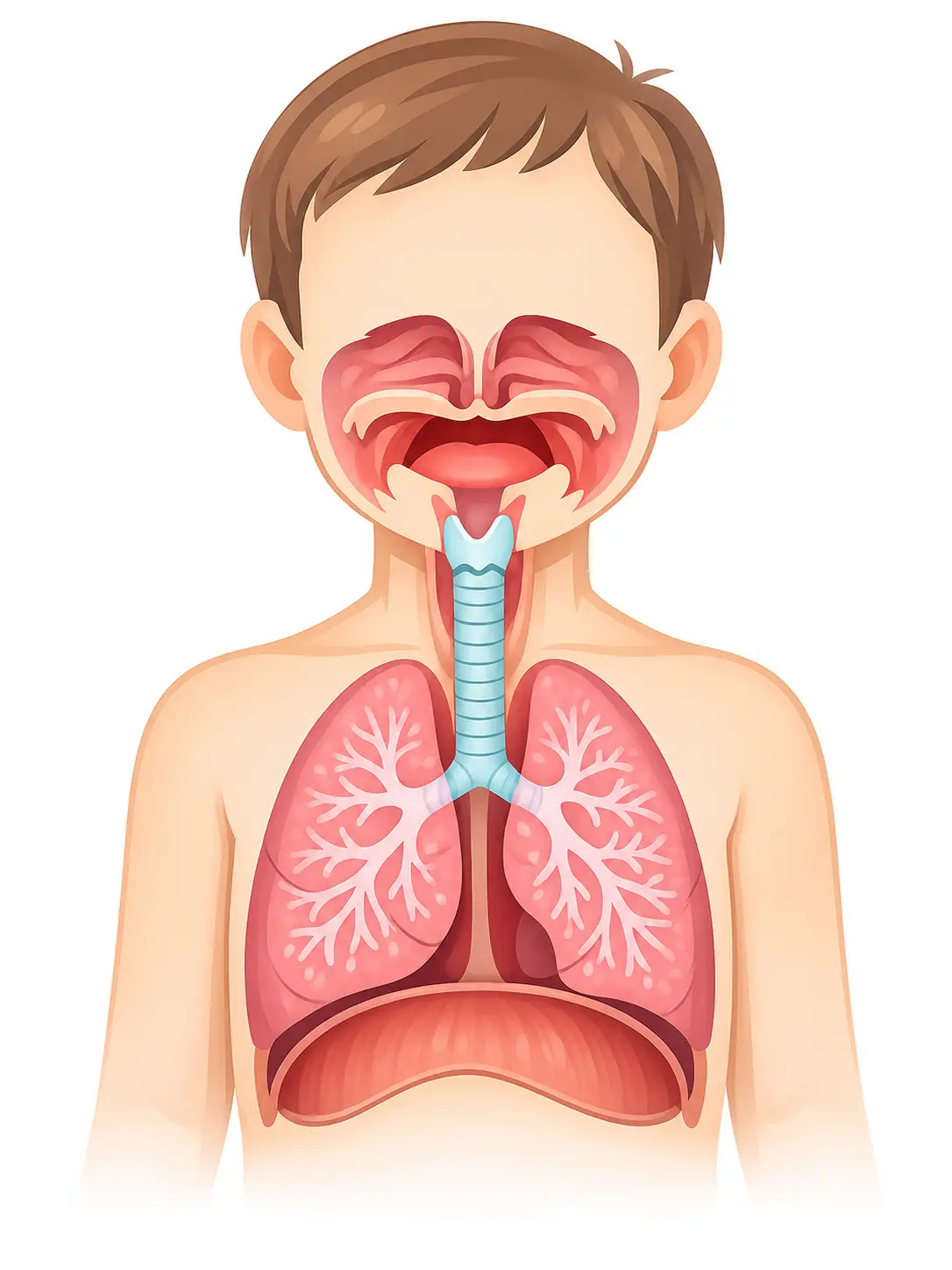
Babies have narrower, softer airways than adults and breathe faster — up to 60 breaths per minute in newborns. Even small amounts of swelling or mucus can make breathing harder. Signs of breathing difficulty include skin pulling in around the ribs, nostrils flaring, noisy breathing, or grunting on every exhale. These signs mean the body is working harder than normal to breathe.
Common Breathing Signs
Tap any card to learn what it looks like, what it sounds like, and how to describe it.

How Does a Baby's Breathing System Work — and Why Is It Different From an Adult's?
Babies are born with airways that are much narrower and softer than an adult's — a newborn's windpipe is roughly the width of a drinking straw, so even a small amount of swelling or mucus can make breathing noticeably harder.
Babies under about 6 months are preferential nose breathers, meaning they rely heavily on their nasal passages for airflow — a stuffy nose alone can make breathing look labored.
A baby's ribcage is made mostly of soft cartilage rather than rigid bone, so the chest wall is flexible and can visibly pull inward when the baby works harder to breathe.
Babies breathe faster than older children and adults — a healthy newborn may take 30 to 60 breaths per minute, compared to 12 to 20 in an adult.
The muscles between the ribs and the diaphragm do most of the breathing work in babies, which is why belly movement and rib movement are so visible.
Because of these differences, babies can show dramatic-looking breathing patterns — including irregular rhythms and visible belly movement — that are completely normal for their age.
What Are the Most Common Breathing Symptoms Parents Notice?
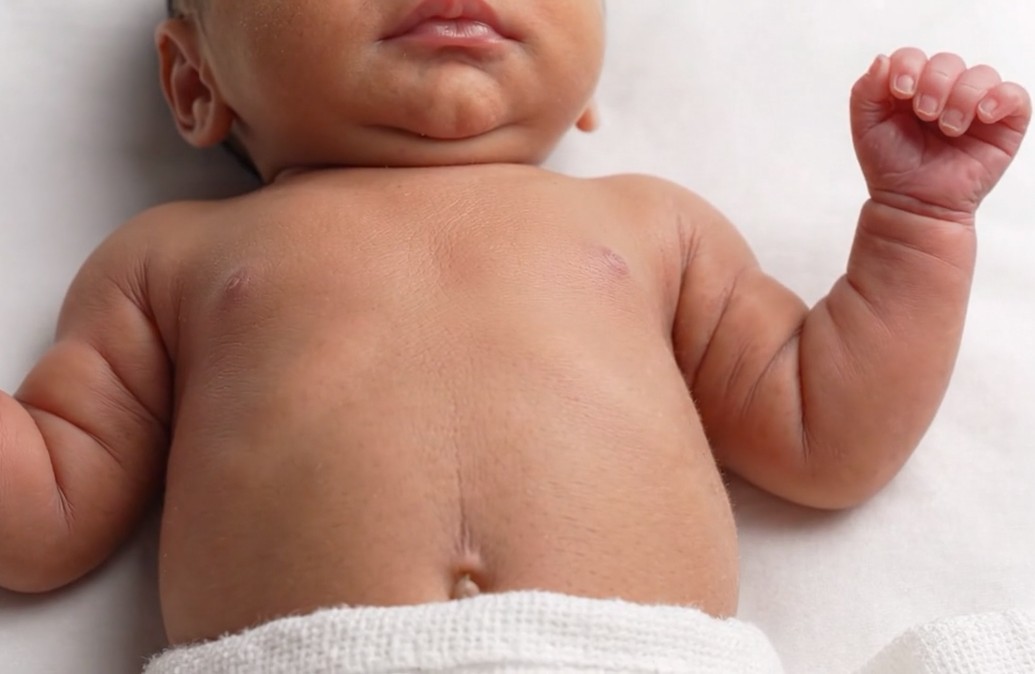
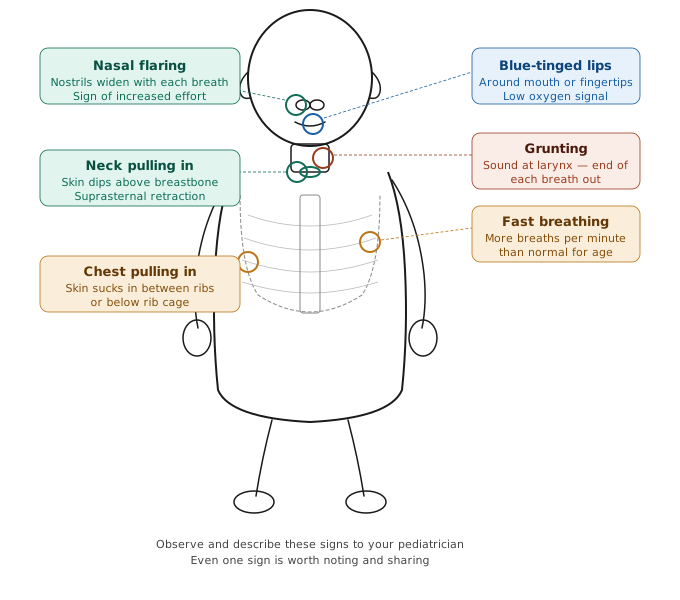
Chest retractions — skin pulling inward between the ribs, below the ribcage, or at the throat notch with each breath, which signals the breathing muscles are working harder than usual to pull air into the lungs.
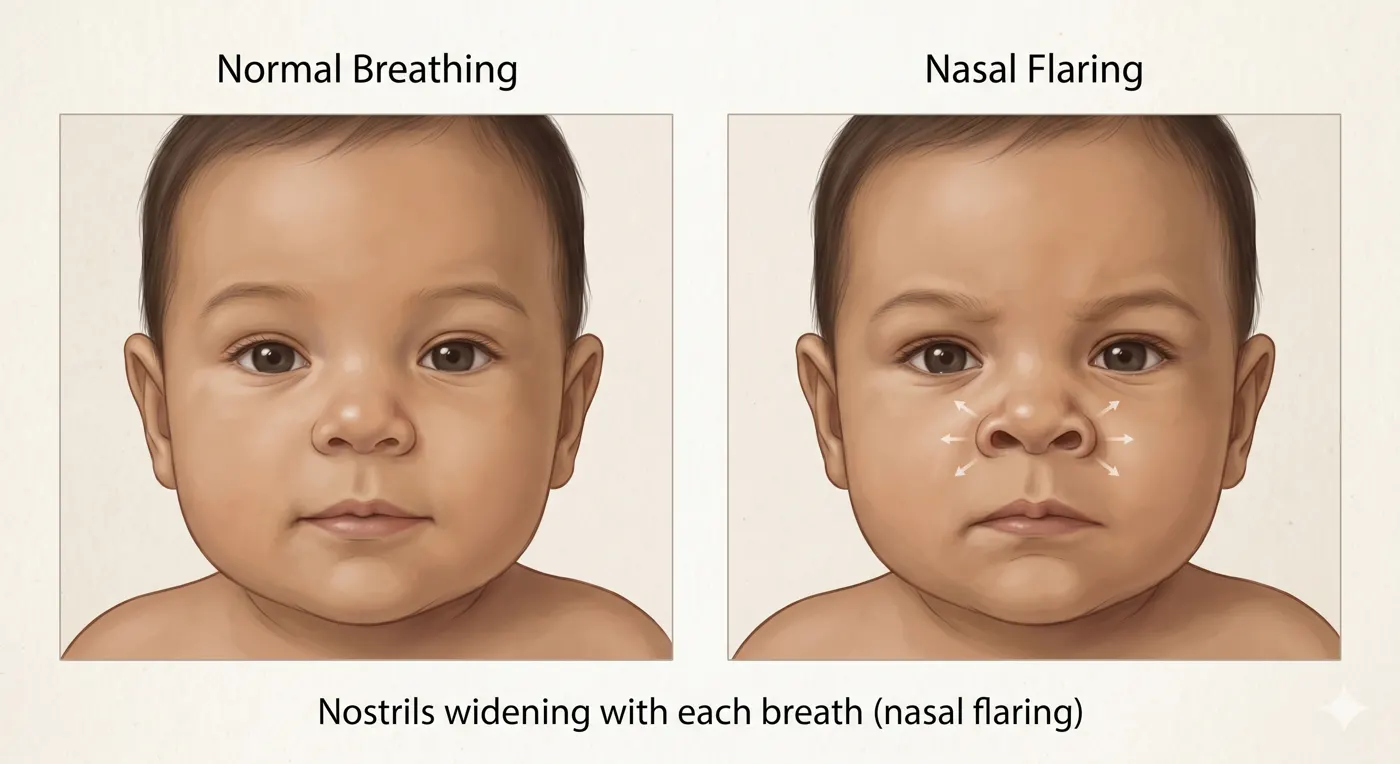
Nasal flaring — nostrils spreading wide open with each inhale, which is the body's way of trying to pull in more air through a wider opening.
Fast breathing (tachypnea) — a breathing rate that stays consistently above the normal range for the child's age, even when the child is calm or sleeping.
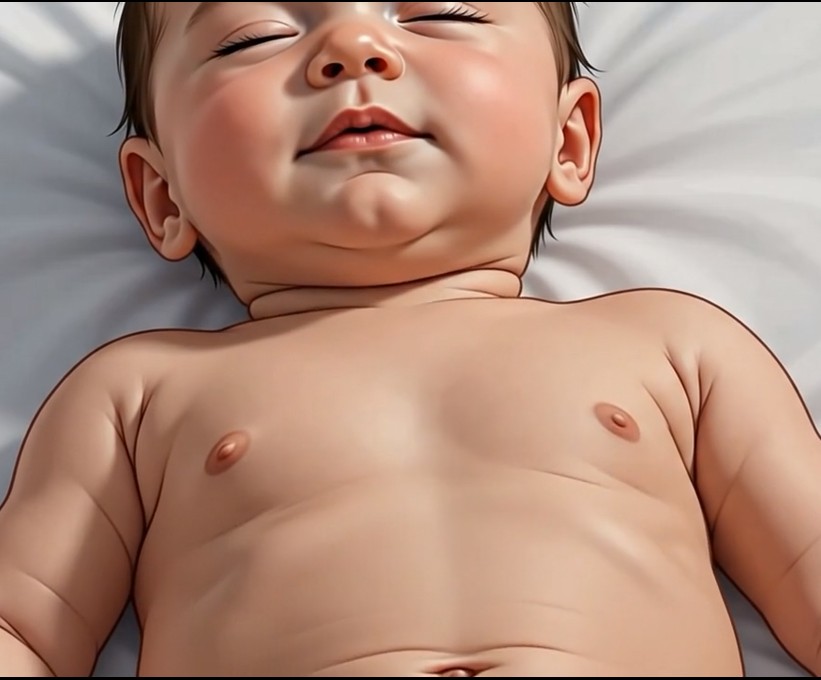
Belly breathing — the stomach rising and falling prominently with each breath, which is normal in newborns and young babies but can signal distress in older toddlers or when it becomes exaggerated.
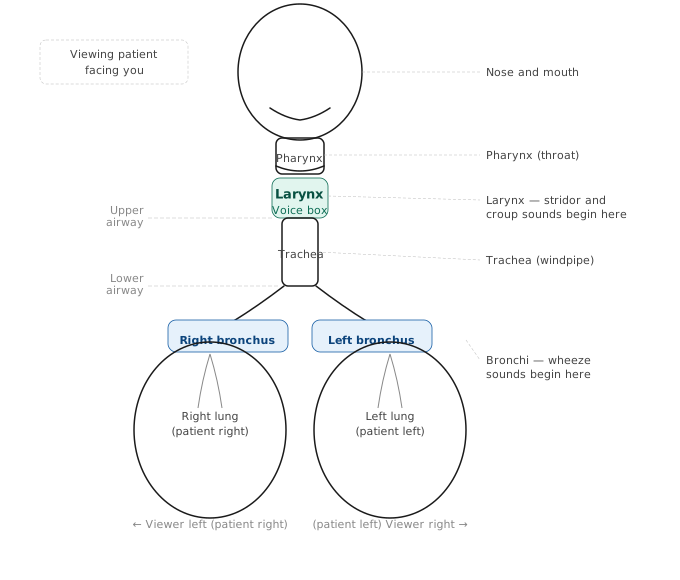
Noisy breathing — sounds such as a high-pitched squeak on breathing in (stridor), a whistling sound on breathing out (wheezing), a barking seal-like cough (croup), or a grunting sound on every exhale.
Breathing pauses — short stops in breathing lasting a few seconds (periodic breathing), which are common in newborns but need attention if they last longer than 20 seconds or are accompanied by color changes.
Each of these symptoms has its own detailed guide covering what is normal, what causes it, and when to seek care.
What Causes Breathing Changes in Babies and Young Children?
Viral infections are the most common cause — illnesses like bronchiolitis (often caused by RSV), croup, and common colds cause swelling and mucus in the airways, which can produce retractions, wheezing, stridor, or fast breathing.
Fever alone can speed up a baby's breathing rate — the body breathes faster to release heat, which can look alarming but may not mean the lungs themselves are affected.
Nasal congestion can cause noisy or labored-looking breathing in young babies who rely heavily on nose breathing, even without a serious lower airway problem.
Developmental anatomy plays a role — some newborns have a naturally floppy voice box (laryngomalacia) that causes a harmless high-pitched squeak, and young babies have immature brainstem breathing control that causes normal pauses and irregular rhythms during sleep.
Less common causes include asthma or reactive airway disease (more often in toddlers), allergic reactions, or rarely structural problems present from birth — these are typically identified by a pediatrician during evaluation.
What Can Parents Observe and Do at Home?
Watch the chest and belly with the child's shirt off in good lighting — look for skin pulling in around the ribs, at the throat notch, or below the ribcage, and note whether the belly is doing most of the work.
Count the breathing rate by watching the chest or belly rise for a full 60 seconds while the child is calm or sleeping — compare to normal ranges for age (under 2 months: up to about 60 breaths per minute; 2 to 12 months: up to about 50; over 12 months: up to about 40).
Listen for sounds — note whether any noises happen when the child breathes in (suggests an upper airway issue like croup or stridor) or breathes out (suggests a lower airway issue like wheezing).
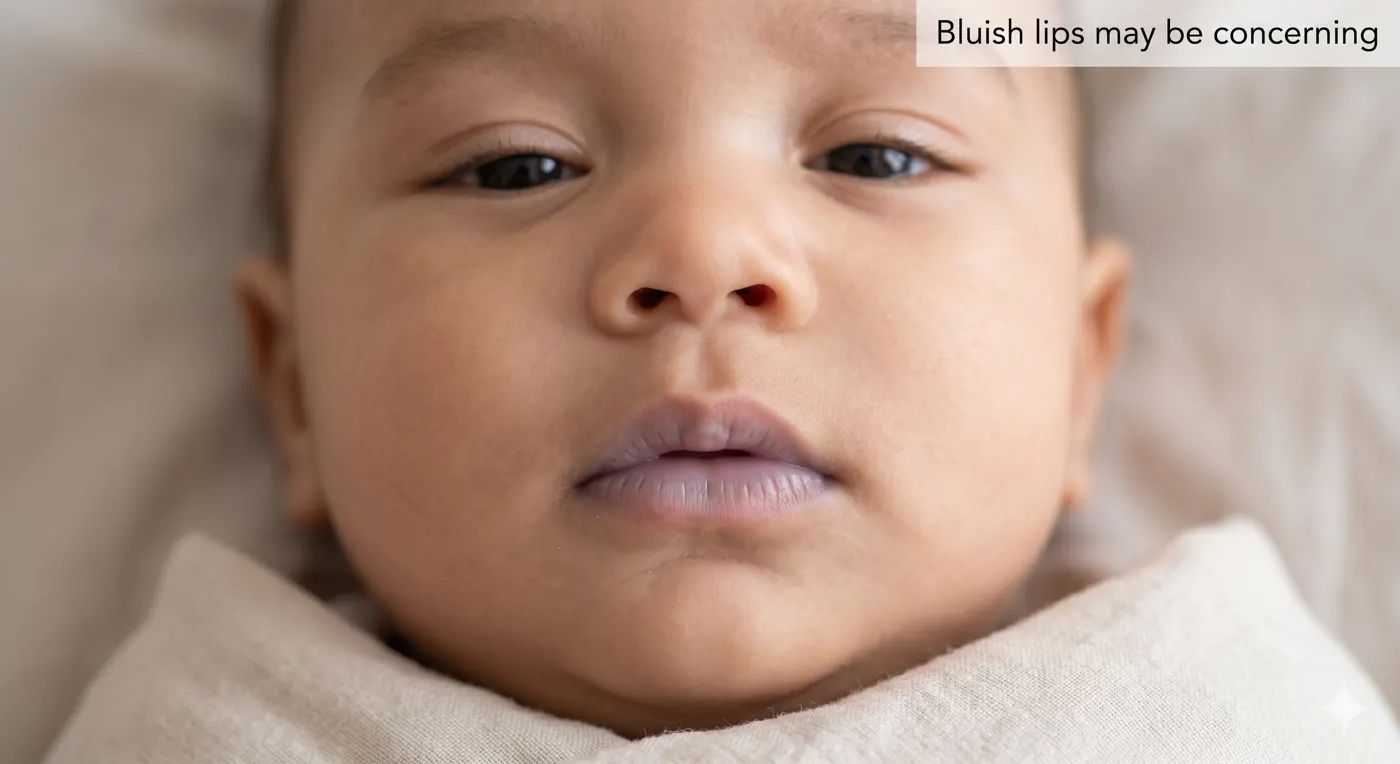
Check the color of the lips, tongue, and fingernails — these should remain pink.
Note feeding and behavior — a baby who is feeding well, making wet diapers, and interacting normally is generally coping well, even if breathing looks or sounds different.
Keep the nose clear in young babies using saline drops and gentle suction, and use a cool-mist humidifier in the room during illness.
Record a short video of the breathing pattern to show the pediatrician — breathing symptoms can come and go, and a video captures exactly what parents are seeing.
When Should Parents Call the Doctor or Seek Emergency Care?
Call the pediatrician if the child has a new cough with noisy breathing, a breathing rate that stays above normal for age even when calm, mild skin pulling in at the ribs during illness, reduced feeding (taking less than half of normal), or fewer wet diapers than usual.
Go to the emergency room or call 911 if the child has skin pulling in deeply at the throat notch, between every rib, or below the ribcage with each breath.
Go to the emergency room or call 911 if there is a grunting sound on every exhale.
Go to the emergency room or call 911 if there is pale, gray, or blue color around the lips, tongue, or fingernails.
Go to the emergency room or call 911 if the child is too breathless to feed or drink at all, is unusually limp, difficult to wake, or not responding normally.
Go to the emergency room or call 911 if breathing stops for more than 20 seconds or the child turns blue during a pause.
These signs look the same regardless of the cause — parents do not need to figure out why the child is struggling, only that the child is struggling.
When in doubt, calling the pediatrician's office or nurse line is always appropriate — describing what the breathing looks like, or sharing a video, helps the care team advise next steps quickly.
Check Your Understanding
Tap the answer that best fits each scenario.
A 3-week-old's belly rises and falls with each breath and the chest barely moves. The baby is calm, feeding well, and has a healthy color. What is this?
A 5-month-old has a cold and observers notice the skin between the ribs pulling in with each breath. The baby is also feeding less than usual. What is the appropriate response?
A high-pitched squeaky sound is heard when a 6-week-old breathes in. It has been present since the second week of life, gets louder when the baby cries, and disappears when calm. The baby is gaining weight normally. What is this most likely?
Breathing changes can be hard to describe in the moment.
Ralston SL, Lieberthal AS, Meissner HC, et al. Clinical Practice Guideline: The Management and Prevention of Bronchiolitis. Pediatrics. 2014;134(5):e1474-e1502.
Fleming S, Thompson M, Stevens R, et al. Normal Ranges of Heart Rate and Respiratory Rate in Children From Birth to 18 Years of Age: A Systematic Review of Observational Studies. Lancet. 2011;377(9770):1011-1018.
Ebenezer Adebiyi, MD, MPH, FAAP
Board-Certified Pediatrician · FAAP · Founder of PediaPulse
Dr. Adebiyi built PediaPulse to help parents understand what they are observing so they can have better, more informed conversations with their own doctors.