What do parents see when a baby has blue color around the lips?
Blue Color Around a Baby's Lips (Cyanosis)
Seeing blue or gray color around your baby's lips can feel frightening, especially when it appears suddenly. This page helps you notice what you are seeing, compare it to common patterns parents describe, and prepare clear observations for your child's doctor.
Cyanosis is a bluish color that appears on the skin, lips, or tongue when there is not enough oxygen being carried in the blood. It happens because hemoglobin — the part of red blood cells that carries oxygen — changes color when it is not fully loaded with oxygen. The blue tint is most visible in areas where skin is thin, such as the lips, tongue, and fingertips.
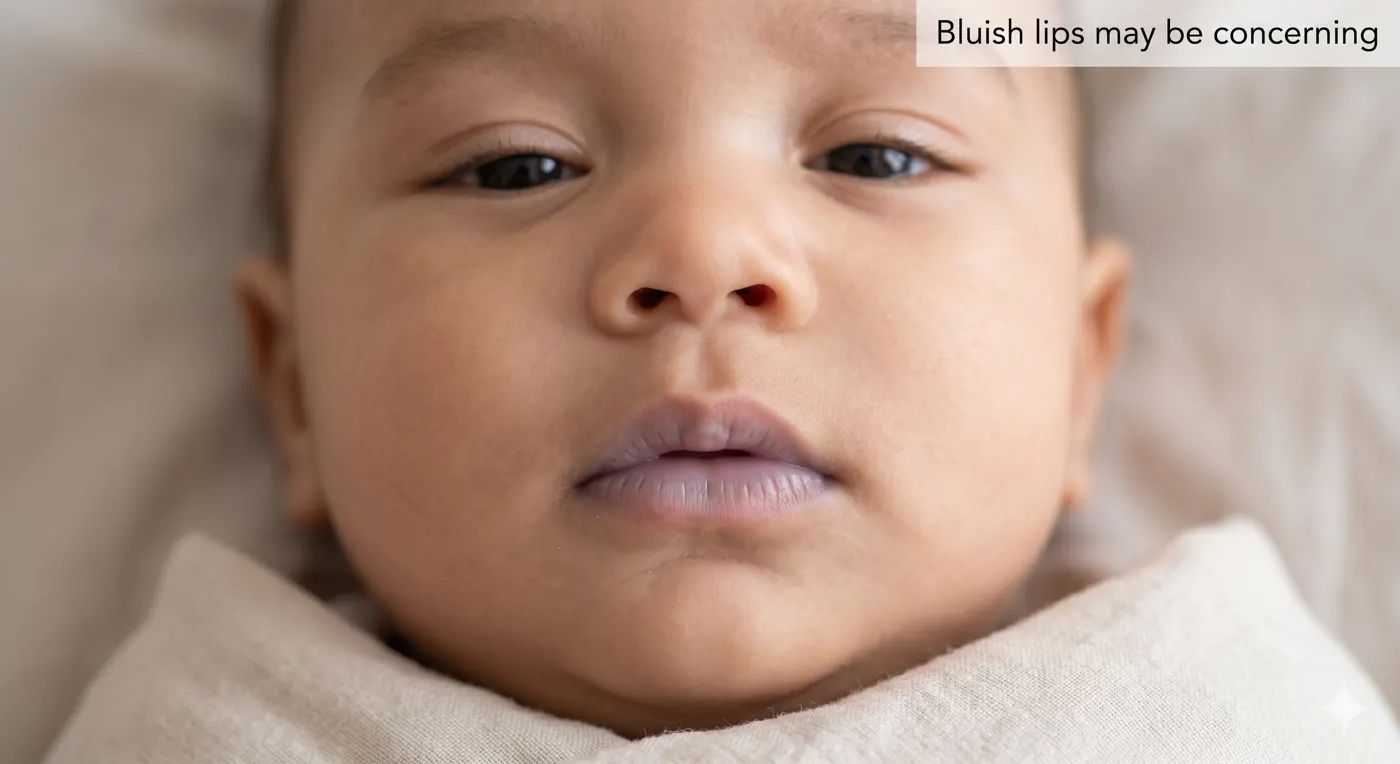
What does normal skin color look like around a baby's lips and fingers?
- Healthy babies typically have pink or warm-toned lips, tongue, and nail beds, regardless of overall skin tone.
- In the first 24 to 48 hours after birth, it is common for hands and feet to appear slightly blue or purple — this is called acrocyanosis and is considered normal in newborns.
- Acrocyanosis happens because blood flow to the hands and feet is still maturing and is often triggered by cold temperatures.
- The key area to watch is the lips, tongue, and inside of the mouth — these areas reflect oxygen levels more reliably than the hands or feet.
- In babies with darker skin tones, color changes may be harder to spot on the skin surface, so checking the tongue, gums, and nail beds is especially helpful.
- A baby who is feeding well, active, and breathing comfortably with pink lips and tongue is generally showing reassuring color.
What causes blue color changes around the lips in babies and young children?
- Cyanosis occurs when there is a higher-than-normal amount of oxygen-poor hemoglobin in the blood — typically visible when reduced hemoglobin reaches about 3 grams per 100 mL of blood.
- Respiratory causes are among the most common — conditions like bronchiolitis, pneumonia, asthma, and croup can reduce how well the lungs deliver oxygen to the blood.
- Heart-related causes include certain congenital heart conditions where oxygen-rich and oxygen-poor blood mix before reaching the body.
- Airway blockage — from choking, swelling, or severe congestion — can limit oxygen intake.
- Brief blue color around the lips may sometimes occur during hard crying, breath-holding spells, or exposure to cold, and may resolve quickly on its own.
- Persistent or worsening blue color that does not improve with calming or warming is different from these brief, self-resolving episodes.
How can parents tell the difference between harmless color changes and something more serious?
- Bluish hands and feet alone in a newborn who is feeding well and breathing comfortably is usually acrocyanosis — a normal finding that improves with warming.
- Blue color limited to the area just around the lips during crying or cold exposure that resolves quickly is generally less concerning.
- Blue color on the tongue, gums, or inside the mouth — called central cyanosis — is more significant because it suggests lower oxygen levels throughout the body.
- Central cyanosis that persists at rest, during feeding, or during sleep warrants closer attention.
- Color changes accompanied by fast breathing, chest retractions, grunting, poor feeding, unusual sleepiness, or limpness look and feel different from brief, isolated episodes.
- Cyanosis can be harder to detect visually in babies with darker skin pigmentation — checking the tongue and mucous membranes provides more reliable information.
When should immediate medical attention be sought?
- Blue or gray color on the tongue, lips, or gums that does not go away with warming or calming — immediate medical attention should be sought.
- Any blue color change combined with difficulty breathing, fast breathing, chest pulling, or grunting — emergency medical care is recommended without delay.
- A baby who appears limp, unusually sleepy, difficult to wake, or stops feeding — this combination with any color change requires urgent evaluation.
- Sudden onset of blue color after choking, gagging, or possible contact with a small object — emergency care should be sought immediately.
- Blue color that appears for the first time in a baby who previously looked well — prompt medical evaluation is advisable.
- In newborns, all hospitals in the United States now screen for critical congenital heart disease using pulse oximetry before discharge — but some heart conditions may not show signs until days or weeks later.
How do pediatricians evaluate blue color changes in babies?
- Pulse oximetry is the primary tool — a small sensor placed on the hand or foot measures oxygen levels in the blood painlessly and quickly.
- Normal oxygen saturation in children is generally above 95%; in newborns, screening thresholds are set to detect levels that may indicate a heart or lung problem.
- Pediatricians observe the location of the blue color — whether it involves only the hands and feet (peripheral) or includes the tongue and lips (central).
- Breathing rate, breathing effort, heart rate, feeding ability, and overall alertness are all assessed alongside color.
- If oxygen levels are low or central cyanosis is confirmed, further evaluation may include listening to the heart and lungs, chest imaging, and heart ultrasound (echocardiogram).
- The overall pattern of findings — color, oxygen levels, breathing, feeding, and behavior together — guides the clinical assessment rather than any single observation alone.