Observers notice a small dip at the base of a 3-month-old's throat sinking inward with every breath. The baby is calm and feeding normally. What is the appropriate first step?
Infant Neck Sucking In (Tracheal Tugging): What It Looks Like
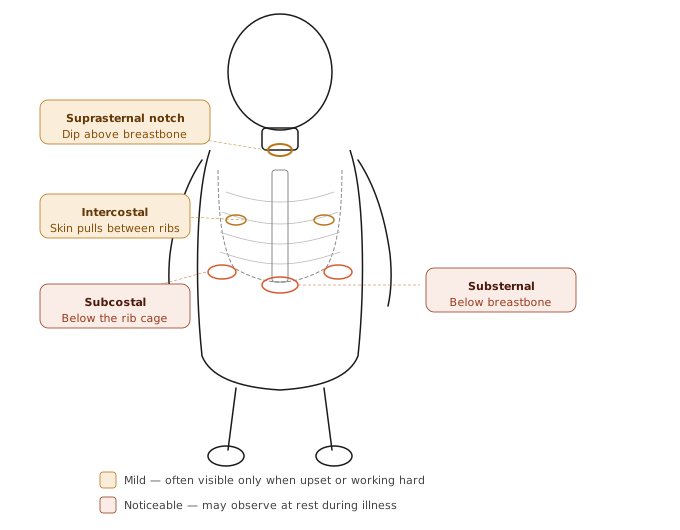
Tracheal tugging is the visible pulling-in of the skin at the base of the throat — at the small notch between the collarbones — with each breath in. It happens when the breathing muscles have to pull harder than usual to move air through a narrowed or obstructed airway, causing the soft skin at the neck to get sucked inward rhythmically.
It can be frightening to notice the skin at your baby's neck pulling inward with each breath. This guide explains what tracheal tugging is, why it happens, what it looks like, and when to contact a doctor.
- Clinical term: Tracheal Tugging
- Parents often search for: baby neck sucking in when breathing, hole at bottom of neck sucking in breathing, skin pulling in at throat when baby breathes, suprasternal retraction baby, baby throat dipping with each breath
What does normal breathing look like around a baby's neck and throat?
- During normal, comfortable breathing, the skin around a baby's neck, throat, and the small dip at the top of the chest — called the suprasternal notch — should look smooth and relaxed.
- A baby's belly will gently rise and fall with each breath.
- This is called belly breathing and is completely normal because babies rely heavily on their diaphragm to breathe.
- The area just above the collarbones and the small hollow at the base of the throat should not sink inward noticeably with each breath.
- Babies naturally breathe faster than adults — typically 30 to 60 breaths per minute for newborns — and their breathing rhythm may be slightly irregular with occasional short pauses, which is normal.
- The neck and throat area should move very little during quiet breathing.
- The main visible motion should be the gentle rise and fall of the belly.
What causes the skin at a baby's neck to pull inward during breathing?
- When a baby's airway is partially narrowed or the lungs have to work harder to take in air, the breathing muscles pull with extra force — and this causes the soft skin around the neck and throat to get sucked inward.
- A baby's windpipe and the cartilage surrounding it are much softer and more flexible than an adult's, which means the neck area is more likely to show visible pulling when breathing effort increases.
- Common reasons for increased breathing effort include respiratory infections such as croup or bronchiolitis, swelling in the airway, mucus blocking the nose or throat, or conditions where the airway is naturally floppy.
- In some babies, the windpipe or voice box is softer than usual from birth, which can cause mild pulling at the neck even without illness — a pediatrician can evaluate this.
- The key point: neck pulling-in means the body is generating more force than usual to move air through the airway.
What does tracheal tugging look like — and how can parents spot it?
- Tracheal tugging appears as a visible downward or inward pull of the skin at the base of the throat — right at the small notch between the collarbones — each time the baby breathes in.
- It may look like the throat is dipping or sucking in rhythmically with every breath, almost as if something is pulling the skin downward from inside.
- Parents may also notice pulling-in of the skin just above the collarbones — called supraclavicular retractions — which become more pronounced with each breath in.
- Tracheal tugging is different from chest retractions: chest retractions happen between or below the ribs, while tracheal tugging happens specifically at the neck and throat.
- To check, undress the baby's upper body and watch the neck and upper chest area in good lighting — look at the small dip at the base of the throat and the spaces above the collarbones during several breaths.
- If the pulling is mild and only happens occasionally during crying or fussiness, it may not be concerning.
- If it is deep, constant, and present with every breath, it deserves medical attention.
What can parents do at home when they notice neck pulling-in?
- Stay calm and observe closely — note how deep the pulling is, whether it happens with every breath or only sometimes, and whether it gets better or worse when the baby is calm.
- Keep the baby's nose clear using a bulb syringe or nasal aspirator, since babies breathe mainly through their noses and a stuffy nose can increase breathing effort.
- Hold the baby upright or at a slight incline — this position can help open the airway and may reduce the pulling.
- Avoid exposing the baby to cigarette smoke, strong fumes, or very dry air.
- A cool-mist humidifier in the room may help keep airways moist.
- Do not put anything in the baby's mouth or throat to try to clear the airway — this can cause more harm.
- Record a short video of the breathing pattern on your phone to show the pediatrician — babies do not always show symptoms during an office visit.
When should parents call the doctor or seek care?
- Call the pediatrician promptly if the neck pulling-in is new, persistent — happening with every breath for more than a few minutes — or getting worse over time.
- Seek emergency care immediately if the pulling is accompanied by skin turning blue or gray around the lips, tongue, or fingernails, a grunting sound with each breath out, very fast breathing that does not slow down, or the baby becoming limp or very difficult to wake.
- A high-pitched squeaking or whistling sound with breathing combined with neck pulling-in suggests the airway may be significantly narrowed — this needs same-day medical evaluation.
- If the baby is refusing to feed, choking during feeds, or drooling excessively with neck pulling-in, seek care right away — these can be signs of a more serious airway problem.
- Any baby under 2 months old with new breathing difficulty including neck retractions should be evaluated by a healthcare provider promptly.