A 2-month-old's nostrils spread wide during a hard crying spell but return to normal within a minute of settling. The baby is feeding well and has good color. What is this?
Baby Nose Spreading Wide (Nasal Flaring)
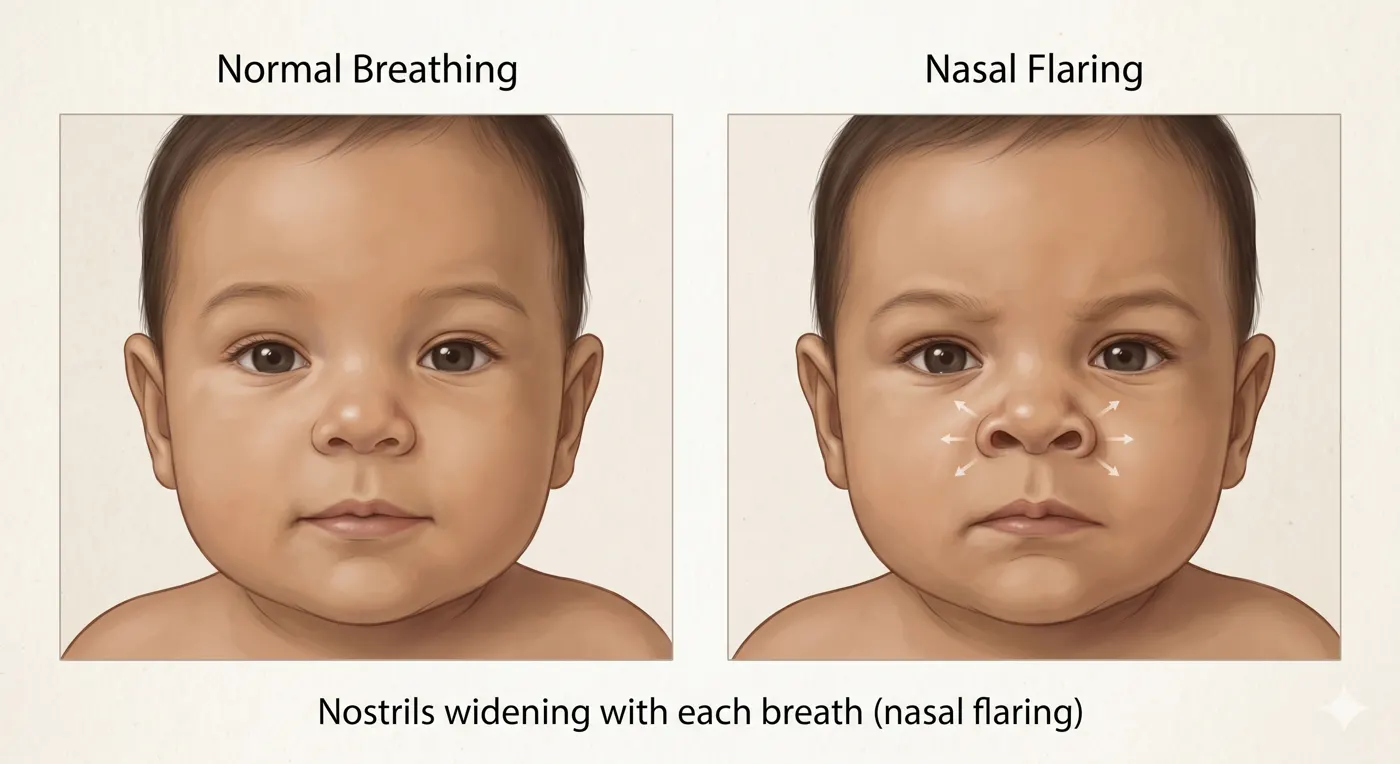
Nasal flaring is when both nostrils visibly spread open with each breath in — the body's automatic response to needing more air. Small muscles around the nostrils widen the airway opening when breathing effort increases. Brief flaring during crying or feeding is normal. Persistent flaring at rest, especially with fast breathing, chest pulling-in, or grunting, is a sign the body is working harder than usual to breathe.
Noticing your baby's nostrils spread wide with each breath can be alarming. This guide explains what nasal flaring looks like, why it happens, what is normal versus concerning, and when to contact your pediatrician.
- Clinical term: Nasal Flaring
- Parents often search for: baby nose spreading wide when breathing, baby nostrils flaring out, nostrils opening wide with each breath baby, nasal flaring newborn, baby nose puffing out when breathing
What does normal breathing look like in babies — and where does nasal flaring fit in?
- Healthy babies breathe faster than adults — roughly 30 to 60 breaths per minute in newborns, slowing down as they grow.
- Normal breathing should look quiet and easy, with the belly gently rising and falling and no extra effort visible in the chest, neck, or face.
- A baby's nostrils may widen slightly during hard crying, vigorous feeding, or right after a sneeze — this is a normal, brief response that stops once the baby calms down.
- Nasal flaring means both nostrils visibly spread open with every breath in, even when the baby is calm — this is the body's way of trying to pull in more air.
- If the flaring only happens during crying and disappears when the baby settles, it is generally not a concern — persistent flaring at rest is what doctors pay close attention to.
What causes a baby's nostrils to flare during breathing?
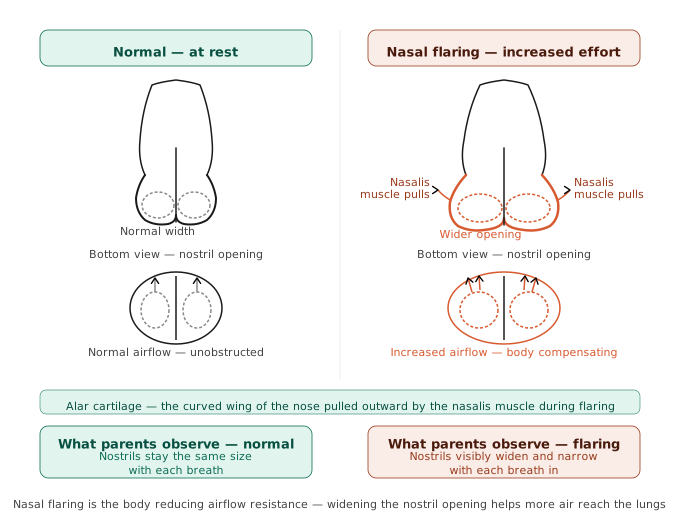
- Nasal flaring happens when small muscles around the nostrils contract to widen the airway opening — the body does this automatically when it senses it needs more air.
- In newborns, the most common reason is that the lungs are still adjusting after birth — extra fluid in the lungs can temporarily make breathing harder.
- In older babies and toddlers, common causes include viral respiratory infections like bronchiolitis or croup.
- Nasal congestion from a cold can also force a baby to work harder to breathe, since young babies breathe mainly through their noses.
- Nasal flaring is one of several signs of increased breathing effort — others include chest or neck pulling inward, grunting sounds, and breathing faster than normal.
What does nasal flaring look like — and how can parents spot it?
- Watch the baby's face during a calm moment — not during crying, feeding, or hiccupping — to get an accurate picture of resting breathing effort.
- Nasal flaring looks like both nostrils opening wide with each breath in, almost like the nose is puffing out rhythmically.
- It is easiest to see from the front, with good lighting, while the baby is lying on their back or being held upright.
- Mild flaring may be subtle — the nostrils widen just slightly — while more obvious flaring is easy to spot even from a short distance.
- Look at the whole picture: check whether the baby also has chest pulling-in, fast breathing, unusual sounds, or changes in skin color — these signs together tell a more complete story than any single sign alone.
- Recording a short video on your phone can be very helpful, since symptoms may come and go and the video gives the pediatrician a clear view of what you saw.
What can parents do at home when they notice nasal flaring?
- First, calm the baby and yourself — pick the baby up, hold them upright, and observe their breathing for a few minutes in a quiet setting.
- If the baby has a stuffy nose, gentle nasal suctioning with a bulb syringe or saline drops may help clear the nasal passages and reduce breathing effort.
- Keep the room air comfortable — cool-mist humidifiers can help loosen nasal congestion, especially during dry weather or winter months.
- Count the baby's breaths for a full 60 seconds while they are calm — write down the number so you can share it with the doctor if needed.
- Continue to offer regular feedings — a baby who is feeding well and staying hydrated is generally coping better than one who refuses to eat.
- Do not use any over-the-counter cold or cough products in babies unless specifically directed by a pediatrician.
When should parents call the doctor or seek care?
- Call the pediatrician if nasal flaring is persistent at rest — not just during crying — if the baby is breathing faster than usual, or if the baby seems to be working harder to breathe than normal.
- Call the pediatrician if the baby is feeding poorly — taking less than half of normal feeds, refusing the breast or bottle, or choking during feeds.
- Go to the emergency room if the baby's lips, tongue, or fingernails turn blue or gray — this suggests oxygen levels may be dropping.
- Go to the emergency room if the baby has grunting sounds with every breath, deep pulling-in of the chest or neck, or appears limp, unusually sleepy, or difficult to wake.
- Seek immediate care for any baby under 3 months old with a fever of 100.4°F or higher combined with nasal flaring or fast breathing.
- Trust your instincts — if something about your baby's breathing looks or feels wrong, it is always appropriate to call the doctor.