An 18-month-old wakes at midnight with a harsh barking cough that sounds like a seal. The child is upset but drinking water and has pink lips. What is often tried first?
Cough Sounds Like a Seal or Dog (Croup)
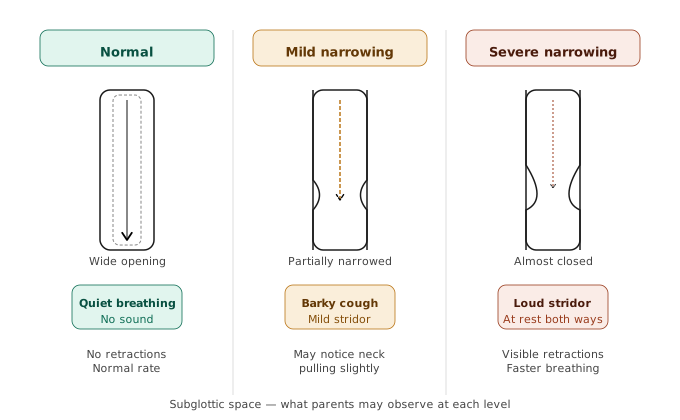
When a child's cough sounds like a barking seal or dog, it usually means the voice box and windpipe are swollen from a viral infection. This swelling narrows the airway just below the vocal cords, forcing air through a tighter space — which creates that distinctive harsh, barking sound. Doctors call this croup.
A barking seal cough can be alarming, especially when it starts suddenly at night. This guide explains what croup sounds like, what causes the distinctive cough, and when to seek care.
- Clinical term: Croup
- Parents often search for: toddler cough sounds like a seal or dog, barking cough child croup, baby cough sounds like seal, barking seal cough toddler night, croup cough what does it sound like
What does a normal cough sound like in babies and young children?
- A normal cough in a young child is a short, sharp burst of air that clears mucus or irritants from the throat and lungs — it may sound wet or dry, but it does not have a harsh, barking quality.
- Normal coughs come and go, usually during colds, and do not change the sound of the child's voice or breathing between coughs.
- A child with a normal cough breathes quietly and comfortably between coughing episodes — there is no noisy breathing when the child inhales.
- Normal coughs do not typically worsen dramatically at night compared to daytime, and the child can usually sleep, eat, and drink without significant difficulty.
What causes the barking seal cough in children?
- Croup is caused by a viral infection — most commonly parainfluenza virus — that inflames and swells the lining of the voice box and windpipe, particularly the area just below the vocal cords called the subglottis.
- This part of the airway is the narrowest section in a young child's breathing tube, so even a small amount of swelling significantly reduces the opening, producing the barking cough and noisy breathing.
- Croup most commonly affects children between six months and three years of age, with the highest rates in the second year of life.
- It is more common in boys.
- It peaks in autumn and winter and typically begins with one to two days of cold symptoms before the barking cough appears — often suddenly at night.
- The barking cough resolves within 48 hours in the majority of affected children, though it may last up to a week in some cases.
What does croup look and sound like — and how can parents recognize it?
- The hallmark is a loud, harsh, barking cough that sounds like a seal or a dog — once parents hear it, it is usually unmistakable and very different from a normal wet or dry cough.
- The child's voice may become hoarse or raspy because the swelling affects the vocal cords.
- Parents may hear stridor — a high-pitched, squeaky or whistling sound when the child breathes in — this is caused by air being pulled through the narrowed airway and is a key sign of croup.
- Symptoms are characteristically worse at night, possibly because the body's natural anti-inflammatory hormone drops to its lowest levels around bedtime.
- Crying, agitation, and lying flat can all make the barking cough and stridor temporarily louder — this does not necessarily mean the child is getting worse overall.
What can parents do at home when their child has a barking cough?
- Keep the child calm — crying and agitation tighten the airway muscles and make symptoms worse.
- Comfort the child by holding them upright, reading, or using a calm voice.
- Try exposure to cool night air — bundling the child up and stepping outside into cool air below about 50°F or 10°C for 15 to 30 minutes has been shown to help reduce mild to moderate croup symptoms.
- Keep the child hydrated with small, frequent sips of clear fluids — a sore, swollen throat can make swallowing uncomfortable, so offer fluids the child prefers.
- Elevate the child's head slightly during sleep — propping the head of the crib mattress or holding the child upright can help reduce airway narrowing.
- Steam and humidifiers have not been shown to provide significant benefit in studies — cool air appears to be more helpful.
When should parents call the doctor or go to the emergency room?
- Call the pediatrician if the barking cough lasts more than three to four days, if the child develops a fever above 104°F, or if symptoms are not improving with comfort measures and cool air.
- Go to the emergency room if the child has stridor present at rest when calm — stridor only during crying or agitation is less concerning, but stridor at rest suggests moderate to severe airway narrowing.
- Seek immediate emergency care if the child has visible retractions, is drooling or unable to swallow, appears very pale or bluish around the lips, or seems unusually sleepy or difficult to rouse.
- A child who is sitting very still, leaning forward, and refusing to lie down may be working very hard to breathe — this posture is a sign of significant airway distress and requires urgent evaluation.
- Recurrent episodes of croup — three or more — should be discussed with the pediatrician, as they may indicate an underlying airway abnormality or other condition that needs further evaluation.