Observers notice a 3-month-old's belly rises and falls with each breath but the chest is still. The baby is calm, feeding well, and has a healthy color. What pattern is this?
Baby Chest Sucking In (Subcostal & Intercostal Retractions)
When a baby has trouble getting enough air, the breathing muscles have to pull harder than usual. Because a baby's chest is soft and flexible, this extra effort causes the skin to visibly sink inward — between the ribs (intercostal retractions) or just below the ribcage (subcostal retractions). It is a sign the body is working harder to breathe.
What does normal breathing look like in babies?
- Babies naturally breathe faster than older children and adults — this is normal and expected.
- A healthy baby's breathing is usually quiet and easy, with little visible effort in the chest.
- You may notice the belly gently rising and falling — babies rely on their belly muscles (diaphragm) more than their chest to breathe.
- Breathing may speed up briefly during crying, feeding, or activity, then return to a calm rhythm.
- Newborns sometimes pause their breathing for a few seconds and then start again on their own — short pauses under 10 seconds are usually normal.
- During sleep, breathing may be slower and more regular than when the baby is awake.
- The chest and belly should move together smoothly, without any tugging or pulling of the skin.
What causes chest retractions in babies and young children?
- Retractions happen when something makes it harder for air to flow in and out of the lungs.
- Common causes include viral illnesses like bronchiolitis (swelling of the tiny airways in the lungs) and croup (swelling around the voice box).
- Pneumonia (an infection in the lungs), asthma flare-ups, and allergic reactions can also cause retractions.
- Babies are more likely to show retractions than older children because their chest walls are softer and more flexible.
- Anything that narrows or blocks the airways — such as mucus, swelling, or a small object — can make the breathing muscles work harder.
- Retractions are a sign of increased effort, not a specific illness — many different conditions can cause them.
What does chest pulling in look like — and how can parents recognize it?
- Undress your baby's chest so you can clearly see the skin and ribs.
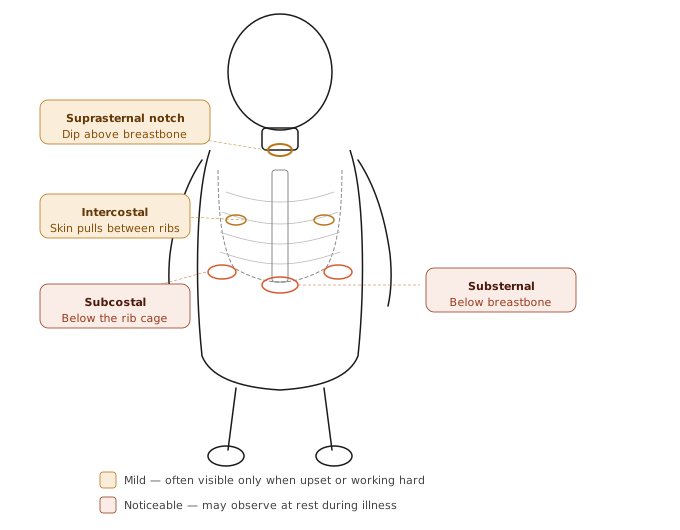
- Intercostal retractions look like the skin between the ribs sinks inward each time the baby breathes in.
- Subcostal retractions appear as a tugging or pulling-in of the skin just below the bottom edge of the ribcage with each breath.
- You may also notice pulling at the notch at the base of the throat above the breastbone — this is called suprasternal retraction.
- In some babies, the belly pushes outward while the chest pulls inward at the same time, creating a seesaw motion.
- Retractions are easiest to see from the side, looking across the baby's chest while the baby is calm or sleeping.
- Other signs that often appear alongside retractions include nostril flaring and faster-than-usual breathing.
What can parents do at home when they notice chest retractions?
- Stay calm — your calm presence helps keep your baby calm, which can ease breathing effort.
- Remove clothing from the chest so you can watch the breathing pattern clearly.
- Keep the baby in a comfortable, upright or slightly reclined position — avoid laying the baby completely flat if breathing seems labored.
- Use a bulb syringe or nasal aspirator to gently clear mucus from the nose, since babies breathe mainly through their noses.
- Offer small, frequent feedings — babies who are working hard to breathe may tire quickly during feeds.
- Keep the room air comfortable and avoid cigarette smoke, strong scents, or very dry air.
- Watch closely for changes — note whether the retractions are getting deeper, whether breathing is getting faster, or whether the baby seems more tired or less alert.
When should parents call the doctor or seek care?
- Call your child's doctor right away if you see retractions that do not go away within a few minutes or that are getting worse.
- Seek immediate emergency care if the skin turns blue or gray, especially around the lips, tongue, or fingernails.
- Seek emergency care if the baby stops breathing for more than 10 seconds.
- Seek emergency care if you hear grunting sounds with every breath out.
- Seek emergency care if the baby is too tired to cry or is difficult to wake.
- Seek emergency care if the baby refuses to eat or cannot swallow.
- Seek emergency care if breathing is very fast and does not slow down with rest.
- Babies under 3 months of age with any signs of breathing difficulty should be seen by a healthcare provider promptly.
- If you are unsure whether what you are seeing is serious, call your doctor or go to the emergency room — trust your instincts.