A 2-week-old pauses breathing for about 6 seconds during sleep, then starts again on their own. The baby has pink lips and relaxed limbs throughout. What is this?
Baby Stops Breathing for a Few Seconds (Periodic Breathing & Apnea)
When a baby pauses breathing for a few seconds, the brain's breathing control center is briefly resetting between breath cycles. This is called periodic breathing — clusters of breaths separated by short pauses of 3 to 10 seconds that repeat in a self-limiting pattern. The brain's breathing pacemaker is still maturing, so these brief gaps are a normal part of development, not a sign the baby has stopped breathing entirely.
When a baby pauses breathing for a few seconds, the brain's breathing control center is briefly resetting between breath cycles. This is called periodic breathing — clusters of breaths separated by short pauses of 3 to 10 seconds that repeat in a self-limiting pattern.
- Clinical term: Periodic Breathing and Apnea
- Parents often search for: baby stops breathing for a few seconds while sleeping, newborn pauses breathing sleep normal, periodic breathing vs apnea baby, baby holds breath while sleeping, newborn stops breathing briefly is it normal
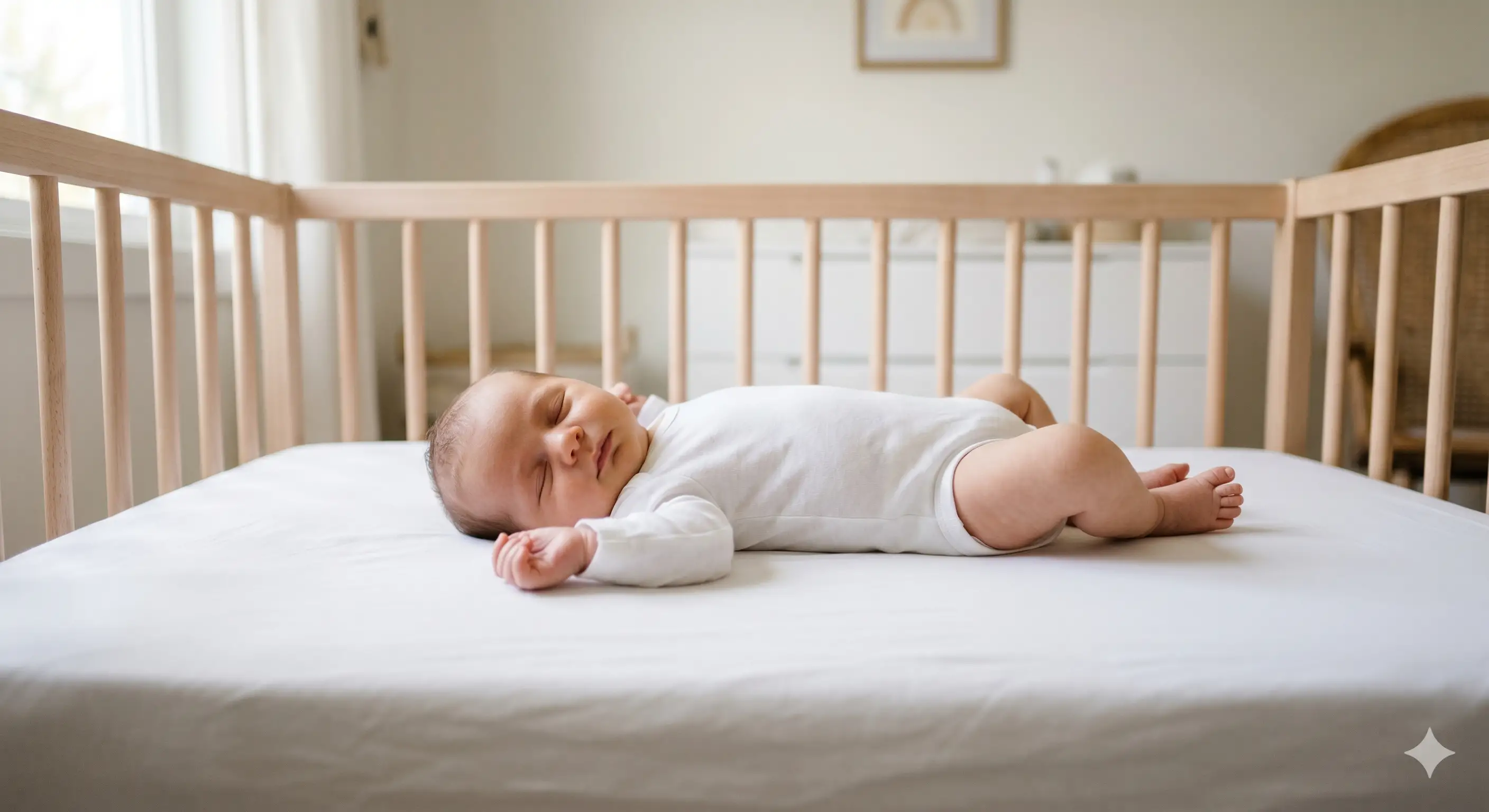
What does normal breathing look like in babies — and are pauses expected?
- Healthy newborns do not breathe in a smooth, steady rhythm like adults — instead, they breathe in bursts of faster breaths followed by slower ones, with brief pauses scattered throughout.
- These short pauses, typically lasting 3 to 10 seconds, are called periodic breathing — a pattern where the baby takes several breaths, pauses briefly, then starts again on its own.
- Periodic breathing is seen in up to 40% of healthy full-term newborns in the first weeks of life and is most common during active sleep.
- The pattern decreases naturally over the first few months as the brain's breathing control center matures, and it becomes uncommon by about 6 months of age.
- During these pauses, a healthy baby maintains normal skin color, does not turn blue or gray, and resumes breathing without any intervention.
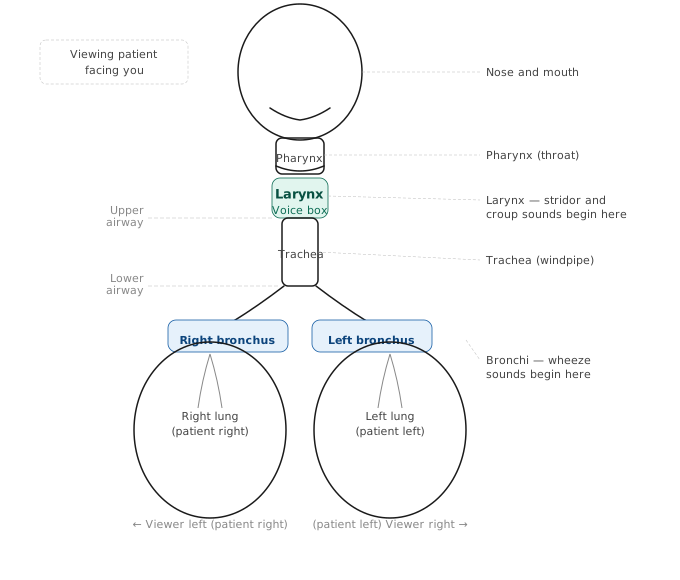
What causes breathing pauses in babies?
- The brain's breathing control center is not fully developed at birth — it sends signals to the lungs in an irregular rhythm, which causes the start-stop pattern parents observe.
- The sensors in the body that detect oxygen and carbon dioxide levels are still being calibrated — they sometimes overreact or underreact, causing the brain to briefly pause its breathing signal before correcting itself.
- Active sleep makes breathing more irregular because the brain is highly active during this stage — since newborns spend more than half their sleep time in active sleep, pauses are more frequent during sleep than when awake.
- Premature babies have more frequent and longer pauses because their brainstem is even less mature — the earlier a baby is born, the more common these pauses are.
- Other temporary triggers can include overheating, nasal congestion, or feeding — these can make pauses slightly more noticeable but do not usually make them dangerous in an otherwise healthy baby.
How can parents tell the difference between normal pauses and something more serious?
- Normal periodic breathing: the baby pauses for under 10 seconds, skin color stays pink, the baby does not go limp, and breathing restarts on its own without any stimulation.
- Concerning apnea: the baby stops breathing for 20 seconds or longer, or a shorter pause is accompanied by a color change — blue or gray lips, face, or body — a sudden drop in muscle tone, or a noticeable slowing of the heart rate.
- Watch the baby's overall appearance during the pause — a baby who pauses briefly but looks relaxed, has normal color, and resumes breathing smoothly is showing a normal developmental pattern.
- A baby who pauses and then needs to be touched, rubbed, or stimulated to start breathing again is showing a more concerning pattern that should be reported to the pediatrician.
- The number of pauses matters less than what happens during them — frequent short pauses with normal color are far less concerning than even one pause with a color change or limpness.
What can parents do at home when they notice breathing pauses?
- If the pause is under 10 seconds and the baby has normal color and resumes breathing on their own — observe calmly and do not intervene.
- This is normal periodic breathing.
- If a pause reaches 15 to 20 seconds, gently stimulate the baby by rubbing the back or feet — this is usually enough to restart breathing.
- Always follow safe sleep guidelines: place the baby on their back on a firm flat surface, keep the sleep area free of soft objects, and avoid overheating — these steps reduce the risk of breathing problems during sleep.
- Record a short video on your phone if you observe a concerning pause — showing the pediatrician exactly what you saw is far more helpful than a description alone.
- Keep a simple log of any pauses: how long they lasted, whether the baby needed stimulation, and what the baby's color was — this information helps the pediatrician assess the pattern.
When should parents call the doctor or seek emergency care?
- Call the pediatrician promptly if the baby has a pause lasting 20 seconds or more, even if the baby recovered on their own — this is called apnea of infancy and needs evaluation.
- Seek emergency care immediately if a breathing pause is accompanied by blue or gray color around the lips, tongue, or face, or if the baby becomes limp or unresponsive.
- Call emergency services if the baby does not resume breathing within 20 seconds despite gentle stimulation.
- Any premature baby with breathing pauses should be discussed with the neonatologist or pediatrician — premature babies have specific monitoring protocols and thresholds.
- A baby who has repeated pauses requiring stimulation to restart breathing, or any pause that causes a color change, should be evaluated promptly even if the baby currently appears well.