PediaPulse

Baby's Soft Spot Looks Sunken In (Fontanelle Depression)

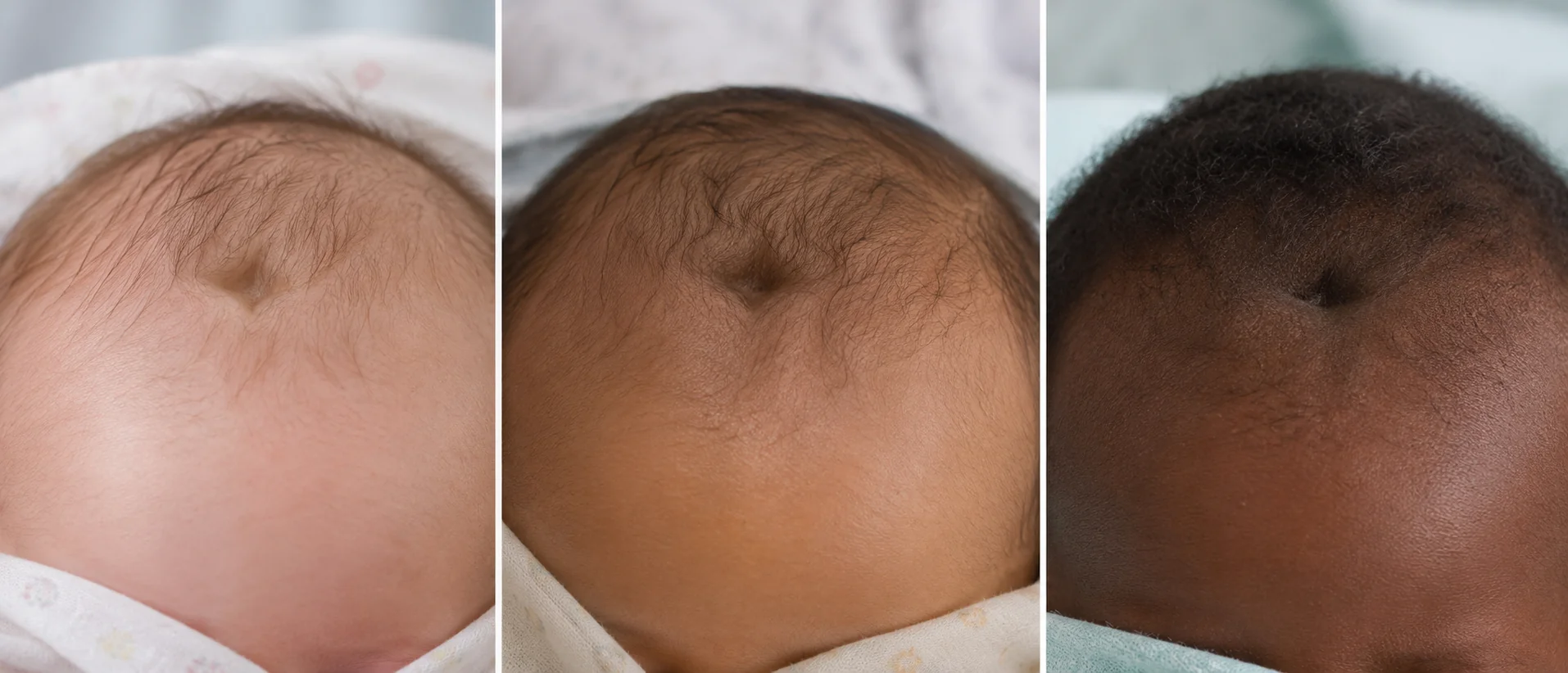
A baby's soft spot — called the fontanelle — is a flexible gap between skull bones that normally looks flat or slightly curved when the baby is calm and upright. When the body loses too much fluid, the soft spot dips inward — creating a visible or touchable dent. This sunken appearance is one of the signs pediatricians check when evaluating dehydration.
The top of a baby's head showing a visibly sunken soft spot — a sign of decreased fluid levels
Illustrative image.

What does a normal soft spot look and feel like?

  • Every baby is born with soft spots — the largest one sits toward the front top of the head and is the one parents can most easily see and feel
  • The average size of the front soft spot is about 2 centimeters across at birth, though it varies widely from baby to baby
  • A normal soft spot feels flat or very slightly curved and may pulse gently with the baby's heartbeat — this pulsing is completely normal
  • The soft spot naturally looks slightly different depending on position — it may appear a bit sunken when the baby is upright and a bit fuller when lying flat
  • The front soft spot typically closes between 12 and 18 months of age, with a median closure time around 13 to 14 months
  • Crying or straining can temporarily make the soft spot bulge outward — this is normal and should return to flat once the baby calms down
A top-down view of an infant head showing the location of the anterior and posterior fontanelles, the major suture lines, and how parents can find the soft spot by touch, for hydration observation education.AFFront of headBack of headLeftRightAnterior fontanelleThe main soft spotDiamond-shapedCloses 12–18 monthsPosterior fontanelleSmaller, at backCloses by 2–3 monthsCoronal sutureLambdoid sutureSagittal sutureHow to find the anterior fontanellePlace a clean fingertip at the very top center of the head — feel for a soft, slightly flexible diamond-shaped area

What causes the soft spot to sink inward?

  • The most common cause of a sunken soft spot in a sick baby is dehydration — when the body loses more fluid than it takes in, the fluid cushion around the brain decreases slightly and the soft spot dips
  • Fever, vomiting, diarrhea, or poor feeding can all lead to fluid loss that shows up as a sunken fontanelle
  • The soft spot acts like a pressure gauge for the inside of the head — less fluid means less pressure, which allows the soft tissue to sink inward
  • A mildly sunken soft spot can sometimes be seen in a healthy baby who is simply positioned upright or has not fed recently — context matters
  • In rare cases, a persistently sunken soft spot without illness could signal ongoing poor fluid intake or a feeding problem that needs attention
  • The opposite — a soft spot that bulges outward when the baby is calm and upright — can signal increased pressure inside the head and needs prompt medical attention
A simplified cross-section of a baby skull showing the anterior fontanelle soft spot at the top, with three comparison panels below showing sunken, flat, and bulging fontanelle appearances.Baby skull — anterior fontanelle (soft spot)BrainCSFAnterior fontanelleSoft spot — gap in skull boneCerebrospinal fluidCushions the brainSkull boneHow the fontanelle looks and feelsSunkenDips inwardPossible dehydrationTell the doctorFlat — normalLevel with skullSoft, not tenseReassuring sign ✓BulgingPushes outwardIncreased pressureSeek urgent care

What can parents observe at home when checking the soft spot?

  • Get familiar with what the soft spot normally looks and feels like when the baby is healthy, calm, and upright — this makes it much easier to notice a change during illness
  • Check the soft spot with the baby calm and in an upright position — checking while the baby is lying flat or crying can give a misleading reading
  • Increase feeding frequency at the first sign of a sunken soft spot during illness — more frequent breastfeeds or smaller, more frequent formula bottles help restore fluid levels
  • For babies over 6 months, a pediatric oral rehydration solution offered between regular feeds can help replace lost fluids and salts
  • Monitor the soft spot alongside other hydration clues — wet diapers, tears during crying, and mouth moisture — since no single sign tells the full story on its own

Check soft spot, mouth, tears, and wet diapers together

Combined hydration observation

Check each sign you can observe right now. This records what you see — it does not assess hydration status.

What does a sunken soft spot look like when it needs prompt attention?

  • A soft spot that looks noticeably sunken compared to its usual appearance during any illness with vomiting, diarrhea, or fever
  • A sunken soft spot combined with other dehydration signs — fewer wet diapers, dry mouth, no tears, or unusual sleepiness — increases the level of concern significantly
  • Any baby under 3 months with a sunken soft spot needs prompt evaluation — young babies dehydrate faster and have less reserve
  • A baby refusing feeds or keeping very little down with a soft spot becoming more sunken over hours needs medical evaluation
  • A soft spot that bulges outward when the baby is calm and upright — especially with fever, vomiting, or extreme irritability — needs urgent evaluation — call 911 if the baby is also unresponsive or limp

Log observations to share with your doctor

Log observations

Record what you observe over time — tears, mouth moisture, wet diapers, or other signs. This builds a timeline for a doctor visit without interpreting severity.

How do pediatricians evaluate and manage a sunken soft spot?

  • The doctor will examine the soft spot with the baby calm and upright, feeling for the level of tension and whether it sits below the surrounding bone edges
  • Pediatricians assess the soft spot as part of a full dehydration check that includes mouth moisture, tear production, skin turgor, capillary refill, and overall alertness
  • Research shows that a sunken fontanelle alone is not the most reliable single sign of dehydration — doctors use it in combination with other findings because multiple signs together are much more accurate
  • For mild dehydration, the doctor typically recommends increased feeding at home with close follow-up to confirm the soft spot returns to normal
  • For moderate to severe dehydration, the baby may receive supervised oral rehydration or intravenous fluids, and the doctor will recheck the fontanelle as fluid levels are restored
  • If the soft spot is bulging rather than sunken, the doctor may order imaging such as an ultrasound through the fontanelle to check for increased pressure inside the head

Prepare a handoff summary for the doctor

Build your caregiver handoff sheet

Share what you have already observed. The preview updates as you type. Nothing is saved on this page.

Symptoms to note (select all that apply)

Live preview

PediaPulse

Caregiver Handoff Sheet

Your handoff preview will appear here as you type.

Educational observation sheet only. This does not replace medical advice, an emergency action plan, or care from your child's clinician.

Check Your Understanding

Tap the answer that best fits each scenario.

A 4-month-old has had a fever for 12 hours and has been feeding less than usual. A parent checks the soft spot with the baby calm and sitting upright. The soft spot looks noticeably dipped inward compared to its usual flat appearance.

What does a noticeably sunken soft spot during fever and reduced feeding describe?

A parent checks a 6-month-old's soft spot while the baby is crying. The soft spot appears to bulge outward. After the baby calms down, the soft spot returns to flat.

What does temporary bulging during crying describe?

A 5-month-old has been vomiting for 4 hours. A parent checks the soft spot with the baby calm and upright — it appears sunken. The baby also has no tears when crying and has had only 1 wet diaper in the past 8 hours.

What does a sunken soft spot combined with no tears and only 1 wet diaper describe?