PediaPulse

Dry Diapers When Sick (Decreased Urine Output)

When a child is sick, the kidneys conserve water by making less urine — resulting in fewer wet diapers. This is the body's built-in signal that fluid going out is outpacing fluid going in. Tracking wet diaper count is one of the most reliable hydration observations a parent can make during illness.
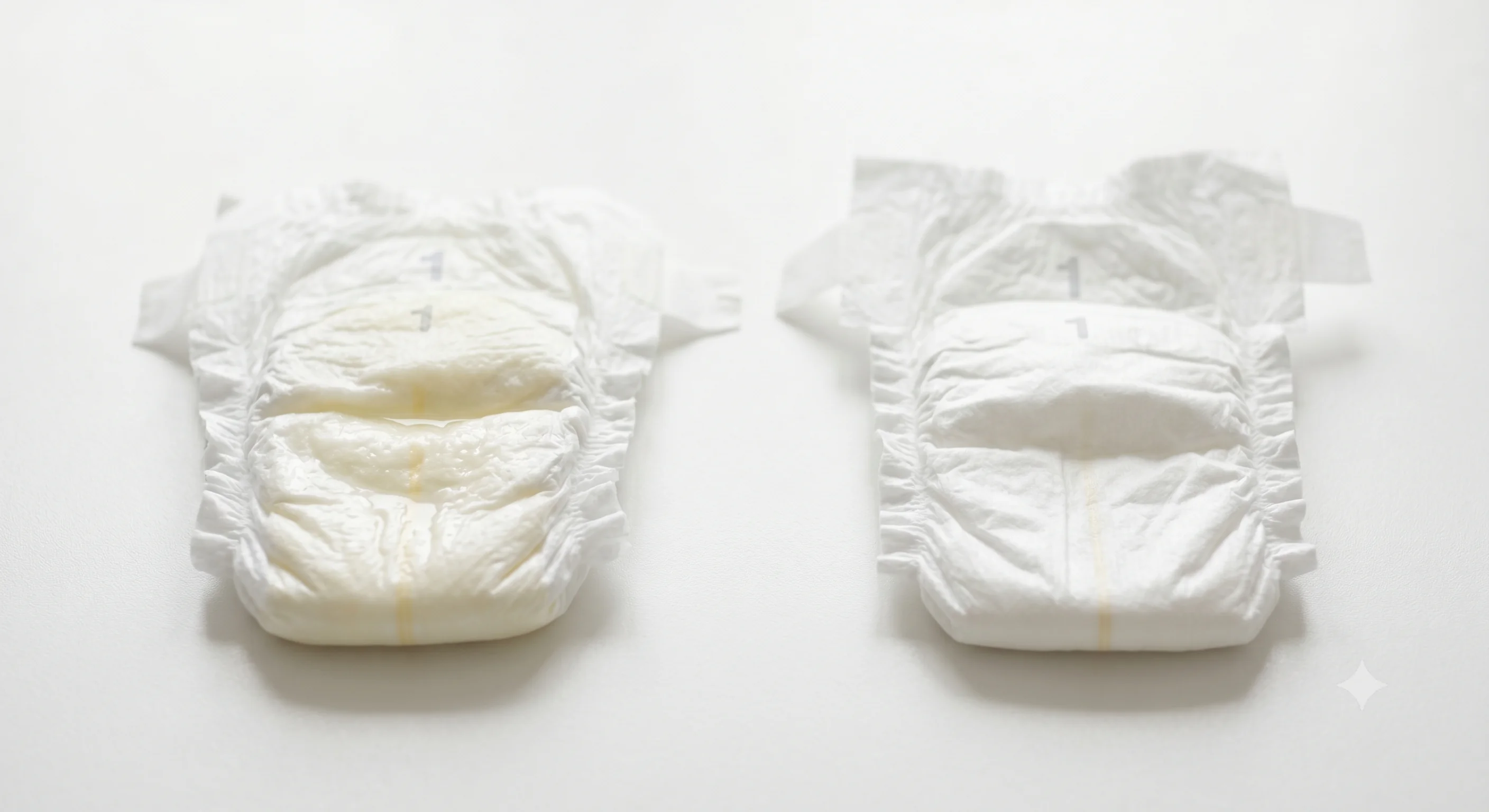
A side-by-side comparison of a wet and dry diaper showing the visible difference in weight and texture
Illustrative image.

What is a normal number of wet diapers in babies and toddlers?

  • Most healthy babies produce at least 4 to 6 wet diapers per day — newborns in the first week may have fewer as feeding is established, but by one week of age 6 or more wet diapers daily is typical
  • Toddlers in diapers generally wet 4 to 5 diapers per day, though the volume per diaper is larger than in younger babies because their bladders hold more fluid
  • Urine should be pale yellow or nearly clear — this color indicates the child is well-hydrated
  • Modern disposable diapers are very absorbent, which can make it harder to tell if a diaper is wet — placing a tissue or cotton ball inside the diaper can help detect small amounts of urine
  • During illness, a slight decrease in wet diapers is common and does not automatically mean dangerous dehydration — but a noticeable drop from the child's usual pattern is worth paying attention to
A visual bar chart showing the expected number of wet diapers per day for babies and young children at different ages, from newborn through toddler, helping parents recognize when diaper output has dropped below normal during illness.Expected wet diapers per day — by age10987654321Newborn0–1 month6–81–3 months5–73–6 months4–66–12 months3–5Toddler1–3 years3–4Concernbelow 3Wet diapers per dayNormal range for ageFewer than 3 diapers — tell your doctorDuring illness, track diapers across 24 hours and share the count with your pediatrician

What causes decreased urine output during illness?

  • Vomiting and diarrhea are the most common causes — the body loses large amounts of water and salts through the gut, and the kidneys respond by holding onto whatever fluid remains
  • Fever increases fluid loss through the skin and breathing — the higher the fever and the longer it lasts, the more fluid the body uses up without parents seeing it leave
  • Refusing to drink is a major contributor — a sore throat, mouth sores, nausea, or feeling too unwell to drink can cause a child to take in far less fluid than usual
  • Young children are especially vulnerable because they have a higher body surface area compared to their weight, meaning they lose proportionally more fluid than older children and adults
  • Sweating, fast breathing, and prolonged crying all increase fluid loss — when combined with reduced intake during illness, the balance tips quickly toward dehydration and the kidneys reduce urine production to compensate
A simplified diagram showing how the kidneys filter blood and produce urine, explaining why reduced urine output is the earliest sign of dehydration in babies and young children, with observable signs parents can track at home.Heart pumps bloodLeftkidneyRightkidneyBladderstores urineUrine outWell hydratedPale yellowor clear urineFrequent wetdiapersDehydratedDark yellow orstrong-smellingDry or fewerwet diapersKidneys conserve water when dehydrated — less urine is the body's earliest signal that fluid is lowBlood inBlood in

What can parents observe and do at home when wet diapers decrease?

  • Track wet diapers by writing down each change — having a count over 12 to 24 hours gives a clear picture of whether urine output is trending down and provides useful information if a doctor needs to be called
  • Offer small, frequent sips rather than large amounts at once — a sick child is more likely to keep down a teaspoon of fluid every few minutes than a full bottle or cup given all at once
  • For breastfed babies, offer the breast more frequently than usual — breast milk provides both hydration and nutrition and is generally well tolerated during illness
  • For toddlers, oral rehydration solutions available at pharmacies without a prescription are designed to replace both water and the essential salts lost during vomiting and diarrhea — these are more effective than plain water or juice for rehydration
  • Check urine color when changing diapers — dark yellow or amber-colored urine is an early sign the child needs more fluid, while pale or clear urine suggests hydration is adequate
  • Avoid large volumes of plain water in babies under 6 months — young babies get all their hydration from breast milk or formula, and too much plain water can dilute important minerals in the blood

Track wet diapers and urine output over 24 hours

Wet diaper diary

Record each wet diaper or bathroom trip with the time. This builds a 24-hour picture for a doctor visit — it does not assess hydration status.

What reduced diaper patterns need prompt attention?

  • Fewer than 4 wet diapers in 24 hours for a baby, or a toddler who has not urinated in 6 to 8 hours — a noticeable drop in urine output is one of the most reliable early signs of dehydration
  • Dry diapers combined with other warning signs — no tears when crying, a dry or sticky mouth, sunken-looking eyes, or a soft spot that looks noticeably dipped inward — describe a pattern worth prompt evaluation
  • Vomiting so frequent that the child cannot keep down even small sips for several hours — when nothing stays in, oral rehydration is not possible and medical evaluation may be needed
  • Any baby under 3 months with reduced wet diapers alongside a fever needs prompt medical evaluation — young babies can become dehydrated quickly and have less reserve to tolerate fluid loss
  • A child who is extremely sleepy, difficult to wake, limp, breathing fast, or has cold and mottled skin alongside very few wet diapers — these are signs of severe dehydration — call 911

Log observations to share with your doctor

Log observations

Record what you observe over time — tears, mouth moisture, wet diapers, or other signs. This builds a timeline for a doctor visit without interpreting severity.

How do pediatricians assess and manage decreased urine output?

  • The doctor will ask about the number of wet diapers over the past 12 to 24 hours and the time of the last wet diaper — this history is one of the first and most important pieces of information used to gauge hydration status
  • A physical exam checks for clinical signs of dehydration — the mouth and tongue for dryness, whether tears are present, the fontanelle in babies, and skin turgor by gently pinching the skin on the belly
  • Research shows that the presence of three or more clinical signs together — such as dry mouth, absent tears, and poor skin turgor — is more reliable than any single finding alone when assessing dehydration
  • For mild dehydration, the doctor will typically recommend oral rehydration at home with clear guidance on how much fluid to give, how often, and what signs should prompt a return visit
  • For moderate dehydration, oral rehydration may be done in the office or emergency room under supervision — small measured amounts of rehydration solution are given frequently over several hours
  • For severe dehydration or when a child cannot keep any fluids down, intravenous fluids are used to restore hydration quickly — blood tests may also be checked to measure electrolyte levels and kidney function

Prepare a handoff summary for the doctor

Build your caregiver handoff sheet

Share what you have already observed. The preview updates as you type. Nothing is saved on this page.

Symptoms to note (select all that apply)

Live preview

PediaPulse

Caregiver Handoff Sheet

Your handoff preview will appear here as you type.

Educational observation sheet only. This does not replace medical advice, an emergency action plan, or care from your child's clinician.

Check Your Understanding

Tap the answer that best fits each scenario.

A 7-month-old has had diarrhea for 10 hours. The baby usually has 5 to 6 wet diapers per day but has only had 2 today. The mouth looks slightly dry but the baby is still making tears when crying and is alert and responsive.

What does this pattern of reduced wet diapers describe?

A 3-week-old has not had a wet diaper in 7 hours. The baby also has a fever of 100.6°F and is feeding less than usual. The soft spot on top of the head looks slightly sunken inward.

What does this combination describe in a baby this young?

A 2-year-old with vomiting has had dark amber-colored urine in the last two diapers. The toddler is still awake and interactive but has been refusing all fluids for the past 3 hours.

What does dark amber urine alongside fluid refusal describe?