PediaPulse

Sunken Soft Spot in Newborns — Checking for Dehydration

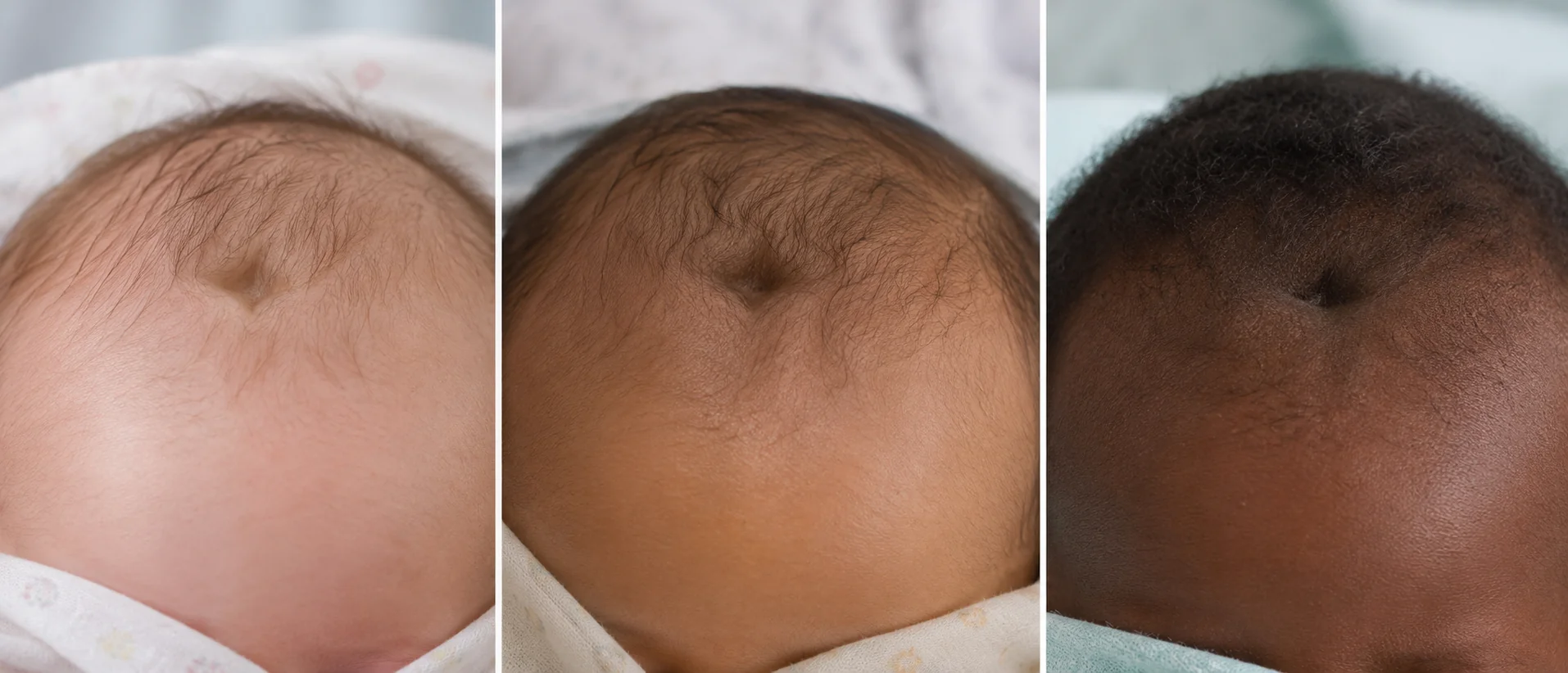
In newborns (birth to 28 days), the soft spot is large, open, and highly sensitive to fluid changes. Even a short period of poor feeding can cause the soft spot to dip noticeably. A sunken soft spot in a newborn is a more urgent signal than in an older baby and should prompt same-day medical evaluation.
The top of a newborn's head showing the location and appearance of the anterior fontanelle soft spot
Illustrative image.

Why is a sunken soft spot more urgent in newborns than in older babies?

  • Newborns have the largest and most open fontanelle relative to head size, making even small fluid shifts more visible at the soft spot
  • A newborn's total body fluid volume is tiny — a few missed feeds can create a noticeable deficit quickly
  • Newborns cannot show many other dehydration clues that older babies can — tear glands are not yet fully active, so absent tears is unreliable in the first few weeks
  • The immune system is immature, so any illness causing dehydration in a newborn carries a higher risk of serious infection
  • Feeding patterns are still being established — it can be harder to tell whether a newborn is getting enough milk, especially in the first days of breastfeeding
A top-down view of an infant head showing the location of the anterior and posterior fontanelles, the major suture lines, and how parents can find the soft spot by touch, for hydration observation education.AFFront of headBack of headLeftRightAnterior fontanelleThe main soft spotDiamond-shapedCloses 12–18 monthsPosterior fontanelleSmaller, at backCloses by 2–3 monthsCoronal sutureLambdoid sutureSagittal sutureHow to find the anterior fontanellePlace a clean fingertip at the very top center of the head — feel for a soft, slightly flexible diamond-shaped area

What should parents watch for and do at home when a newborn's soft spot looks sunken?

  • A soft spot that looks dipped inward when the newborn is calm and upright — especially combined with fewer than 4 wet diapers in 24 hours or dark-colored urine
  • Feed newborns at least 8 to 12 times per day — frequent feeds are the primary way to prevent and correct early dehydration in this age group
  • Learn what the soft spot looks and feels like during the first well-baby visit to have a personal baseline for comparison
  • Track feeding times and wet diapers in a simple log during the first weeks — this helps identify a drop in intake before the soft spot sinks noticeably
  • Any newborn under 28 days with a sunken soft spot — especially with fever, poor feeding, or excessive sleepiness — should be seen by a doctor the same day

Check soft spot, wet diapers, and feeding together

Combined hydration observation

Check each sign you can observe right now. This records what you see — it does not assess hydration status.

How do pediatricians evaluate and manage a sunken soft spot in newborns?

  • The doctor will feel the fontanelle with the newborn calm and upright, comparing its tension to what is expected for the baby's age
  • A full dehydration assessment includes checking mouth moisture, skin turgor, weight compared to birth weight, and diaper output history
  • Because newborns are at higher risk for serious bacterial infections, a fever or significant dehydration in this age group often leads to blood tests, urine tests, and sometimes a spinal fluid check to rule out infection
  • For mild dehydration, the doctor may observe the newborn feeding in the office to assess latch and intake, and recommend more frequent feeds with a weight recheck within 24 to 48 hours
  • For moderate to severe dehydration, newborns are typically admitted to the hospital for intravenous fluids and close monitoring

Prepare a handoff summary for the doctor

Build your caregiver handoff sheet

Share what you have already observed. The preview updates as you type. Nothing is saved on this page.

Symptoms to note (select all that apply)

Live preview

PediaPulse

Caregiver Handoff Sheet

Your handoff preview will appear here as you type.

Educational observation sheet only. This does not replace medical advice, an emergency action plan, or care from your child's clinician.

Back to Sunken Soft SpotView visual guide →

Check Your Understanding

Tap the answer that best fits each scenario.

A 10-day-old has had only 3 wet diapers in the past 24 hours. The usual count is 6 or more. A parent checks the soft spot with the baby calm and upright — it looks slightly dipped inward compared to the first few days.

What does a sunken soft spot with fewer wet diapers describe in a newborn this age?

A 3-week-old is feeding 7 to 8 times per day and has 6 wet diapers today. A parent notices the soft spot looks slightly sunken when checking while the baby is lying in a crib.

What does this soft spot observation describe?

A 2-week-old has a fever of 100.6°F and has been very sleepy — harder to wake for feeds than usual. The soft spot looks sunken when checked with the baby calm and upright.

What does a sunken soft spot with fever and difficulty waking describe in a newborn?