PediaPulse

Baby & Toddler Fever Guide: Temperature, Behavior, and Red Flags

Fever is one of the most common reasons parents worry. This guide explains what fever is, what causes it, what behavior changes to watch for, and how pediatricians think about fever in babies and young children.
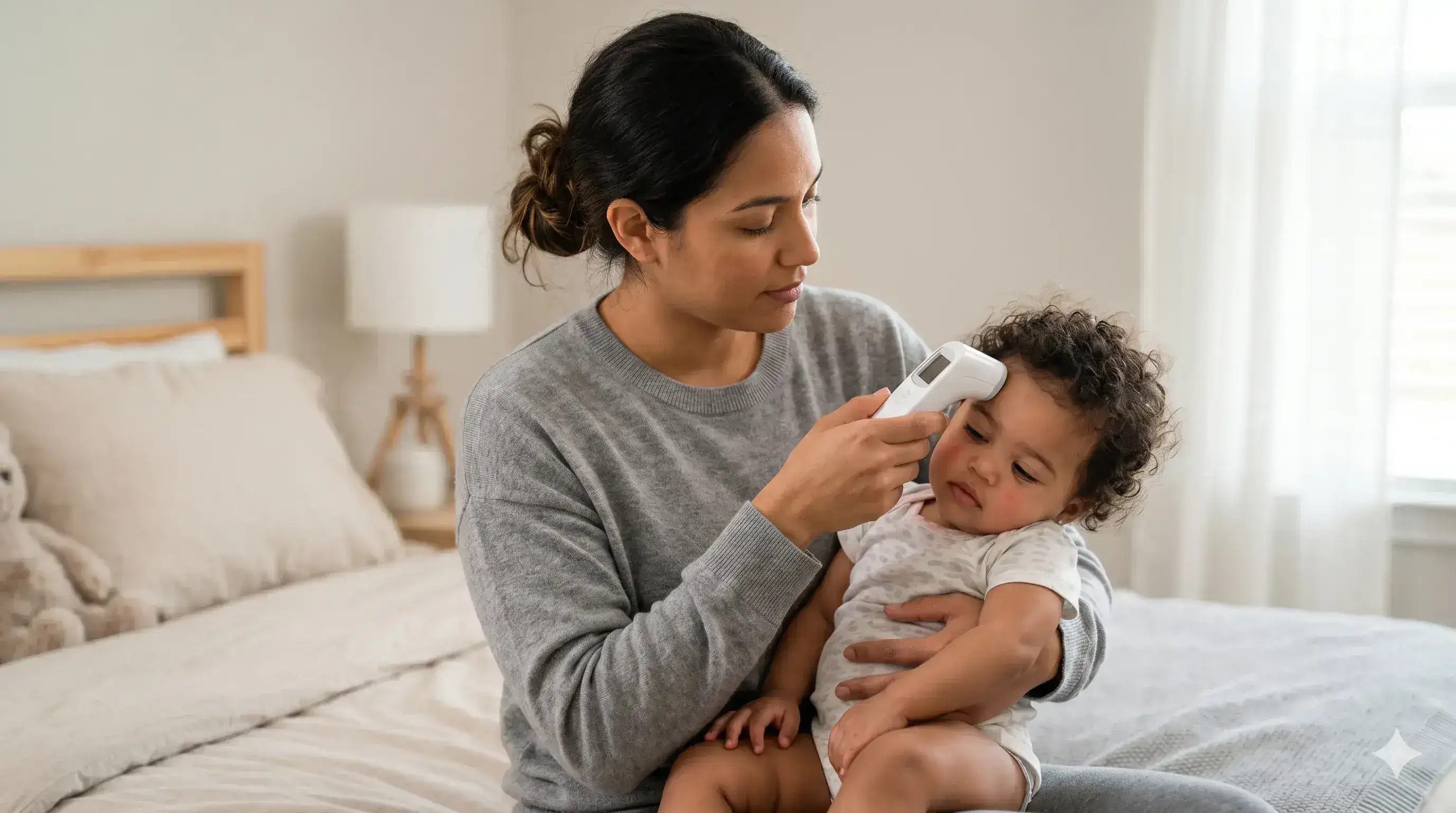

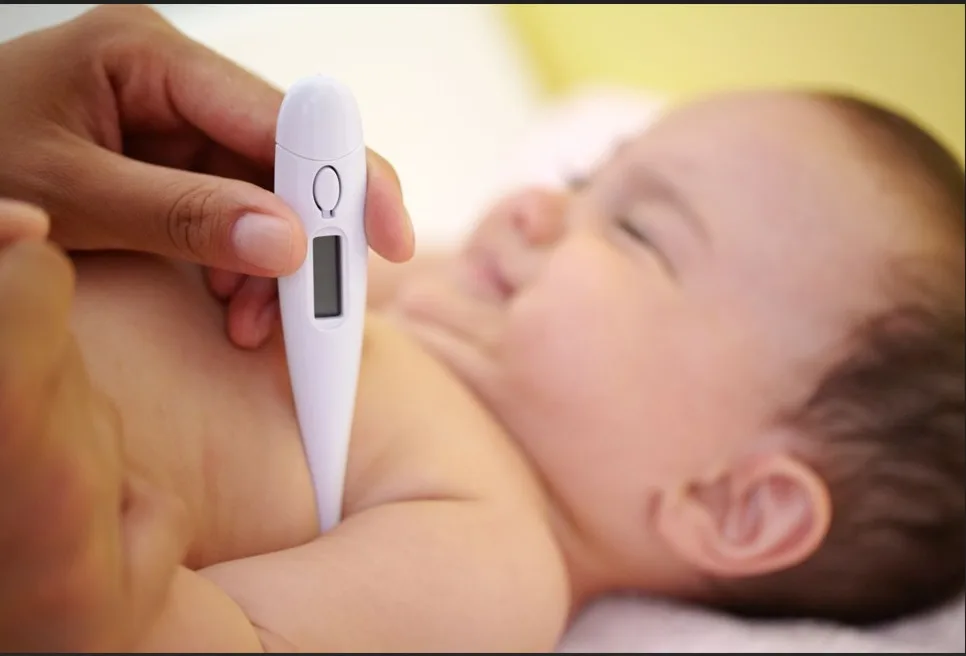
A parent holding a sick baby who appears unwell and feverish
Illustrative image.

Explore fever signs

What is a fever and what counts as a normal temperature in babies?

  • Normal body temperature in babies generally falls between 97.5°F and 99.5°F (36.4°C to 37.5°C)
  • A fever is a temperature of 100.4°F (38.0°C) or higher — this threshold applies at any age and by any method of measurement
  • Rectal thermometers are the most accurate method for babies and children under three years old
  • Body temperature naturally runs lower in the early morning and higher in the late afternoon
  • Activity, feeding, warm clothing, and warm baths can temporarily raise temperature without indicating illness
  • Armpit (axillary) readings tend to run about 0.5 to 1°F lower than rectal readings and may miss a low-grade fever
  • Ear thermometers work best in children over six months — small ear canals in younger babies can affect accuracy
  • A single slightly elevated reading does not always mean a child is sick — patterns and behavior matter more than one number
A reference table showing that the pediatric definition of fever is a rectal temperature of 100.4 degrees Fahrenheit or 38 degrees Celsius or higher across all age groups per AAP and ACEP guidelines while noting that clinical significance and urgency of evaluation vary by age.Fever — universal pediatric definition (AAP / ACEP)Rectal temperature ≥ 100.4°F (38.0°C) — this threshold applies to all age groupsAge groupFever thresholdBest methodClinical urgencyUnder 2 monthsNewborn≥ 100.4°F (38.0°C)Rectal thermometermost accurateHighest urgencyCall promptly2–6 monthsYoung infant≥ 100.4°F (38.0°C)Rectal or temporalartery thermometerHigh urgencyBehavior key6–24 monthsOlder infant≥ 100.4°F (38.0°C)Rectal temporalor axillaryWatch alertnessand feeding2–5 yearsToddler≥ 100.4°F (38.0°C)Temporal earor oralDuration andbehavior keyThe number is only one piece of informationBehavior appearance and feeding matter as much as the temperature readingAlways tell your pediatrician the exact reading the method used and the time taken

What causes fever in babies and young children?

  • Viral infections — such as colds, flu, and stomach bugs — are the most common cause of fever in young children
  • Fever is not an illness itself — it is the body's natural defense response to help fight infection
  • Bacterial infections, including ear infections and urinary tract infections (UTIs — infections of the bladder or kidneys), can also cause fever
  • Vaccines sometimes cause a mild, short-lived fever within 24 to 48 hours — this is a normal immune response
  • Teething may cause a very slight temperature rise, but temperatures at or above 100.4°F are not caused by teething alone
  • Overdressing or overheating a baby can temporarily raise body temperature
  • In very young babies under three months old, fever may be the only visible sign of a serious infection
  • Most fevers in children over three months with up-to-date vaccinations are caused by common viral illnesses
A front-facing infant body diagram showing what happens throughout the body during a fever with two legs the heart correctly shown on the patient anatomical left side and labels for brain temperature regulation increased heart rate skin flushing and cool hands and feet.Hypothalamusraises set pointHeartBrain signals feverRaises body temperatureHeart beats fasterCirculates heatSkin flushes redReleases heat outwardHands and feet coolBlood moves to coreAppetite decreasesEnergy for immune responseBreathing fasterMore oxygen for immune workMuscles may acheCytokines signal pain receptorsSweating increasesAs fever breaksFever is a sign the immune system is working — how the child acts matters as much as the number

What behavior changes might parents notice alongside fever?

  • A baby or child with fever may seem fussier, clingier, or more irritable than usual
  • Reduced appetite and decreased interest in feeding — including breast or bottle — are common during febrile illness
  • Increased sleepiness or unusual tiredness often accompanies fever, especially as the body fights infection
  • Some children become less active or less interested in play — others may remain active even with a fever
  • Faster breathing and a faster heartbeat are expected with fever — the heart rate may increase by about 10 beats per minute for each degree Celsius of temperature rise
  • Mild dehydration signs — such as fewer wet diapers, dry lips, or fewer tears when crying — may develop if fluid intake drops
  • Shivering or chills can occur as the body raises its temperature — sweating may follow as the fever breaks
  • How a child looks and behaves overall is often more informative than the exact number on the thermometer

How does your child seem right now?

Rate what you observe on each dimension. This records your observations — it does not score or judge them.

Alertness

Consolability

Activity level

What fever signs in babies should parents describe to a doctor promptly?

  • Any fever of 100.4°F (38.0°C) or higher in a baby younger than three months old requires same-day medical evaluation — regardless of how the baby appears
  • In babies three to six months old, a fever above 102°F (38.9°C) or any fever lasting more than one day is elevated
  • A child who is difficult to wake, appears limp or unresponsive, or refuses all fluids needs prompt evaluation
  • Fever combined with a rash that does not fade when pressed firmly with a finger — called a non-blanching rash — is a medical emergency — call 911
  • Fever combined with difficulty breathing, a stiff neck, or uncontrollable shaking needs urgent evaluation
  • Fever lasting more than three to five days — even if the child seems otherwise well — is worth describing to a pediatrician
  • Signs of dehydration alongside fever — no wet diapers for six or more hours, no tears, or a sunken soft spot on the head — add to the concern
  • The height of the fever alone does not predict how serious the illness is — a child's overall appearance and behavior matter more

What are you noticing?

Tap the card that best matches what you are seeing or wondering about during a fever.

How do pediatricians evaluate a child with fever?

  • Pediatricians assess the child's overall appearance, activity level, feeding, hydration, and behavior alongside the temperature reading
  • A thorough examination includes checking the ears, throat, lungs, belly, and skin for signs of infection
  • In very young babies — especially those under three months — blood tests, urine tests, and sometimes a test of the fluid around the brain and spine may be used to check for bacterial infection
  • Older children with a clear source of fever — such as an ear infection or sore throat — may not need additional testing
  • Pediatricians consider the child's age, vaccination history, and how long the fever has lasted when deciding on next steps
  • Fever itself is generally not treated to reach a specific number — the focus is on the child's comfort and identifying what is causing it
  • The goal of evaluation is to determine whether the fever is from a common viral illness or something that needs specific attention

Sick-day readiness check

Answer ten quick questions while your child is well. Your score helps you spot preparation gaps before the next illness.

1. Do you have a working thermometer that every caregiver can find?

2. Do you have an oral syringe or dosing cup for liquid medicines?

3. Are age-appropriate fluids your pediatrician approves easy to locate at home?

4. Could you write a brief plan of symptoms and medicines already given if illness started tonight?

5. Is your pediatrician's phone number saved and posted where caregivers can see it?

6. Do you know the after-hours nurse line or on-call number?

7. Is your preferred pharmacy number saved?

8. Are urgent care or backup clinic numbers posted if your pediatrician advised using them?

9. Do you have a written weight-based dosing reference from your last well visit (if your doctor provided one)?

10. Do you feel confident describing your child's symptoms if you needed to call the nurse line tonight?

Knowledge check

Test your observational skills — three quick scenarios.

Check Your Understanding

Tap the answer that best fits each scenario.

A 6-week-old feels warm to the touch. A parent takes a rectal temperature and reads 100.6°F. The baby is feeding and appears alert.

How would you describe this temperature reading?

A 10-month-old has had a fever of 101.8°F for two days. The baby is fussier than usual but is drinking fluids, producing wet diapers, and has no rash or breathing changes.

Which observations are most useful to describe to a doctor?

A 2-year-old develops a fever of 103°F and becomes very difficult to wake. When picked up the child feels unusually limp. The lips appear pale.

What does this combination of signs describe?

PediaPulse is an independent, visual educational initiative founded by Ebenezer Adebiyi, MD, MPH, FAAP. It is not affiliated with, endorsed by, or representative of the views or clinical practices of any hospital network or medical institution. Dr. Adebiyi's work on PediaPulse is strictly educational, does not constitute the establishment of a doctor-patient relationship, and does not provide medical advice or diagnostic triage. Always consult your child's physician for medical concerns. PediaPulse is a product of ProParenting Pulse LLC.