PediaPulse

Crying With No Tears (Dry Mouth and Absent Tears)

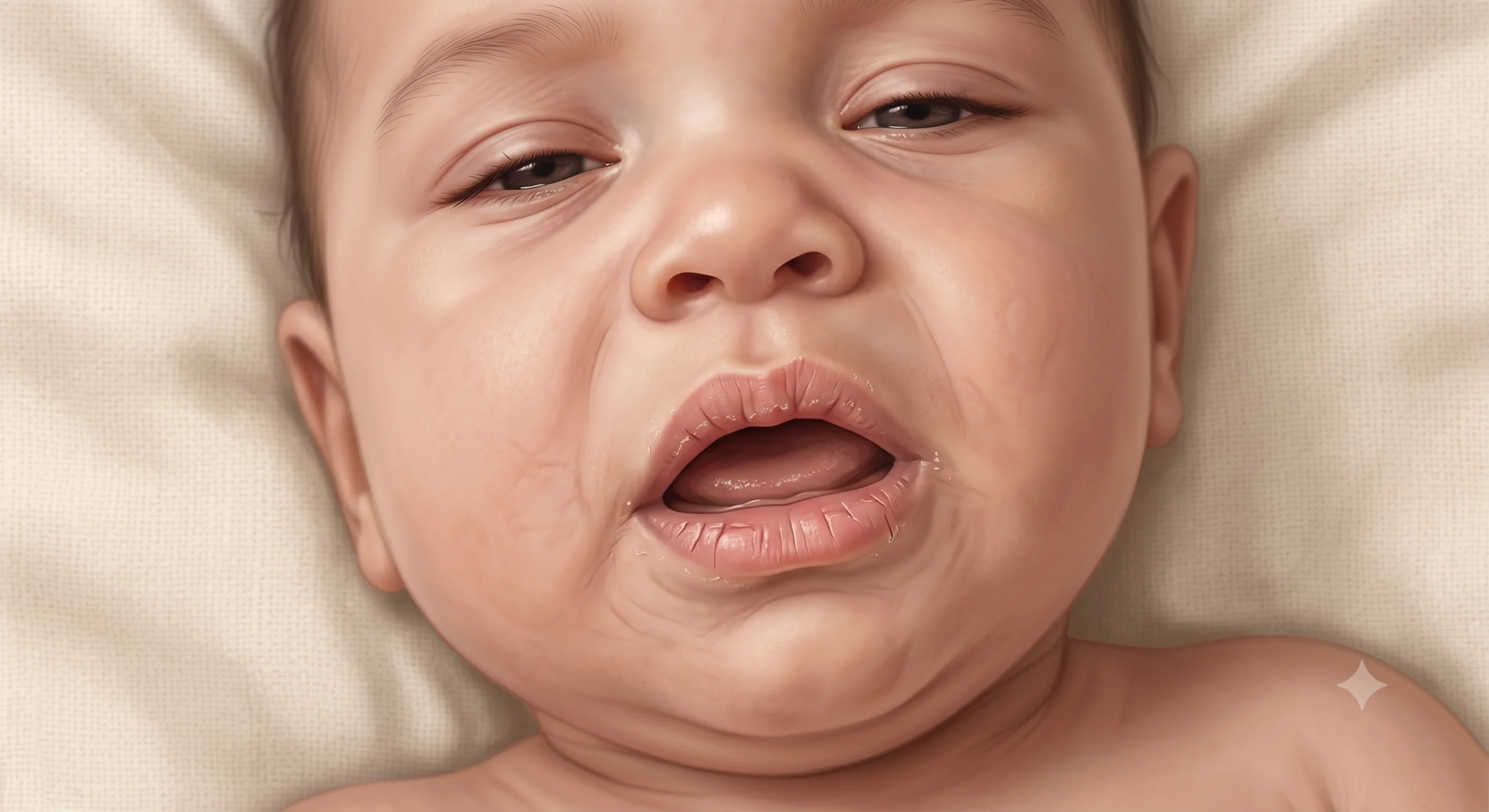
When a child cries without producing tears or has a noticeably dry, sticky mouth, the body is running low on fluid. Tear glands and saliva glands need adequate hydration to function. When fluid levels drop, the body prioritizes vital organs and reduces moisture to the eyes and mouth — making these some of the earliest visible signs of dehydration.
A sick baby with visibly dry cracked lips and a dry mouth — an early sign of dehydration
Illustrative image.

What is normal tear and saliva production in babies and toddlers?

  • Newborns often cry without tears for the first few weeks of life — tear glands are not fully active until around 2 to 4 weeks of age, and some babies do not produce visible tears until closer to 2 months
  • After that early period, healthy babies and toddlers should produce visible tears during a strong cry
  • A healthy child's mouth should look moist and glistening inside — the tongue and inner cheeks should appear wet, not sticky or dry
  • Saliva production is typically high in babies and toddlers, which is why drooling is so common — a noticeable decrease in drooling during illness can itself be a clue
  • Tear and saliva output naturally dip slightly during sleep, so the best time to check is when the child is awake and active
A side-view head diagram showing the location of the lacrimal (tear) glands and salivary glands, explaining how dehydration reduces tear production and saliva, leading to dry eyes and sticky mouth as observable signs for parents.LGPGSGLacrimal (tear) glandsProduce tears — dry up with dehydration→ crying with no visible tearsParotid glandLargest salivary glandMakes most of salivaSubmandibular + sublingualUnder the jaw and tongue→ sticky mouth when dryTear glands — LGSalivary glands — PG / SGBoth types of glands need water to work — reduced output of tears and saliva are early dehydration signsCheck: are there tears when crying? Is the mouth moist or sticky?

What causes tears and saliva to decrease during illness?

  • The most common cause in young children is dehydration — when the body loses more fluid than it takes in, it reduces output from tear glands and salivary glands to conserve water for essential organs
  • Fever speeds up fluid loss through sweating and faster breathing, which can lead to dry mouth and absent tears even before other dehydration signs appear
  • Vomiting and diarrhea drain fluid rapidly — if the child cannot keep enough liquid down, tear and saliva production drops quickly
  • Mouth breathing from nasal congestion can make the mouth appear dry even without true dehydration — but this type of dryness is limited to the lips and front of the mouth, while dehydration dries the entire inner mouth
  • Certain illnesses that cause mouth sores — like hand, foot, and mouth disease — may cause a child to drool less because swallowing is painful, which can look similar to dry mouth from dehydration
A front-facing infant body diagram showing all the routes through which a sick baby loses fluids, including vomiting, diarrhea, sweating, faster breathing, and fever, with labels explaining why each route matters during illness.BreathingWater vapor lost each breathVomitingLarge rapid fluid lossDiarrheaFluid not reabsorbedSweatingMore with feverUrine outputFirst sign fluid is lowSick babies lose fluid faster and need more — illness increases every loss route at onceSmall, frequent sips are the most effective way to replace fluid when a child is ill

What can parents observe and do at home when tears or saliva are reduced?

  • Check for tears during a strong cry and look inside the mouth for moisture — the tongue and inner cheeks should look wet, not sticky or dry — this is a quick daily hydration check during any illness
  • Increase fluid intake at the first sign of a dry mouth or reduced tears — for breastfed babies this means nursing more frequently; for older babies and toddlers, offering small frequent sips
  • Use a pediatric oral rehydration solution when early signs of dryness appear — it replaces both water and essential salts more effectively than plain water or juice
  • For toddlers who refuse to drink, offer fluids in creative ways — popsicles, ice chips, or a favorite cup can encourage intake
  • Keep a simple log noting whether tears were present during crying and whether the mouth looked moist — this helps track whether hydration is improving or worsening over hours
  • Run a cool-mist humidifier if nasal congestion is contributing to mouth dryness — this can help distinguish congestion-related dryness from true dehydration

Check mouth, lips, tears, and soft spot together

Combined hydration observation

Check each sign you can observe right now. This records what you see — it does not assess hydration status.

What does absent tears or dry mouth look like when it needs prompt attention?

  • A baby over 2 months old or a toddler who cries hard with no tears at all — absent tears is one of the most reliable early signs of moderate dehydration
  • A dry, sticky mouth that does not improve after offering fluids for an hour or two
  • No tears combined with other dehydration signs — fewer wet diapers, sunken eyes, sunken soft spot in babies, or unusual sleepiness
  • A child who refuses all fluids by mouth and whose mouth is becoming progressively drier
  • Dry mouth and absent tears appearing alongside persistent vomiting or diarrhea that has lasted more than several hours
  • Any baby under 3 months with a dry mouth or absent tears during illness needs prompt evaluation — young babies dehydrate faster and have less reserve

Log observations to share with your doctor

Log observations

Record what you observe over time — tears, mouth moisture, wet diapers, or other signs. This builds a timeline for a doctor visit without interpreting severity.

How do pediatricians evaluate and manage absent tears and dry mouth?

  • The doctor will check the inside of the mouth for moisture — looking at the tongue, inner cheeks, and gums — a truly dehydrated mouth looks dry and sticky throughout, not just on the lips
  • Tear production is assessed by observing whether the child produces tears during crying in the office — research shows absent tears is one of the most useful individual signs for identifying dehydration in children
  • The doctor combines tear and mouth findings with other signs — skin turgor, capillary refill, fontanelle position in babies, and urine output — because multiple signs together are more accurate than any single finding
  • For mild dehydration, pediatricians typically recommend supervised oral rehydration at home with a follow-up check
  • For moderate to severe dehydration, the child may receive oral rehydration in the office or emergency room, or intravenous fluids if unable to drink, along with possible blood tests to check electrolyte balance

Prepare a handoff summary for the doctor

Build your caregiver handoff sheet

Share what you have already observed. The preview updates as you type. Nothing is saved on this page.

Symptoms to note (select all that apply)

Live preview

PediaPulse

Caregiver Handoff Sheet

Your handoff preview will appear here as you type.

Educational observation sheet only. This does not replace medical advice, an emergency action plan, or care from your child's clinician.

Check Your Understanding

Tap the answer that best fits each scenario.

A 6-month-old has had a fever for 12 hours and has been feeding less than usual. When the baby cries hard, no tears appear. The inside of the mouth looks slightly dry and sticky when a parent checks.

What does crying with no tears and a dry sticky mouth describe?

A 2-year-old has a cold with significant nasal congestion and is breathing through the mouth. The lips look dry. When a parent looks inside the mouth, the tongue and inner cheeks appear moist and glistening.

What does this dry lip appearance most likely describe?

A 4-month-old has been vomiting for 3 hours. When crying, no tears are visible. The mouth looks dry and sticky. The baby has had one wet diaper in the past 8 hours.

What does this combination of signs describe?