PediaPulse

Baby Sunken Soft Spot With Diarrhea or Vomiting

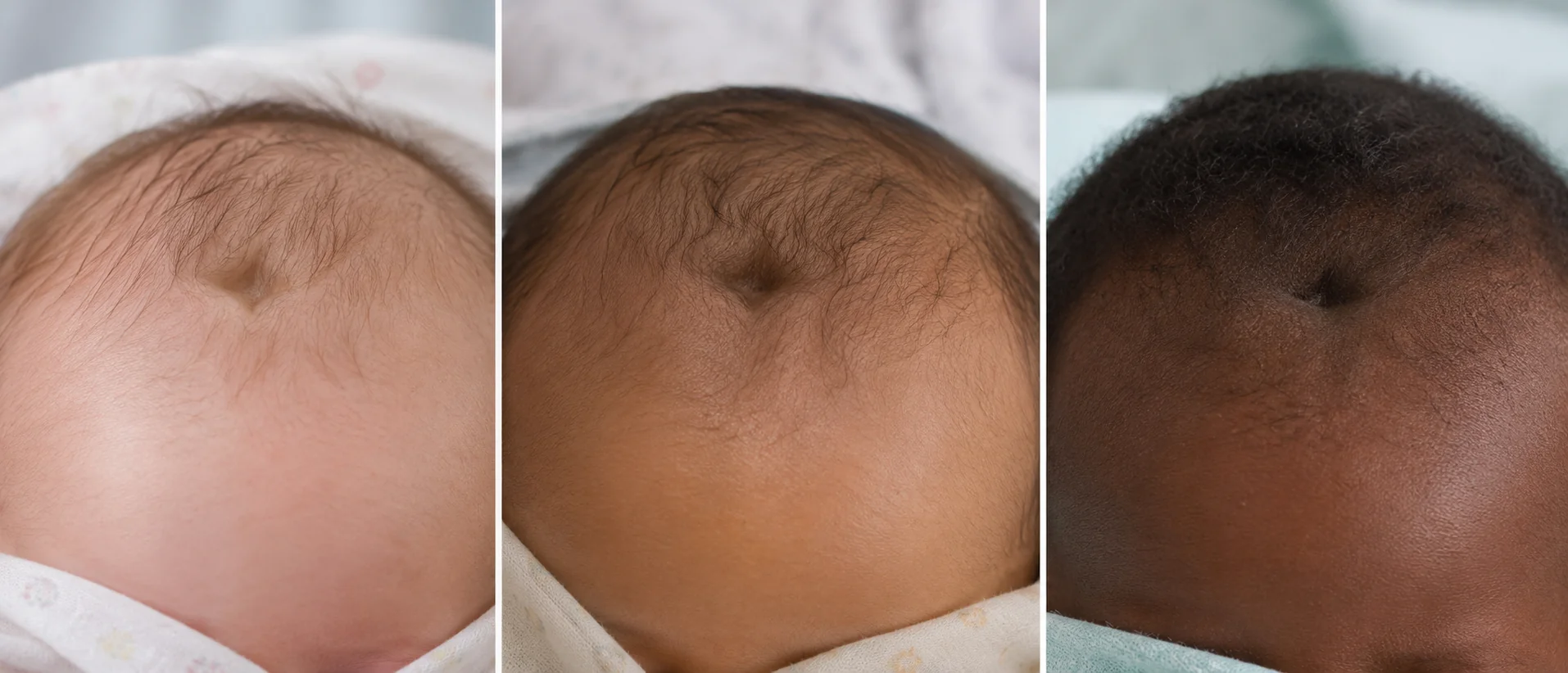
When a baby 1 to 12 months has diarrhea or vomiting and the soft spot begins to look sunken, fluid is leaving the body faster than it is being replaced. Diarrhea and vomiting are the most common causes of rapid dehydration in this age group, and the soft spot provides a visible early warning that fluid levels are dropping.
The top of a baby's head showing a sunken fontanelle during illness with diarrhea or vomiting
Illustrative image.

Why do diarrhea and vomiting make a sunken soft spot more concerning in babies?

  • Diarrhea and vomiting create a double drain — the baby loses fluid from the gut while also being unable to absorb new fluid effectively
  • Babies between 1 and 12 months have higher metabolic rates and proportionally more body water than older children, so fluid losses from illness show up faster
  • The soft spot is still open during this age range and responds visibly to drops in fluid volume — it acts as a real-time gauge that parents can check at home
  • Unlike a fever alone, which causes gradual fluid loss, a bout of vomiting or watery diarrhea can cause the soft spot to sink noticeably within hours
  • Babies this age still depend on breast milk or formula as their primary fluid source, and illness often reduces willingness to feed — making the deficit worse
A simplified cross-section of a baby skull showing the anterior fontanelle soft spot at the top, with three comparison panels below showing sunken, flat, and bulging fontanelle appearances.Baby skull — anterior fontanelle (soft spot)BrainCSFAnterior fontanelleSoft spot — gap in skull boneCerebrospinal fluidCushions the brainSkull boneHow the fontanelle looks and feelsSunkenDips inwardPossible dehydrationTell the doctorFlat — normalLevel with skullSoft, not tenseReassuring sign ✓BulgingPushes outwardIncreased pressureSeek urgent care

What should parents watch for and do at home when a baby has a sunken soft spot with diarrhea or vomiting?

  • A soft spot that looks more sunken than usual combined with 3 or more watery stools or 2 or more vomiting episodes in a few hours
  • Offer small, frequent feeds rather than large volumes — for breastfed babies, short nursing sessions every 1 to 2 hours; for formula-fed babies, smaller bottles more often
  • For babies over 6 months with ongoing losses, a pediatric oral rehydration solution offered in small sips between regular feeds helps replace both water and essential salts
  • If the baby is vomiting, use the syringe method — giving one teaspoon at a time every few minutes, which the stomach is more likely to keep down
  • Check the soft spot every few hours with the baby calm and upright alongside counting wet diapers — if the soft spot is sinking further or other signs are worsening, medical evaluation is needed
  • Breastfed babies should continue nursing throughout the illness — breast milk provides both hydration and nutrients

Check soft spot, mouth, tears, and wet diapers together

Combined hydration observation

Check each sign you can observe right now. This records what you see — it does not assess hydration status.

How do pediatricians evaluate and manage a sunken soft spot with diarrhea or vomiting?

  • The doctor will feel the fontanelle and assess it alongside mouth moisture, tear production, skin turgor, capillary refill, and the baby's overall alertness and energy
  • Research shows no single finding — including a sunken fontanelle — is reliable enough on its own to accurately grade dehydration severity — multiple signs together are required
  • For mild to moderate dehydration, clinical guidelines recommend oral rehydration solution given in measured amounts over 3 to 4 hours, with ongoing replacement of losses after each diarrheal stool or vomiting episode
  • For severe dehydration or when the baby cannot keep any fluids down, intravenous fluids are given to restore hydration quickly — blood tests may check electrolyte levels and kidney function
  • The doctor will recheck the fontanelle after rehydration — a soft spot that returns to its normal flat position is a reassuring sign that fluid levels have been restored

Prepare a handoff summary for the doctor

Build your caregiver handoff sheet

Share what you have already observed. The preview updates as you type. Nothing is saved on this page.

Symptoms to note (select all that apply)

Live preview

PediaPulse

Caregiver Handoff Sheet

Your handoff preview will appear here as you type.

Educational observation sheet only. This does not replace medical advice, an emergency action plan, or care from your child's clinician.

Back to Sunken Soft SpotView visual guide →

Check Your Understanding

Tap the answer that best fits each scenario.

A 6-month-old has had 4 watery diarrheal stools in the past 3 hours. A parent checks the soft spot with the baby calm and sitting upright — it looks noticeably more sunken than it did this morning. The baby last nursed 2 hours ago and accepted a short feed.

What does a more sunken soft spot after 4 watery stools describe?

An 8-month-old has been vomiting every 30 minutes for 2 hours. A parent tries offering breast milk — the baby vomits it back within minutes. The soft spot looks slightly sunken. The last wet diaper was 5 hours ago.

What does a sunken soft spot with vomiting after every feed describe?

A 4-month-old has had vomiting and diarrhea for 6 hours. The soft spot now looks deeply sunken. The baby is extremely sleepy and difficult to rouse for a feeding. No wet diaper in 8 hours.

What does a deeply sunken soft spot with extreme sleepiness and no wet diaper in 8 hours describe?