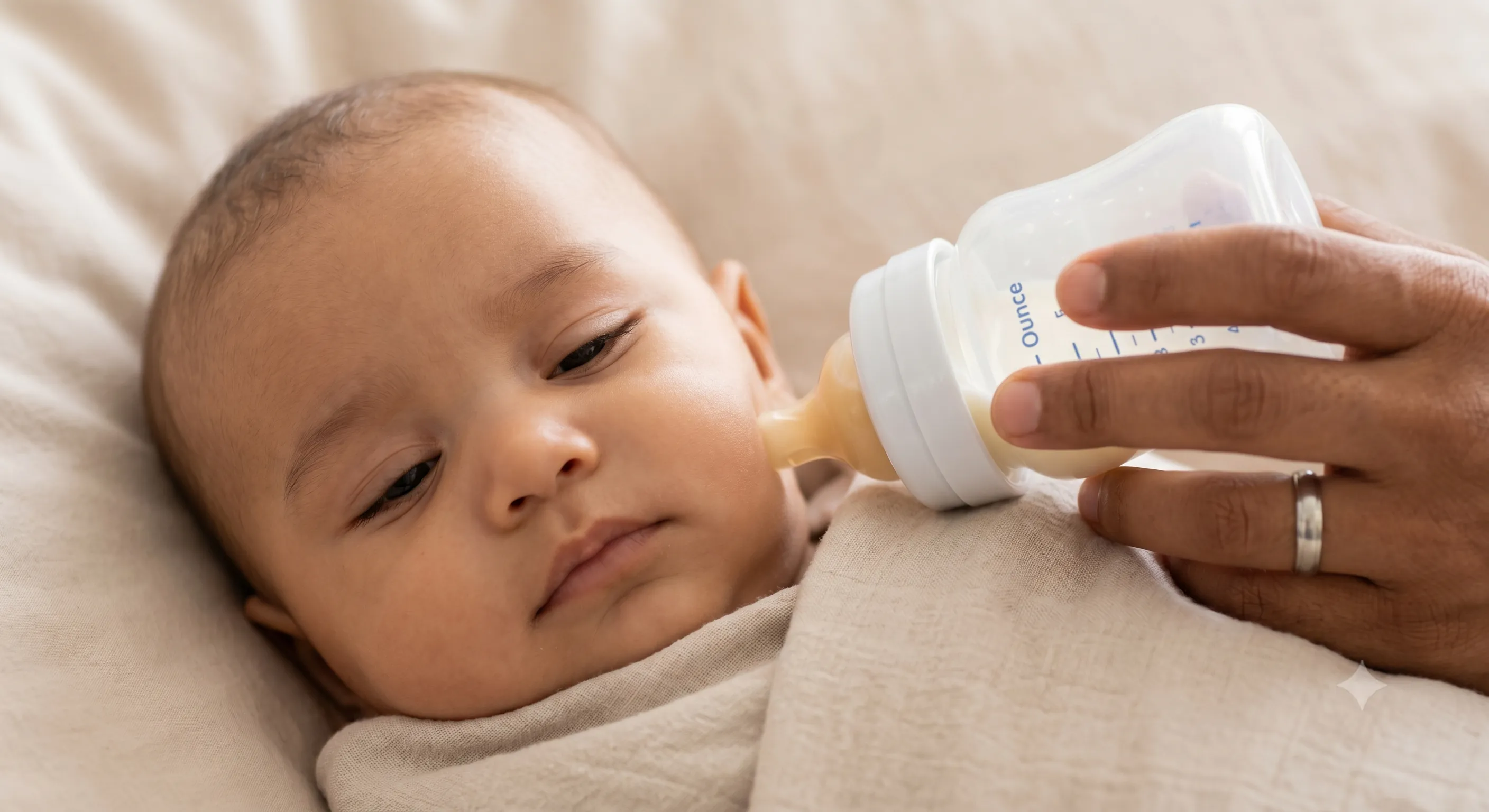
When a sick child refuses to drink, the body stops receiving the fluid it needs to fight infection, regulate temperature, and keep organs working. Children lose extra fluid during illness through fever, sweating, vomiting, or diarrhea. If fluid going out exceeds fluid coming in, dehydration begins — making decreased oral intake one of the most important warning signs to track during any childhood illness.
Illustrative image.
What is normal fluid intake for babies and toddlers?
Newborns and young babies get all their fluid from breast milk or formula — they typically feed 8 to 12 times per day in the first months of life
By 6 to 12 months, babies begin taking small amounts of water alongside breast milk or formula, but milk feeds remain the primary fluid source
Toddlers ages 1 to 3 generally drink a combination of milk, water, and small amounts of other fluids throughout the day — total daily fluid needs increase as body size grows
It is normal for a sick child to eat less food — appetite often drops during illness and usually returns as the child recovers
Fluid intake is different from food intake — maintaining fluids is far more important than maintaining solid food during illness
A mild decrease in drinking is common during the first day of illness, but a child who completely refuses all fluids for several hours is a greater concern
What causes a sick child to refuse fluids?
A sore throat or mouth sores — such as from hand, foot, and mouth disease — can make swallowing painful, causing the child to refuse even favorite drinks
Nausea and vomiting make children reluctant to drink because they associate swallowing with feeling worse or throwing up again
Nasal congestion forces mouth breathing, which makes it difficult for babies to suck on a bottle or breast and for toddlers to drink comfortably
Fever and general malaise cause fatigue and irritability — a child who feels miserable may simply lack the energy or interest to drink
Ear infections can cause pain with sucking and swallowing, leading babies to pull away from the bottle or breast after only a few sucks
Some medications or illness-related taste changes can make familiar fluids taste different, causing a toddler to reject drinks they normally enjoy
What can parents observe and try at home when a child refuses fluids?
Offer small, frequent sips rather than large amounts at once — a few teaspoons every few minutes is easier for a sick stomach to handle than a full cup
Try different temperatures and textures — cold fluids, room-temperature fluids, popsicles, ice chips, or frozen fruit bars may appeal when regular drinks do not
For breastfed babies, try shorter, more frequent nursing sessions rather than waiting for a full feed
Research has shown that for children with mild gastroenteritis, diluted apple juice followed by preferred fluids can be as effective as electrolyte solutions — offering a drink the child actually likes matters
Use a syringe, medicine dropper, or small spoon to get tiny amounts of fluid in when a child refuses a cup or bottle — even small volumes add up over time
Make a simple tally of how much fluid the child takes in over each hour — this helps see whether small sips are adding up to a meaningful amount
Track small sips and fluid intake over time
Small sips tracker
Log each small fluid offer with the time and amount. This shows a running total for a doctor visit — it does not assess hydration status.
What does fluid refusal look like when it needs prompt attention?
A child who has refused all fluids for more than a few hours, or is taking in only tiny amounts clearly not keeping up with losses
Fewer wet diapers than usual — for babies, fewer than 4 in 24 hours; for toddlers, no urination for 6 to 8 hours
Dehydration signs appearing alongside the fluid refusal — dry mouth, no tears during crying, sunken eyes, or unusual sleepiness
A child who vomits every time fluid is offered, making it impossible to keep anything down
Any baby under 3 months refusing feeds needs prompt evaluation — young babies have very small fluid reserves
A child with a sore throat or mouth sores so painful that even sips cause crying or complete refusal — pain may need to be addressed before the child will drink
Log fluid intake and observations to share with your doctor
Log observations
Record what you observe over time — tears, mouth moisture, wet diapers, or other signs. This builds a timeline for a doctor visit without interpreting severity.
How do pediatricians evaluate and manage fluid refusal?
The doctor will assess hydration status by checking mouth moisture, tear production, skin turgor, capillary refill, and overall alertness
Pediatricians look for the underlying cause of fluid refusal — examining the throat for redness or sores, checking the ears, and evaluating for abdominal tenderness
For mild dehydration with ongoing fluid refusal, the doctor may supervise oral rehydration in the office — giving measured amounts of fluid by syringe or spoon over a set period to see if the child tolerates it
If pain is the barrier to drinking, addressing the underlying cause of pain often allows the child to resume drinking
For moderate to severe dehydration or complete fluid refusal, intravenous fluids through a small needle in a vein may be given in the emergency room to restore hydration
The doctor will typically arrange a follow-up check within 24 hours for any child sent home with borderline hydration to confirm fluid intake has improved
Prepare a handoff summary for the doctor
Build your caregiver handoff sheet
Share what you have already observed. The preview updates as you type. Nothing is saved on this page.
Symptoms to note (select all that apply)
Live preview
PediaPulse
Caregiver Handoff Sheet
Your handoff preview will appear here as you type.
PediaPulse
Caregiver Handoff Sheet
No handoff information entered.
Check Your Understanding
Tap the answer that best fits each scenario.
A 10-month-old has had a fever for 12 hours and has been accepting breast milk but only for 2 to 3 minutes per feed instead of the usual 10 to 15 minutes. The baby has had 3 wet diapers today instead of the usual 5 to 6.
What does shorter nursing sessions with fewer wet diapers describe?
A 2-year-old has been refusing all fluids for 4 hours during a stomach bug. A parent tries water, juice, and a favorite cup — all refused. The parent then offers a popsicle and the toddler accepts it and eats most of it.
What does this situation describe?
A 5-month-old has been refusing the bottle for 6 hours. The baby has had no wet diaper in 7 hours. When crying, no tears appear. The baby is also unusually sleepy and hard to rouse.
What does complete bottle refusal with no wet diaper, no tears, and unusual sleepiness describe?
Freedman SB, Willan AR, Boutis K, et al. Effect of dilute apple juice and preferred fluids vs electrolyte maintenance solution on treatment failure among children with mild gastroenteritis. JAMA. 2016;315(18):1966-1975.
Steiner MJ, DeWalt DA, Byerley JS. Is this child dehydrated? JAMA. 2004;291(22):2746-2754.
Ebenezer Adebiyi, MD, MPH, FAAP
Board-Certified Pediatrician · FAAP · Founder of PediaPulse
Dr. Adebiyi built PediaPulse to help parents understand what they are observing so they can have better, more informed conversations with their own doctors.