PediaPulse

Baby Hasn't Had a Wet Diaper in 6 Hours

Babies under 12 months typically produce 4 to 6 wet diapers per day. No wet diaper in 6 or more hours during illness signals that fluid intake is not keeping up with losses. Babies have smaller fluid reserves than older children and can become dehydrated more quickly.
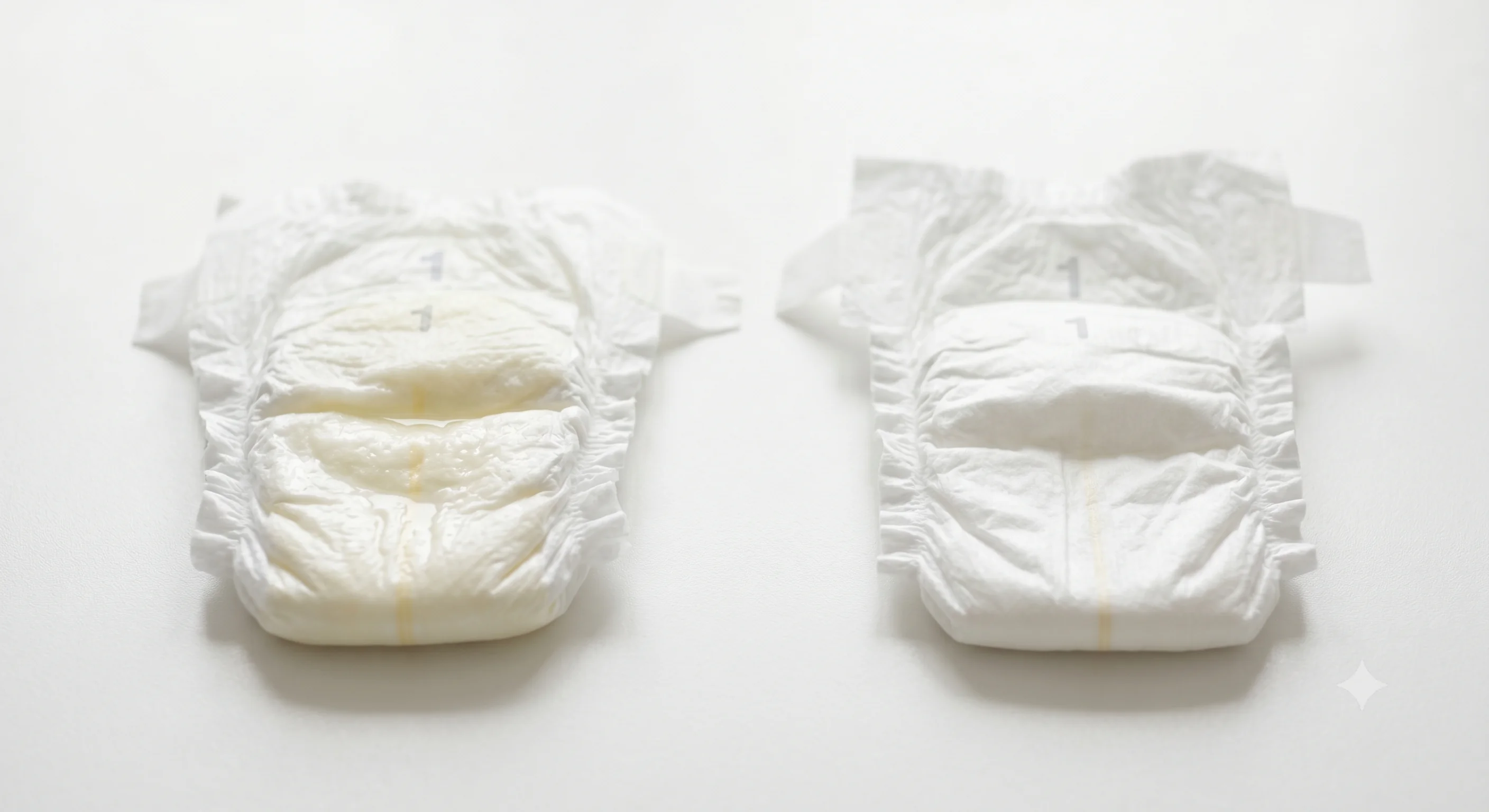
A side-by-side comparison of a wet and dry diaper showing the visible difference in weight and texture
Illustrative image.

Why do babies under 12 months dehydrate faster than older children?

  • Babies have a higher body surface area relative to their weight, so they lose fluid through the skin and breathing faster than toddlers
  • Babies depend entirely on breast milk or formula for hydration — they cannot ask for a drink or help themselves to fluids
  • A baby's kidneys are still maturing and are less efficient at concentrating urine, meaning they need a steady fluid supply to maintain normal output
  • The fontanelle — the soft spot on top of the head — provides an extra visual clue that is unique to babies whose fontanelle has not yet closed; a noticeably sunken fontanelle during illness suggests fluid loss
  • Six hours without a wet diaper in a baby is a more urgent signal than the same gap in a toddler, because babies have less total body fluid to spare
A visual bar chart showing the expected number of wet diapers per day for babies and young children at different ages, from newborn through toddler, helping parents recognize when diaper output has dropped below normal during illness.Expected wet diapers per day — by age10987654321Newborn0–1 month6–81–3 months5–73–6 months4–66–12 months3–5Toddler1–3 years3–4Concernbelow 3Wet diapers per dayNormal range for ageFewer than 3 diapers — tell your doctorDuring illness, track diapers across 24 hours and share the count with your pediatrician

What should parents watch for when a baby has no wet diaper for 6 hours?

  • No wet diaper for 6 or more hours combined with a dry or sticky mouth, no tears when crying, or sunken-looking eyes
  • A soft spot on the head that appears noticeably dipped inward when the baby is calm and upright
  • A baby who is unusually sleepy, difficult to wake, or feels limp — these signs suggest significant fluid loss
  • Refusing to feed or only taking very small amounts before pulling away
  • Dark yellow or amber-colored urine in the diaper, or a strong smell — signals the kidneys are conserving water
  • Any baby under 3 months with no wet diaper and a fever of 100.4°F or higher needs prompt medical evaluation

Track wet diapers over 24 hours

Wet diaper diary

Record each wet diaper or bathroom trip with the time. This builds a 24-hour picture for a doctor visit — it does not assess hydration status.

Baby (under 12 months): 4 to 6 wet diapers per day is typical for babies under 12 months.

Observation Summary

Age group: Baby (under 12 months). Reference: 4 to 6 wet diapers per day is typical for babies under 12 months.

Why Pediatricians Ask About This

Wet diaper and void counts give your pediatrician objective data about fluid output over time. Counts paired with brief notes help distinguish a busy day from a day when output truly seemed lower than usual.

Other Things Parents Often Notice

  • Urine color (pale, yellow, or darker) noted on individual entries
  • Whether diapers felt lighter or less saturated than usual
  • Timing of last wet diaper relative to feeds or fluids offered
  • For toilet-trained children, how many bathroom trips included urination

Share this observation with your child's pediatrician.

How do pediatricians generally evaluate and manage this in babies?

  • The doctor will ask how many wet diapers the baby has had in the past 12 to 24 hours and the exact time of the last wet diaper
  • A physical exam checks the mouth for dryness, whether tears are present, fontanelle position, skin turgor, and overall alertness
  • Research shows that three or more dehydration signs together — such as dry mouth, absent tears, and poor skin turgor — are more reliable than any single finding alone
  • For breastfed babies, doctors commonly recommend nursing more frequently — shorter, more frequent feeds help the baby absorb fluid steadily
  • For formula-fed babies, pediatricians often suggest offering smaller, more frequent bottles rather than waiting for the usual feeding schedule
  • For moderate to severe dehydration, intravenous fluids through a small needle in a vein may be used if the baby cannot keep fluids down

Prepare a handoff summary for the doctor

Build your caregiver handoff sheet

Share what you have already observed. The preview updates as you type. Nothing is saved on this page.

Symptoms to note (select all that apply)

Live preview

PediaPulse

Caregiver Handoff Sheet

Your handoff preview will appear here as you type.

Educational observation sheet only. This does not replace medical advice, an emergency action plan, or care from your child's clinician.

Back to Dry Diapers When SickView visual guide →

Check Your Understanding

Tap the answer that best fits each scenario.

A 5-month-old has been vomiting since this morning. It is now early afternoon and the baby has not had a wet diaper in 7 hours. The baby's mouth looks dry and no tears appeared when the baby cried.

What does this combination describe?
A 3-month-old has a fever of 101°F. The baby has had only 2 wet diapers today instead of the usual 5 or 6. The baby is still making tears when crying and accepted a feeding 2 hours ago.

What does reduced wet diaper count with fever describe in a baby this age?

A 9-month-old with diarrhea has had amber-colored urine in the last diaper. The last wet diaper was 5 hours ago. The baby is alert, making eye contact, and accepted some breast milk 30 minutes ago.

What does dark urine 5 hours after the last wet diaper describe?