PediaPulse

Baby Crying Without Tears — A Key Dehydration Sign

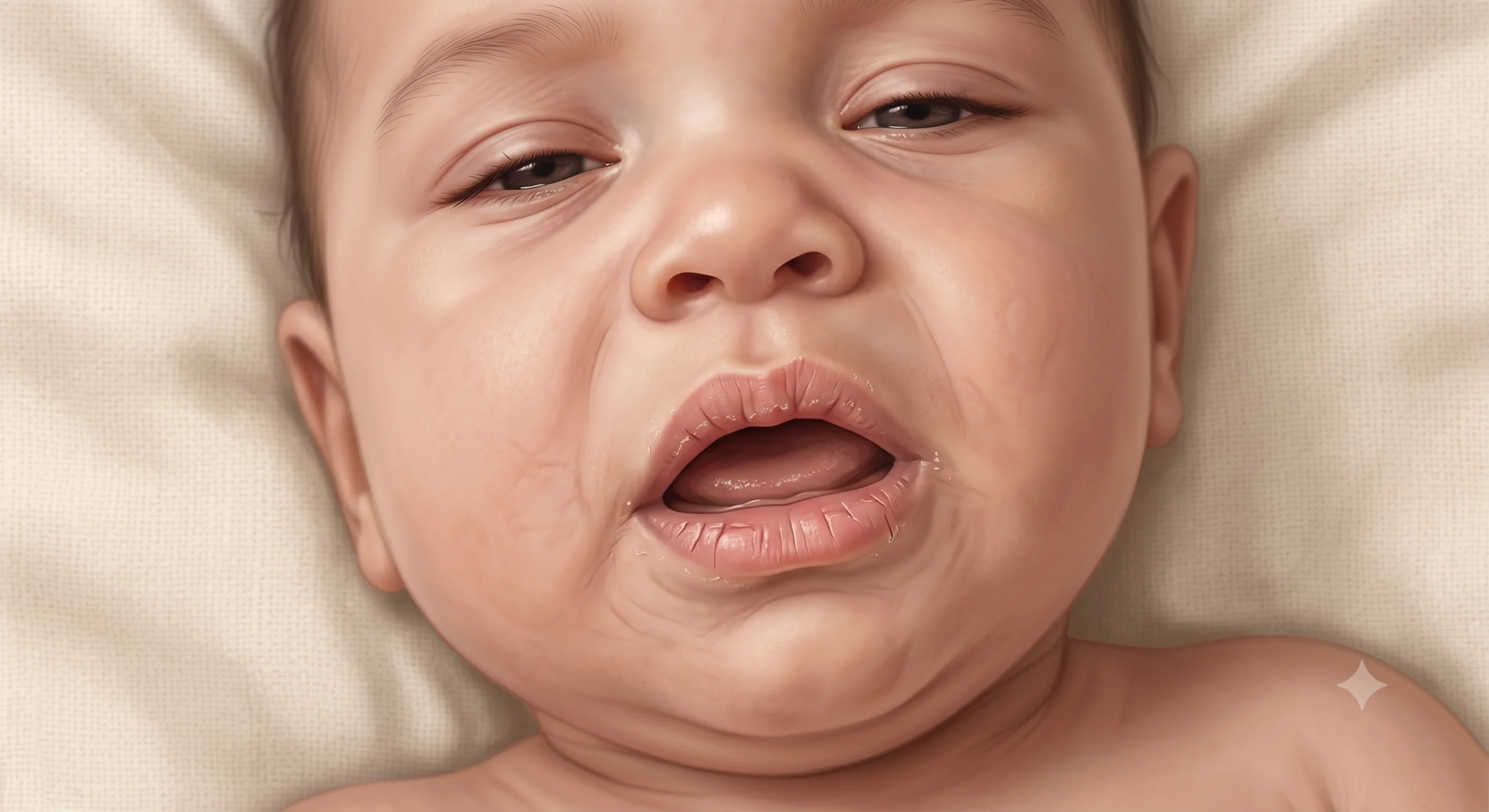
Babies older than about 2 months should produce visible tears when crying hard. No tears during a strong cry in a sick baby is one of the earliest and most reliable signs the body is running low on fluid. In babies under 2 months, absent tears alone is harder to interpret — but combined with dry mouth or fewer wet diapers, it still raises concern.
A sick baby crying without visible tears — an early sign of dehydration
Illustrative image.

Why is absent tears during crying different in babies than in older children?

  • Tear glands in newborns are immature — many babies do not produce visible tears until 2 to 4 weeks of age, and some not until closer to 2 months, making this sign unreliable in the earliest weeks
  • Once tear glands are active, absent tears during a strong cry becomes one of the most useful single signs of dehydration in babies
  • Babies depend entirely on breast milk or formula for hydration — they cannot ask for a drink or seek fluids on their own
  • Babies have a higher body surface area relative to their weight, so they lose fluid through skin and breathing faster than toddlers
  • A baby's smaller total fluid volume means even a few hours of poor feeding during illness can reduce tear and saliva production noticeably
A side-view head diagram showing the location of the lacrimal (tear) glands and salivary glands, explaining how dehydration reduces tear production and saliva, leading to dry eyes and sticky mouth as observable signs for parents.LGPGSGLacrimal (tear) glandsProduce tears — dry up with dehydration→ crying with no visible tearsParotid glandLargest salivary glandMakes most of salivaSubmandibular + sublingualUnder the jaw and tongue→ sticky mouth when dryTear glands — LGSalivary glands — PG / SGBoth types of glands need water to work — reduced output of tears and saliva are early dehydration signsCheck: are there tears when crying? Is the mouth moist or sticky?

What should parents watch for and do at home when a baby cries without tears?

  • No tears during a hard cry combined with a dry or sticky mouth, fewer wet diapers, or a sunken soft spot signals the baby needs more fluid
  • Increasing feeding frequency helps — shorter, more frequent breastfeeds or smaller, more frequent formula bottles help the stomach absorb fluid steadily
  • For babies over 6 months, a pediatric oral rehydration solution offered between regular feeds can help when early dryness signs appear
  • Check the inside of the mouth between feeds — the tongue and inner cheeks should look wet and glistening, not tacky or dry
  • Keep a simple log of feeding times, wet diapers, and whether tears were present — this gives the pediatrician a clear picture if a call or visit is needed
  • Any baby under 3 months with absent tears during illness needs prompt evaluation — young babies dehydrate faster and have less reserve

Check mouth, lips, tears, and soft spot together

Combined hydration observation

Check each sign you can observe right now. This records what you see — it does not assess hydration status.

How do pediatricians evaluate and manage absent tears in babies?

  • The doctor will observe whether the baby produces tears during crying in the office — research shows this is one of the most accurate individual signs for detecting dehydration in young children
  • A physical exam checks the mouth for moisture, the fontanelle for sunkenness, skin turgor by gently pinching belly skin, and overall alertness
  • Doctors combine multiple signs together because no single finding is perfectly reliable — three or more dehydration signs together significantly increase diagnostic accuracy
  • For mild dehydration, pediatricians typically recommend more frequent feeds at home with close monitoring and a follow-up check
  • For moderate to severe dehydration, the baby may receive supervised oral rehydration or intravenous fluids through a small needle in a vein, and blood tests may check electrolyte levels

Prepare a handoff summary for the doctor

Build your caregiver handoff sheet

Share what you have already observed. The preview updates as you type. Nothing is saved on this page.

Symptoms to note (select all that apply)

Live preview

PediaPulse

Caregiver Handoff Sheet

Your handoff preview will appear here as you type.

Educational observation sheet only. This does not replace medical advice, an emergency action plan, or care from your child's clinician.

Back to Crying With No TearsView visual guide →

Check Your Understanding

Tap the answer that best fits each scenario.

A 3-month-old has had a fever for 24 hours and has been feeding less than usual. When the baby cries hard, a parent watches carefully and sees no tears at all. The inside of the mouth looks slightly sticky.

What does crying with no tears and a sticky mouth describe in a baby this age?

A 5-week-old cries hard but produces no visible tears. The baby is feeding normally, has 6 wet diapers today, and the mouth looks moist and glistening.

What does absent tears describe in a baby this young with reassuring other signs?

A 7-month-old has been vomiting for 4 hours. The baby cries hard but no tears appear. The soft spot on top of the head looks slightly sunken inward. The last wet diaper was 7 hours ago.

What does this combination describe?