PediaPulse

Sick Baby Refusing Bottle or Breast — Hydration Baselines

Babies under 12 months depend entirely on breast milk or formula for hydration. When a sick baby refuses to feed, fluid reserves can drop within hours. A healthy baby typically feeds 8 to 12 times daily — any significant drop below half of normal intake during illness is a signal to monitor closely and act quickly.
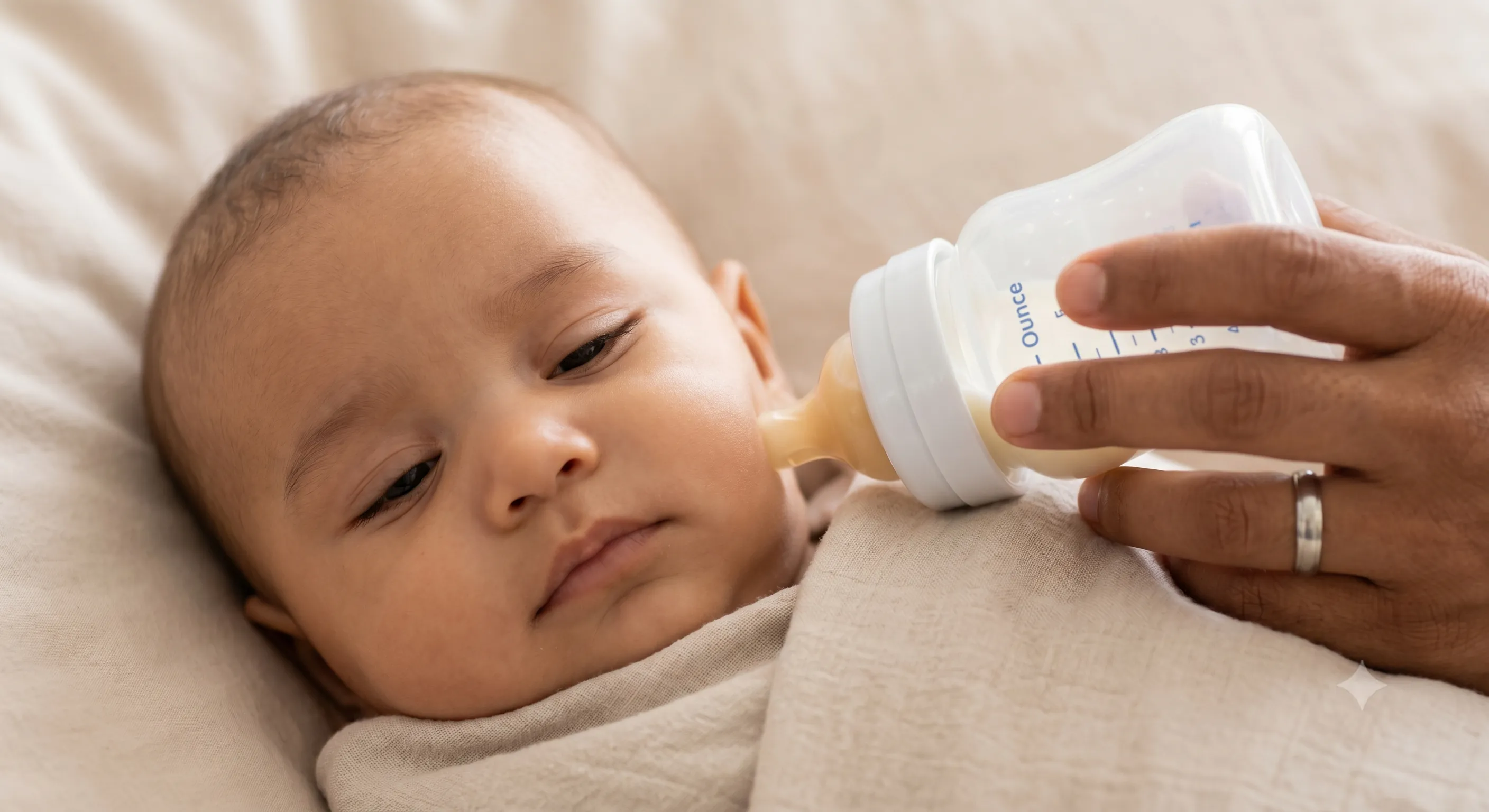
A baby turning away from a bottle — refusing to feed while sick
Illustrative image.

Why is feeding refusal more urgent in babies under 12 months?

  • Babies cannot drink from a cup, use a straw, or eat water-rich foods — breast milk or formula is their only fluid source, so refusing feeds means zero fluid intake
  • A baby's body is proportionally more water than a toddler's, but total fluid volume is very small — even a few hours of poor feeding can create a meaningful deficit
  • Nasal congestion is especially disruptive for young babies because they are obligate nose breathers — a stuffy nose can make sucking on a bottle or breast physically difficult
  • Babies cannot say they feel nauseous or that their throat hurts — feeding refusal may be the only visible sign of pain, nausea, or discomfort
  • The soft spot (fontanelle) is still open in babies, giving parents a visible hydration gauge that older children do not have
A reference card showing recommended small-volume oral rehydration amounts and frequency by age group for sick babies and young children, helping parents offer fluids in the right amounts during vomiting or diarrhea illness. Observational reference only — not a treatment guide.Oral rehydration — small and frequent is the keyObservational reference — always follow your pediatrician's guidanceAge groupAmount per offerHow oftenFluid typeUnder 6 monthsBreastfed or formula5 mL (1 tsp) at a timesyringe or spoonEvery 1–2 minutesBreast milkor formula6–12 monthsOlder infant5–10 mL at a time1–2 teaspoonsEvery 2–3 minutesORS orbreast milk1–3 yearsToddler10–15 mL at a time2–3 teaspoonsEvery 3–5 minutesORS, water,diluted juice3–5 yearsYoung child15–30 mL at a time1–2 tablespoonsEvery 5 minutesORS, water,or clear fluidsORS = oral rehydration solution (such as Pedialyte)Contains the right balance of salt and sugar — water alone is not as effectiveThe key rule — small and often beats large and infrequentIf child vomits, wait 10 minutes then restart with tiny amountsA small amount absorbed is better than a large amount vomited back up

What should parents watch for and do at home when a baby refuses feeds?

  • Fewer than half the usual number of feeds in a 24-hour period, or feeds that are very short and weak compared to normal
  • Offer the breast or bottle more frequently in smaller sessions — short feeds every 1 to 2 hours are often better tolerated than waiting for a full feed
  • If nasal congestion is blocking feeding, use saline drops and gentle suction before each feed to clear the airway
  • For babies over 6 months who refuse the breast or bottle, try small amounts of a pediatric oral rehydration solution by syringe or spoon between feed attempts
  • Track wet diapers, check for tears during crying, and feel the soft spot — these three checks together give a quick hydration snapshot
  • Contact the doctor if the baby takes less than half of normal intake for more than 8 to 12 hours — or immediately if the baby is under 3 months old

Track feeding attempts and fluid intake over time

Small sips tracker

Log each small fluid offer with the time and amount. This shows a running total for a doctor visit — it does not assess hydration status.

During illness, small amounts every few minutes are often better tolerated — for example 1 to 2 teaspoons (5 to 10 mL) by syringe or spoon.

Observation Summary

Age group: Baby (under 12 months). During illness, small amounts every few minutes are often better tolerated — for example 1 to 2 teaspoons (5 to 10 mL) by syringe or spoon.

Why Pediatricians Ask About This

When illness affects hydration, pediatricians ask how much fluid a child accepted and whether they kept it down. A sip-by-sip log shows volume and timing without you having to estimate from memory during a visit or phone call.

Other Things Parents Often Notice

  • Whether your child refused usual fluids or only took small amounts
  • Vomiting or spitting up noted shortly after drinking
  • Type of fluid offered (breast milk, formula, oral rehydration solution, water)
  • Whether intake improved or stayed the same over several hours

Share this observation with your child's pediatrician.

How do pediatricians evaluate and manage feeding refusal in babies?

  • The doctor will assess hydration by checking the fontanelle, mouth moisture, skin turgor, tear production, and diaper output history
  • Pediatricians often observe a feeding in the office to check whether the baby has a weak suck, pain with swallowing, or difficulty coordinating breathing and feeding
  • The underlying cause is investigated — ears are checked for infection, the throat is examined for redness or sores, and the nose is assessed for congestion
  • For mild dehydration, doctors typically recommend more frequent feeds at home with a weight check and follow-up within 24 to 48 hours
  • For moderate to severe dehydration or complete feed refusal, the baby may receive fluids through a nasogastric tube (a thin flexible tube passed through the nose into the stomach) or intravenous fluids in the hospital

Prepare a handoff summary for the doctor

Build your caregiver handoff sheet

Share what you have already observed. The preview updates as you type. Nothing is saved on this page.

Symptoms to note (select all that apply)

Live preview

PediaPulse

Caregiver Handoff Sheet

Your handoff preview will appear here as you type.

Educational observation sheet only. This does not replace medical advice, an emergency action plan, or care from your child's clinician.

Back to Won't Drink FluidsView visual guide →

Check Your Understanding

Tap the answer that best fits each scenario.

A 4-month-old with a cold has been nursing for only 3 to 4 minutes per session instead of the usual 12 to 15 minutes. The baby seems to pull away and get frustrated. The baby has had 3 wet diapers today instead of the usual 6.

What does shorter nursing sessions with fewer wet diapers describe in a baby with nasal congestion?

An 8-month-old with an ear infection has been pulling away from the bottle after just a few sucks, crying, and refusing to continue. This has been happening for 6 hours. The baby has had 2 wet diapers today instead of the usual 5.

What does repeated pulling away from the bottle with crying describe?

A 6-week-old has been feeding only once in the past 6 hours. The baby is very sleepy and difficult to wake for feeds. The soft spot looks slightly sunken when the parent checks with the baby calm and upright.

What does feeding only once in 6 hours with a sunken soft spot describe in a baby this young?