A 2-week-old is sleeping. The eyes are fluttering, limbs are twitching, and observers notice brief nostril flaring for about 20 seconds, then breathing settles. What is this?
Newborn Nose Flaring While Sleeping: Normal Rhythms vs. Distress
Newborns cycle between active sleep and quiet sleep, and their breathing looks different in each. During active sleep, breathing is naturally irregular and brief nostril flaring can occur as part of normal rhythm changes. During quiet sleep, breathing is steady, so persistent flaring during quiet sleep is more concerning. Flaring that comes and goes with active sleep cycles and stops when the baby wakes is usually normal. Flaring that continues through all sleep stages, worsens over time, or appears alongside grunting, chest pulling, or color changes signals distress that needs medical attention.
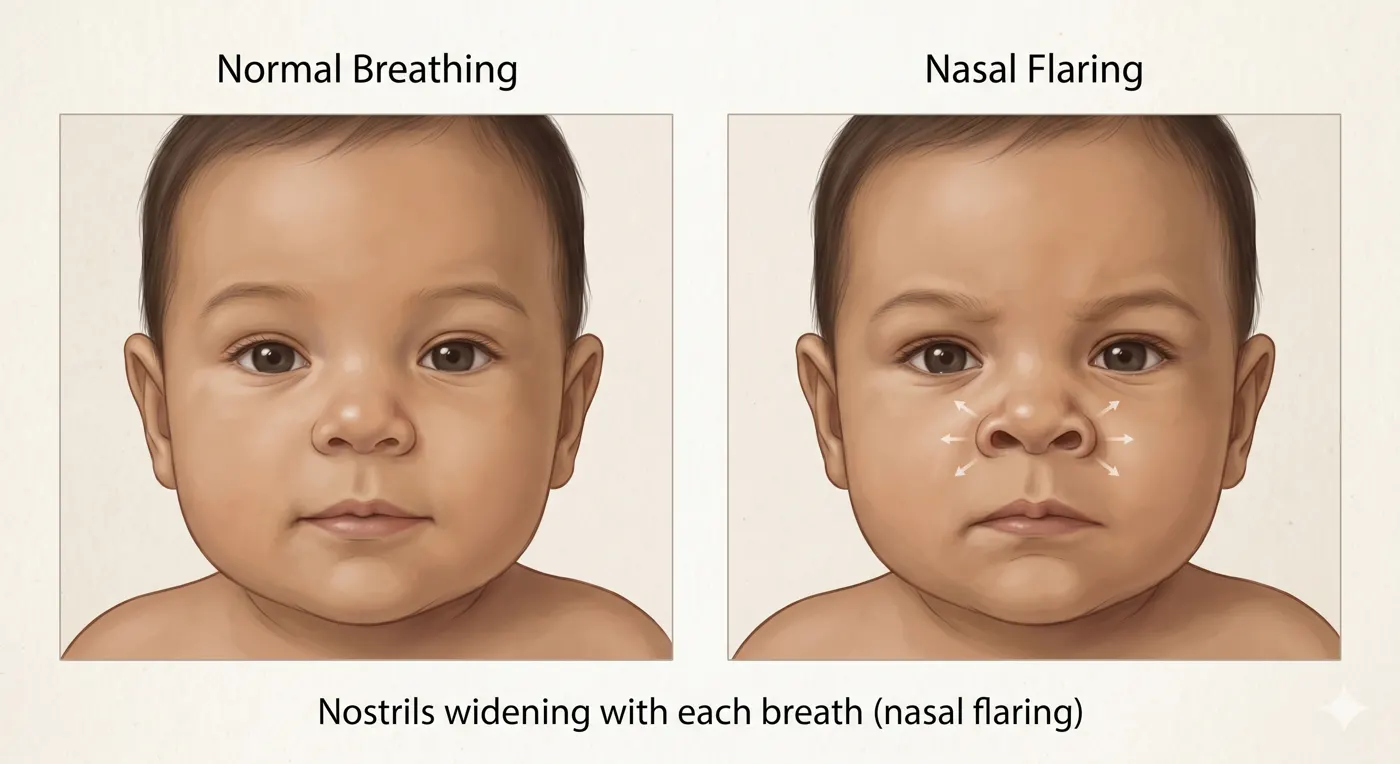
Why Newborn Sleep Makes Breathing Look Different
- Newborns spend about half their sleep time in active sleep — during this phase breathing naturally varies from breath to breath, and brief nostril flaring can occur as part of normal rhythm changes.
- During quiet sleep, breathing becomes very regular and rhythmic with steady even breaths — this is when breathing should look its calmest and flaring should not be present.
- Periodic breathing is common in healthy newborns — the baby breathes normally for several seconds, pauses for up to about 10 seconds, then starts again. Brief nostril flaring as breathing resumes after a pause is normal.
- Because newborns breathe mainly through their noses, even mild nasal congestion during sleep can cause noticeable nostril flaring as the baby works to keep the airway open.
- Periodic breathing is a normal sign of an immature but developing brain — it is most common in the first few weeks of life and gradually decreases as the baby matures.
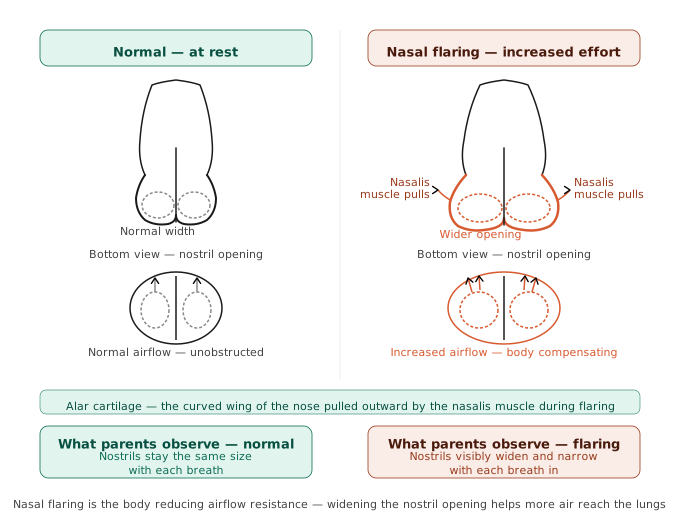
When to Worry
- Persistent flaring during quiet sleep — when the baby is still and breathing should be steady — is more concerning than flaring during active sleep.
- Breathing consistently faster than 60 breaths per minute during calm quiet sleep may signal increased effort.
- Grunting with every breath out, high-pitched squeaking when breathing in, or a whimpering sound during sleep are warning signs.
- Visible pulling-in between the ribs, below the ribcage, or at the base of the throat alongside nostril flaring means the baby is using extra muscles to breathe.
- Any blue, gray, or dusky tint around the lips or fingernails during sleep is a sign of low oxygen — seek care immediately.
- Flaring that is present every time you check or that seems to be getting worse over hours needs medical evaluation.
Knowledge Check
Tap the answer that best fits each scenario.
A 3-week-old is in quiet sleep — still, no eye movement, breathing should be steady. Observers notice the nostrils flaring with every breath and the skin between the ribs pulling in slightly. What is the appropriate response?
A caregiver checks a sleeping newborn and notices the skin around the lips looks slightly blue-gray. The nostrils are flaring with every breath. What is the appropriate response?