A 3-week-old's nostrils flare during the first few minutes of breastfeeding but settle down once the baby slows to intermittent sucking. The baby finishes the feed well and has good color. What is this?
Baby Nose Flaring During Bottle or Breastfeeding
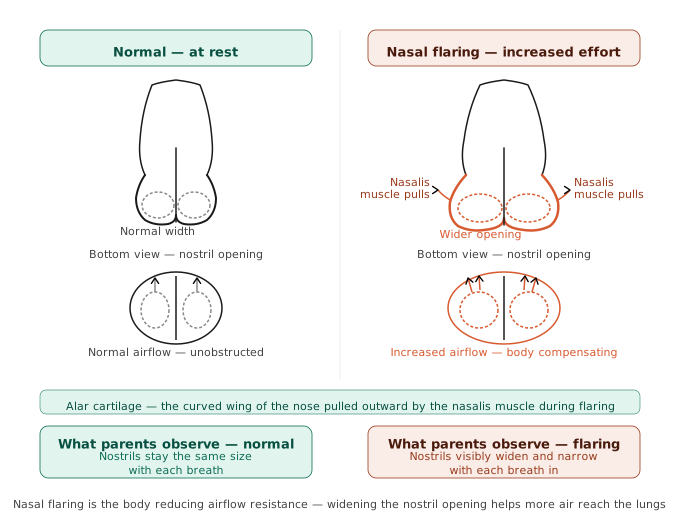
Babies must coordinate sucking, swallowing, and breathing at the same time during every feed. Because swallowing briefly closes the airway, mild nostril flaring during active feeding is common — the nose widens to pull in extra air between swallows. Flaring that stops once the feeding ends is usually normal. Persistent flaring after the feed, flaring with coughing or choking, color changes, or refusal to eat signals the baby may need medical evaluation.
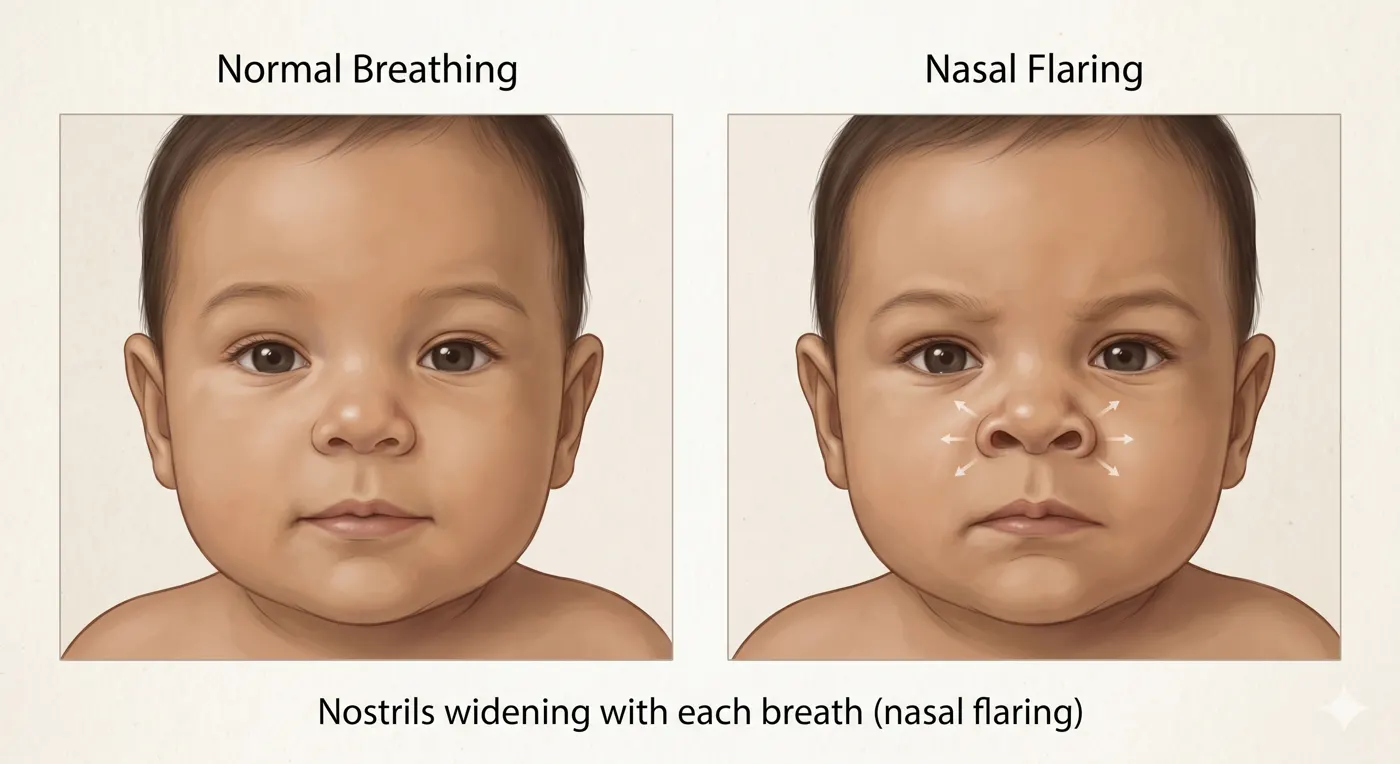
Why Feeding Is a Unique Breathing Challenge for Babies
- Every time a baby swallows milk, the airway closes briefly — during a fast feeding burst this can happen more than once per second, significantly reducing the time available for breathing.
- Healthy full-term babies learn to alternate short clusters of sucks and swallows with brief breathing pauses, but this coordination takes weeks to fully mature.
- During the first minutes of a feed, babies often suck continuously — breathing drops noticeably during this phase and the nostrils may flare as the body tries to maximize airflow in the short gaps between swallows.
- As the feed continues and the baby switches to intermittent sucking, breathing returns closer to normal and flaring typically eases.
- Younger babies and premature babies take longer to develop smooth suck-swallow-breathe coordination, so feeding-related flaring may be more noticeable in the early weeks.
When to Worry
- Flaring that continues after the baby has stopped feeding and is resting quietly — this suggests the breathing difficulty is not just from the effort of feeding.
- Repeated coughing, choking, or a wet-sounding gurgle during feeds — these may mean milk is going near or into the airway instead of the stomach.
- A baby who pulls off the breast or bottle frequently, arches the back, or falls asleep exhausted after only a small amount may be struggling to breathe and eat at the same time.
- Any blue, gray, or pale color around the lips or fingertips during or right after feeds — this is a sign oxygen levels may be dropping.
- Slow weight gain over days to weeks — a baby breathing too hard to feed well may not take in enough milk.
Knowledge Check
Tap the answer that best fits each scenario.
A 6-week-old has nasal flaring during feeds and continues to flare for 10 minutes after the feed ends while resting quietly. What is the appropriate response?
A 2-month-old repeatedly coughs and chokes during bottle feeds, pulls off the bottle frequently, and is gaining weight slowly. What does this suggest?