An 18-month-old wakes up at midnight with a harsh barking cough that sounds like a seal. Between coughs the child is calm and drinking water. What is this most likely?
Neck Sucking In With a Cough: Signs of Upper Airway Resistance
When a child coughs hard, the muscles around the airway squeeze forcefully — and in young children whose windpipes are still soft and narrow, this can temporarily increase resistance to airflow. The skin at the base of the throat may pull inward as the child works harder to breathe between coughs. Mild pulling that eases once coughing settles is common. Deep, constant pulling that persists between coughing fits — especially with a harsh barking cough, noisy breathing, or color changes — signals significant upper airway resistance that needs medical attention.
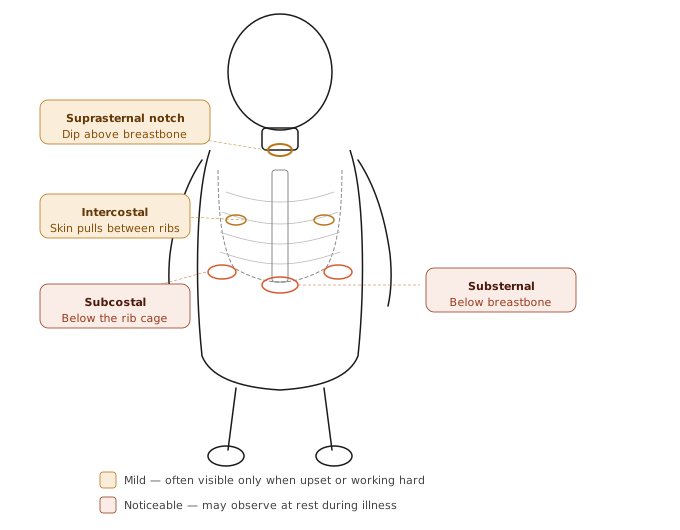
Why Coughing Causes Neck Pulling-In
- Coughing creates sudden bursts of high pressure inside the chest and airway — in young children, the windpipe cartilage is soft enough that these pressure swings can briefly narrow or collapse the airway.
- After each cough, the child must inhale quickly against an airway that may still be partially narrowed from swelling, mucus, or the cough itself — this extra effort pulls the soft skin at the throat inward.
- The most common cause of a barking cough with neck pulling-in is croup — a viral infection that causes swelling just below the voice box, narrowing the airway at its already smallest point.
- Croup most commonly affects children aged 6 months to 3 years and tends to worsen at night.
- Other causes include a foreign body in the airway, bacterial infections of the windpipe, and conditions where the airway cartilage is naturally floppy.
When to Worry
- A harsh seal-like barking cough paired with a high-pitched squeaking sound when breathing in — called stridor — is the hallmark pattern of upper airway narrowing and needs medical evaluation.
- Pulling that continues with every breath even when the child is calm and not coughing — not just during or right after a coughing fit — is more concerning.
- A child who is anxious, refusing to drink, drooling, or becoming very quiet between coughing episodes may be struggling and needs prompt evaluation.
- Any blue or gray color around the lips or fingernails means oxygen levels may be dropping — seek emergency care immediately.
- Record a short video on your phone if possible — symptoms often improve by the time you reach the office and the video helps the pediatrician see exactly what happened.
Knowledge Check
Tap the answer that best fits each scenario.
A 2-year-old has a barking cough and the neck is pulling in with every breath — even between coughing fits when the child is calm. There is a high-pitched squeak when breathing in. What is the appropriate response?
A 14-month-old has a barking cough and suddenly becomes very quiet, stops crying, and starts drooling. The neck is pulling in deeply. What is the appropriate response?