A 6-week-old makes a noisy, squeaky sound when breathing in and the skin at the base of the throat dips inward. The baby is feeding well and gaining weight normally. What is this most likely?
Infant Neck Sucking In (Tracheal Tugging): What It Looks Like
In babies, the skin pulling inward at the base of the throat during breathing is more visible than in older children because a baby's windpipe is softer, narrower, and more flexible. Mild pulling that only appears during crying and disappears when the baby is calm is often not dangerous. Deep, constant pulling with every breath — especially with noisy breathing, color changes, or feeding difficulty — needs medical evaluation.
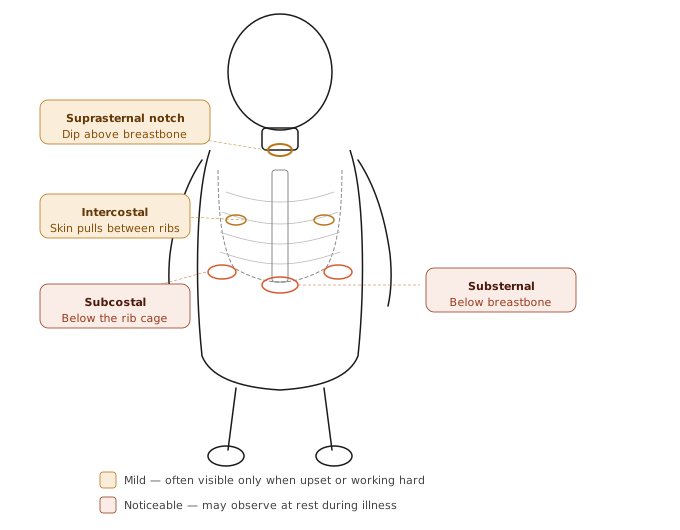
Babies show neck pulling-in more easily than older children because of how their airways are built. This guide explains why, what to watch for, and how pediatricians evaluate it.
Why Infants Show Neck Pulling-In More Easily
- A baby's windpipe is made of very soft, flexible cartilage — even a small increase in breathing effort can cause the skin at the throat to visibly pull inward.
- A newborn's trachea is only about 4 centimeters long and roughly the width of a drinking straw — minor swelling or mucus takes up a much larger percentage of the airway than in an older child.
- Babies breathe almost entirely through their noses for the first several months — a stuffy nose alone can cause visible pulling at the neck.
- The most common cause of noisy breathing with neck pulling in young babies is laryngomalacia — where soft tissue above the voice box collapses inward during breathing. This affects up to 75% of babies with noisy breathing and usually resolves on its own by age 1 to 2 years.
- Babies with a floppy airway may instinctively tilt or arch their neck backward to open the airway — if you notice this, mention it to the doctor.
When to Worry
- Feeding problems alongside neck pulling-in: choking, gagging, coughing during feeds, or taking much longer than usual to finish a bottle or breastfeed — these suggest breathing difficulty is affecting the baby's ability to coordinate sucking, swallowing, and breathing.
- Poor weight gain: if the baby is not gaining weight as expected and also has neck pulling-in or noisy breathing, see the pediatrician promptly.
- Breathing pauses longer than 10 seconds, or any pause accompanied by color changes or limpness — these are not normal and need immediate attention.
- Deep, constant pulling with every breath that does not ease when the baby is calm — especially with blue or gray color around the lips or unusual sleepiness — needs emergency evaluation.
Knowledge Check
Tap the answer that best fits each scenario.
A 2-month-old has neck pulling-in with every breath, is taking much longer than usual to finish feeds, and has not gained weight in 3 weeks. What is the appropriate response?
Observers notice a 3-month-old frequently arches the neck backward during breathing. What is the appropriate response?