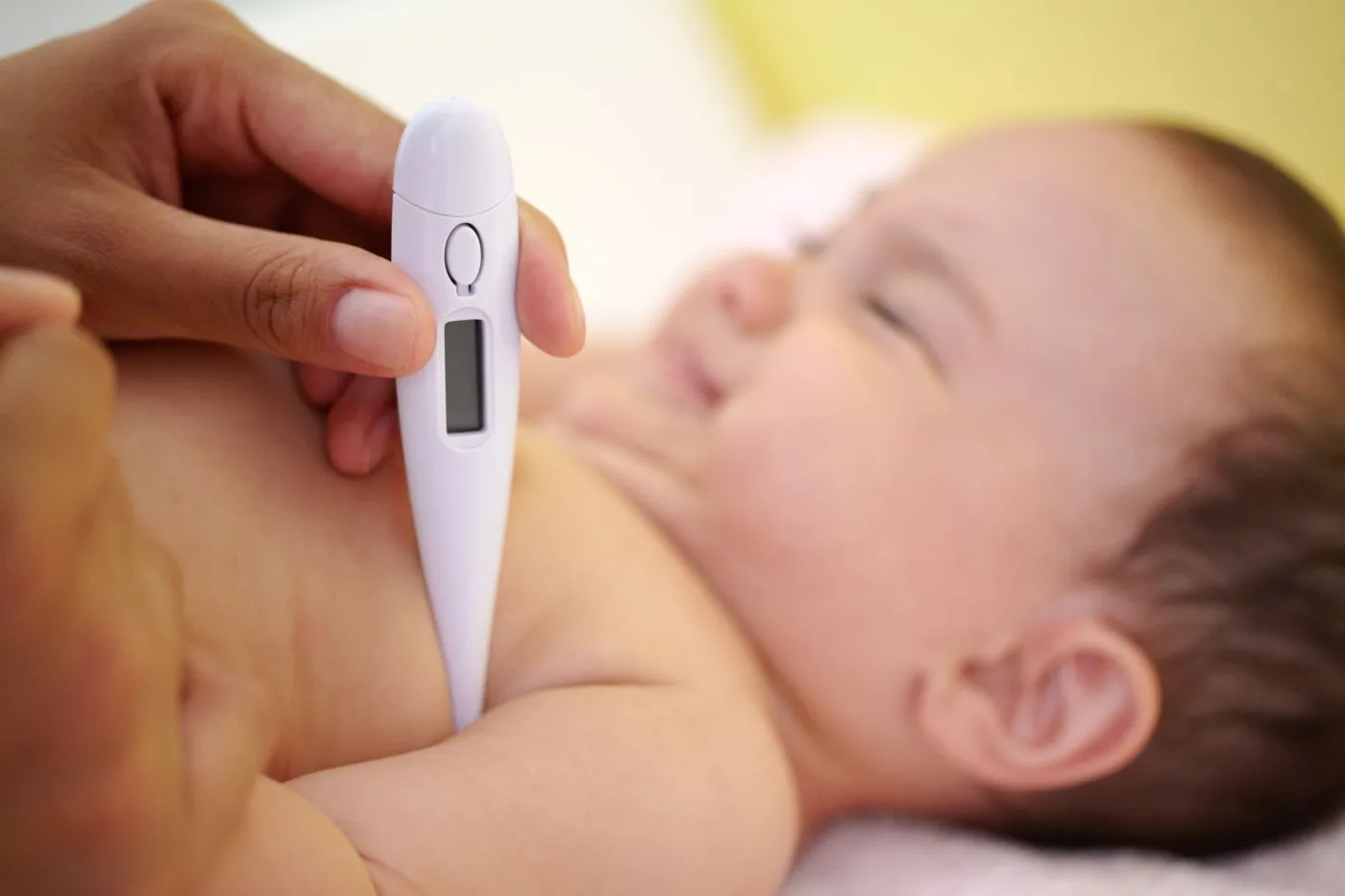
Fever naturally rises and falls during illness. The body's internal thermostat resets higher when fighting infection. Temperature tends to climb in the late afternoon and evening and dip in the early morning. This wave-like pattern is normal during most childhood illnesses and does not mean the infection is getting worse each time the fever returns.
Illustrative image.
Is it normal for a child's fever to go up and down during illness?
Body temperature follows a natural daily rhythm — it runs lower in the morning and higher in the late afternoon, even in healthy children
During illness, the immune system amplifies this rhythm, creating noticeable spikes and dips throughout the day
Fever-reducing medicine temporarily lowers the temperature, but fever often returns as the medicine wears off — this is expected
Most common childhood viral infections produce fevers that spike and drop for three to five days before resolving on their own
A child who looks better and acts more like themselves during the dips — drinking, playing, making eye contact — is generally following a reassuring pattern
The spiking-and-dropping pattern alone does not indicate how serious the illness is
What causes fever to spike and drop repeatedly?
The immune system releases infection-fighting chemicals called pyrogens (signals that tell the brain to raise body temperature) in waves — each wave resets the body's thermostat higher, producing a spike
As the wave passes, the thermostat resets lower and the body cools itself through sweating and flushing, producing a dip
Viral infections — the most common cause of fever in young children — frequently produce this wave-like pattern over several days
Ear infections, throat infections, and respiratory viruses commonly cause temperatures that rise and fall noticeably
Fever-reducing medicine works for a limited window and does not treat the underlying cause — temperature climbs again as the effect fades
Dehydration, overdressing, or a warm room can make spikes appear higher because the body has a harder time releasing heat
In well-appearing children, irregular and intermittent fevers are most commonly caused by back-to-back viral illnesses, especially in children attending group care settings
What can parents track at home during cyclic fever?
Keep a simple fever diary — write down the temperature, the time, and whether medicine was given — this helps pediatricians see the overall pattern
Watch how the child behaves during the dips between spikes — drinking fluids, responding to voices, and showing interest in surroundings are positive signs
Offer small, frequent sips of fluids throughout the day to prevent dehydration — breast milk, formula, or clear fluids depending on age
Dress the child in light, breathable clothing and keep the room at a comfortable temperature
Track wet diapers or bathroom trips — fewer than usual may suggest the child needs more fluids
Avoid bundling the child in heavy blankets during a spike — this traps heat and may push the temperature higher
Allow rest during spikes and gentle activity during dips if the child is interested
Log temperature readings to see the pattern
Log temperature readings
Enter up to 6 temperature readings with times. The dot plot shows the pattern visually — it does not interpret the readings.
What cyclic fever patterns need prompt attention?
Any fever in a baby younger than three months — regardless of the pattern — requires prompt medical evaluation
A child whose behavior worsens over time — becoming less responsive, harder to wake, or refusing all fluids — needs prompt evaluation
Fever lasting more than five days, even with normal-temperature dips in between, is worth describing to a pediatrician
A non-blanching rash — one that does not fade when the skin is pressed firmly — alongside fever spikes is a medical emergency — call 911
Breathing difficulty, chest pulling in, or grunting during fever spikes warrants prompt evaluation
Signs of dehydration — no tears, dry lips, sunken soft spot, or significantly fewer wet diapers — alongside cyclic fever add to the concern
Fevers that follow a very regular, clockwork-like pattern over weeks — recurring every few weeks with symptom-free intervals — are uncommon and may prompt pediatricians to consider less common causes
Log temperature readings to share with your doctor
Log temperature readings
Enter up to 6 temperature readings with times. The dot plot shows the pattern visually — it does not interpret the readings.
How do pediatricians generally evaluate a child with spiking-and-dropping fever?
Pediatricians assess the child's overall appearance, activity level, feeding, hydration, and behavior — these factors carry more weight than any single temperature reading
A thorough physical examination checks for a source of infection — ears, throat, lungs, belly, skin, and lymph nodes are commonly examined
If no clear source is found, urine testing is commonly performed as urinary tract infections are the most frequent serious bacterial infection in young children and often present without obvious symptoms
Blood tests — including inflammatory markers such as C-reactive protein and procalcitonin — may be used when the source remains unclear to help distinguish between lower-risk and higher-risk febrile episodes
For fever lasting beyond five days without a clear source, a more comprehensive evaluation may be considered
Viral testing for common respiratory viruses may help confirm a specific cause and provide reassurance that the fever pattern is following an expected course
Pediatricians generally focus on whether the child looks well between fever spikes, whether the overall trend is improving, and whether any new or concerning signs have developed
Is your sick day kit ready?
Sick-day readiness check
Answer ten quick questions while your child is well. Your score helps you spot preparation gaps before the next illness.
1. Do you have a working thermometer that every caregiver can find?
2. Do you have an oral syringe or dosing cup for liquid medicines?
3. Are age-appropriate fluids your pediatrician approves easy to locate at home?
4. Could you write a brief plan of symptoms and medicines already given if illness started tonight?
5. Is your pediatrician's phone number saved and posted where caregivers can see it?
6. Do you know the after-hours nurse line or on-call number?
7. Is your preferred pharmacy number saved?
8. Are urgent care or backup clinic numbers posted if your pediatrician advised using them?
9. Do you have a written weight-based dosing reference from your last well visit (if your doctor provided one)?
10. Do you feel confident describing your child's symptoms if you needed to call the nurse line tonight?
Check Your Understanding
Tap the answer that best fits each scenario.
A 14-month-old has had a fever for three days. The temperature spikes to 102.8°F in the evening and drops to 99.2°F each morning. Between spikes the child is drinking, playing, and making eye contact normally.
What does this spiking-and-dropping fever pattern describe?
A 9-month-old has had a cyclic fever for six days. Each day the temperature dips in the morning and spikes in the evening. The baby is feeding less than usual and has had fewer wet diapers over the past 24 hours.
What does a six-day cyclic fever with reduced feeding and fewer wet diapers describe?
A 2-year-old has had a cyclic fever for four days with typical evening spikes. On day four a parent notices a spreading rash on the arms and legs that does not fade when pressed firmly with a finger.
What does a non-blanching rash appearing alongside a cyclic fever describe?
Sullivan JE, Farrar HC; Section on Clinical Pharmacology and Therapeutics, Committee on Drugs. Fever and antipyretic use in children. Pediatrics. 2011;127(3):580-587.
Marshall GS. Prolonged and recurrent fevers in children. Journal of Infection. 2014;68(Suppl 1):S83-93.
Ebenezer Adebiyi, MD, MPH, FAAP
Board-Certified Pediatrician · FAAP · Founder of PediaPulse
Dr. Adebiyi built PediaPulse to help parents understand what they are observing so they can have better, more informed conversations with their own doctors.