For babies under 12 months, a fever is any temperature at or above 100.4°F (38°C). Fever-reducing medicine works for a limited window — usually around 4 to 6 hours. Once that window closes, fever often returns. This is normal and does not mean the illness is getting worse. What matters most is how a baby looks and behaves between doses — not whether the fever keeps coming back.
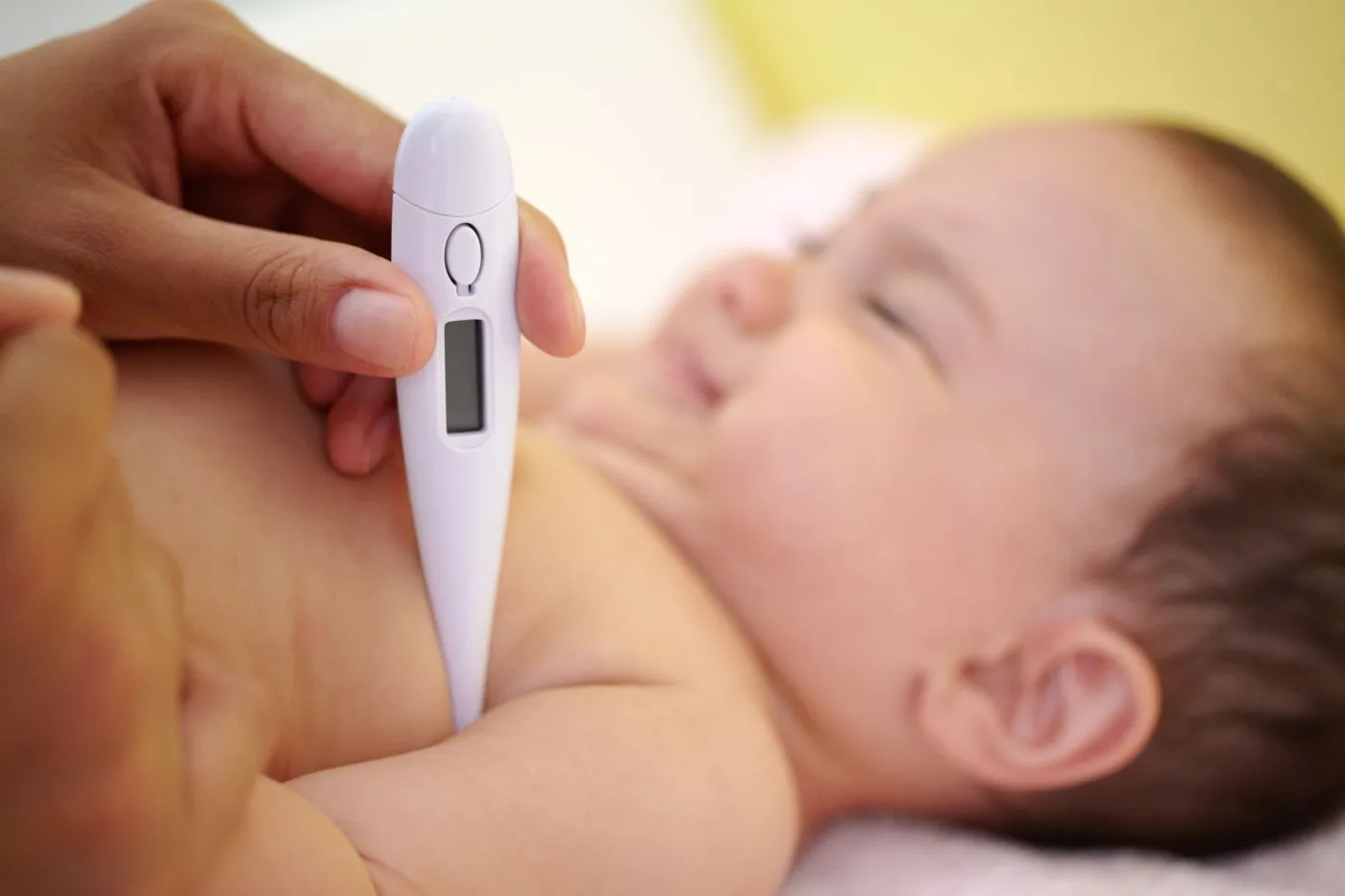
Illustrative image.
Why does baby fever come back after medicine wears off?
Babies under 12 months — and especially under 3 months — have immune systems that are still developing, which means their bodies are less equipped to handle infections on their own
In very young babies, fever might be the only visible clue that something serious is happening — they cannot show typical signs of illness the way older children can
Fever-reducing medicine works for a limited window — typically 4 to 6 hours — and does not treat the underlying cause of the fever
Because young babies can become dehydrated more quickly than older children, even a mild fever requires close attention to feeding and wet diapers
The goal of fever medicine in babies is to help them feel more comfortable — not to make the thermometer reach a specific number
Fever returning as medicine wears off reflects the ongoing immune response, not a worsening illness
What signs should parents watch for when baby fever keeps returning?
Any baby under 3 months with a single temperature reading of 100.4°F or above requires prompt medical evaluation — regardless of how the baby appears
A baby who is unusually sleepy, difficult to wake, or feels limp and floppy needs urgent evaluation
Refusing to feed, having fewer wet diapers than usual, or crying without tears can signal dehydration
Skin that looks pale, grayish, or blotchy — or a rash with tiny red or purple dots that do not fade when pressed — is a medical emergency — call 911
Rapid breathing, grunting sounds, or skin pulling in between the ribs with each breath are signs of breathing difficulty that need prompt evaluation
A baby who is alert, making eye contact, and feeding between fever episodes is showing reassuring signs
Log temperature readings to see the pattern
Log temperature readings
Enter up to 6 temperature readings with times. The dot plot shows the pattern visually — it does not interpret the readings.
How do pediatricians generally approach recurring fever in babies?
Pediatricians first assess how the baby is acting overall — a baby who is alert, making eye contact, and feeding is generally more reassuring than one who is limp or inconsolable
For babies under 3 months with fever, evaluation commonly includes blood work and a urine sample to check for bacterial infections that may not be visible from the outside
For older babies (3 to 12 months) who appear well, the pediatrician may examine the ears, throat, and chest and sometimes collect a urine sample to look for a hidden infection
Rapid swab tests for common viruses may be used to help identify the cause of the fever
Pediatricians generally recommend using one age-appropriate fever-reducing medicine at a time, carefully dosed based on the child's weight
The focus of evaluation is to determine whether the recurring fever is caused by a common self-limited viral illness or something that needs specific attention
Prepare a handoff summary for the doctor
Build your caregiver handoff sheet
Share what you have already observed. The preview updates as you type. Nothing is saved on this page.
Symptoms to note (select all that apply)
Live preview
PediaPulse
Caregiver Handoff Sheet
Your handoff preview will appear here as you type.
A 5-month-old has a fever of 102.4°F. After medicine the temperature drops to 100.8°F. Four hours later the fever returns to 102.2°F. The baby is feeding normally and making eye contact between doses.
What does this recurring fever pattern describe?
A 6-week-old has a temperature of 100.6°F taken rectally. The baby is feeding and appears alert. A parent is unsure whether to call the doctor since the baby seems fine.
How would you describe this situation?
A 9-month-old has had a recurring fever for four days. Between doses the baby is less interested in feeding than usual and has had fewer wet diapers in the last 24 hours. The lips appear dry.
What do reduced feeding and fewer wet diapers describe alongside recurring fever?
PediaPulse is an independent, visual educational initiative founded by Ebenezer Adebiyi, MD, MPH, FAAP. It is not affiliated with, endorsed by, or representative of the views or clinical practices of any hospital network or medical institution. Dr. Adebiyi's work on PediaPulse is strictly educational, does not constitute the establishment of a doctor-patient relationship, and does not provide medical advice or diagnostic triage. Always consult your child's physician for medical concerns. PediaPulse is a product of ProParenting Pulse LLC.
Not every fever is the same—and not every fever needs the same response.
Hamilton JL, Evans SG, Bakshi M. Management of fever in infants and young children. American Family Physician. 2020;101(12):721-729.
Cioffredi LA, Jhaveri R. Evaluation and management of febrile children: a review. JAMA Pediatrics. 2016;170(8):794-800.
Ebenezer Adebiyi, MD, MPH, FAAP
Board-Certified Pediatrician · FAAP · Founder of PediaPulse
Dr. Adebiyi built PediaPulse to help parents understand what they are observing so they can have better, more informed conversations with their own doctors.