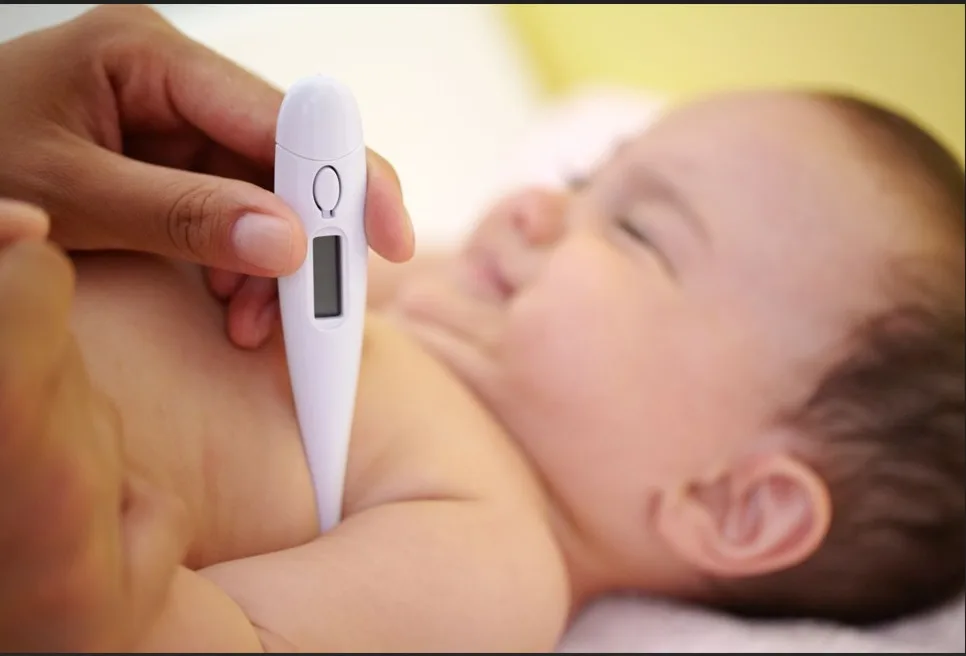
In toddlers ages 1 to 3, a low-grade fever generally falls between 100.4°F and 102.2°F (38°C to 39°C). Common childhood viruses can cause this kind of mild fever for three to five days — sometimes longer. Most resolve on their own. When a low-grade fever persists for five days or more without improving, a pediatrician visit is warranted to rule out something beyond a simple virus.
Illustrative image.
Why do toddlers handle low-grade fever differently than younger babies?
By age one, a child's immune system is significantly more developed than a young baby's — the body is better at localizing and fighting off common infections
Most toddlers have received several rounds of routine vaccinations, which provides strong protection against some of the more serious bacterial infections that affect younger babies
Toddlers can often point to where it hurts, pull at a sore ear, or refuse to swallow because of a sore throat — giving parents and doctors more clues about the source of the fever
Children in group care or with older siblings are exposed to a constant stream of new viruses, so one illness can blend into the next — making it seem like the fever never fully goes away
At this age, a child's overall energy and behavior are more telling than the exact number on the thermometer
What warning signs should parents watch for during a prolonged low-grade fever?
A fever — even a mild one — that continues for five or more days is the point where pediatricians begin looking for less common causes
New symptoms appearing alongside a lingering fever deserve close attention — red eyes without discharge, a widespread rash, swollen or red hands and feet, cracked or very red lips, or a large swollen gland on one side of the neck are findings worth describing to a doctor
Signs of dehydration include fewer than four wet diapers in a day, a dry mouth, no tears when crying, or unusual drowsiness
A toddler who stops playing, loses interest in food and fluids, or becomes increasingly difficult to console shows behavioral changes worth reporting
Any difficulty breathing or a stiff neck alongside prolonged fever warrants prompt evaluation
A rash with purple or red spots that do not lighten when pressed is a medical emergency — call 911
Log temperature readings to see the pattern
Log temperature readings
Enter up to 6 temperature readings with times. The dot plot shows the pattern visually — it does not interpret the readings.
How do pediatricians generally evaluate a toddler with low-grade fever lasting multiple days?
For a toddler who appears well and has had a low-grade fever for one to two days with mild cold symptoms, most pediatricians will recommend keeping the child comfortable and watching closely
If the fever has lasted more than two days without an obvious cause like a runny nose or cough, a urine test is one of the most common first steps to check for a urinary tract infection
When fever reaches the five-day mark, blood tests measuring infection and inflammation markers are commonly ordered to help guide next steps
Pediatricians pay close attention to hydration, energy level, and overall appearance — these observations are often the most valuable part of the evaluation
Imaging such as a chest X-ray is generally only considered when there are specific breathing symptoms — not simply because of a fever alone
The goal is to determine whether the prolonged fever is from a common self-limited viral illness or something that needs specific attention
Is your sick day kit ready?
Sick-day readiness check
Answer ten quick questions while your child is well. Your score helps you spot preparation gaps before the next illness.
1. Do you have a working thermometer that every caregiver can find?
2. Do you have an oral syringe or dosing cup for liquid medicines?
3. Are age-appropriate fluids your pediatrician approves easy to locate at home?
4. Could you write a brief plan of symptoms and medicines already given if illness started tonight?
5. Is your pediatrician's phone number saved and posted where caregivers can see it?
6. Do you know the after-hours nurse line or on-call number?
7. Is your preferred pharmacy number saved?
8. Are urgent care or backup clinic numbers posted if your pediatrician advised using them?
9. Do you have a written weight-based dosing reference from your last well visit (if your doctor provided one)?
10. Do you feel confident describing your child's symptoms if you needed to call the nurse line tonight?
A 2-year-old has had a low-grade fever between 100.6°F and 101.8°F for four days. The child has a mild runny nose, is drinking fluids, producing wet diapers, and playing between fever spikes.
What does this four-day low-grade fever pattern describe?
A 20-month-old has had a low-grade fever for six days with no obvious source — no runny nose, no cough. The child is less playful than usual but is still drinking some fluids.
What does a six-day fever with no clear source describe in a toddler?
A 2-year-old has had a low-grade fever for five days. On day five a parent notices the child's lips look cracked and very red, the eyes appear red without any discharge, and the hands look slightly swollen and red.
What does this combination of new findings alongside prolonged fever describe?
Not every fever is the same—and not every fever needs the same response.
Get pediatrician-designed visual guides and tools like this one, free in the PediaPulse app.
Cioffredi LA, Jhaveri R. Evaluation and management of febrile children: a review. JAMA Pediatrics. 2016;170(8):794-800.
Nijman RG, Tan CD, Hagedoorn NN, et al. Are children with prolonged fever at a higher risk for serious illness? A prospective observational study. Archives of Disease in Childhood. 2023;108(8):632-639.
Ebenezer Adebiyi, MD, MPH, FAAP
Board-Certified Pediatrician · FAAP · Founder of PediaPulse
Dr. Adebiyi built PediaPulse to help parents understand what they are observing so they can have better, more informed conversations with their own doctors.