A 5-day-old has a soft, flexible chest and observers notice slight inward movement when breathing. The baby is feeding well, has good color, and is calm. What is this most likely?
Is My Newborn's Chest Sucking In Normal?
A newborn's ribcage is made mostly of soft cartilage, not hard bone, so it naturally flexes more than an older child's chest. Slight inward movement during breathing can be normal. However, deep, repeated pulling-in of the skin between or below the ribs with every breath is a sign the body is working too hard to breathe and needs medical attention.
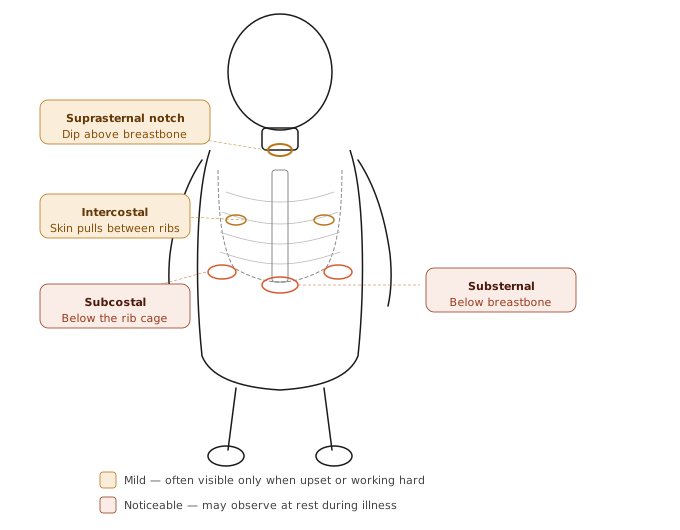
Newborns have softer, more flexible chests than older children. This guide helps parents understand the difference between normal ribcage flexibility and signs that a newborn is working too hard to breathe.
Why Newborn Chests Look Different
- A baby's chest wall is much softer and more flexible than an adult's because the ribs are still largely cartilage rather than solid bone.
- This extra flexibility means that even normal breathing can cause slight visible movement of the chest wall — and this alone is not a reason to worry.
- The difference between normal flexibility and distress comes down to how deep, how constant, and how effortful the pulling-in looks.
- When a baby is truly struggling to breathe, the breathing muscles have to pull much harder to move air into the lungs, and the soft chest wall gets sucked inward noticeably with each breath.
- These deeper, more obvious indentations — especially when paired with fast breathing, flared nostrils, or unusual sounds — go beyond what a flexible ribcage alone would cause.
- A little movement is the ribcage being soft. A lot of pulling is the body asking for help.
When to Worry
- Deep, visible pulling-in that does not stop: If the skin between the ribs, below the ribcage, or at the base of the throat sinks inward with every single breath and does not ease up when the baby is calm, this goes beyond normal flexibility.
- Fast breathing that stays fast: Newborns normally breathe 30 to 60 times per minute. Breathing that stays above 60 breaths per minute — especially combined with chest pulling — is a sign of increased effort that warrants a call to the baby's doctor.
- Color changes or unusual sounds: Skin turning blue or gray around the lips, tongue, or fingernails, or a repetitive grunting sound with each breath out, are signs the baby needs prompt medical evaluation.
- Feeding difficulty or unusual sleepiness: A baby who is too tired to eat, refuses to latch, or is unusually hard to wake may be using all available energy just to breathe — seek care right away.
Knowledge Check
Tap the answer that best fits each scenario.
A 2-week-old is breathing 70 times per minute. The skin below the ribcage sinks in with every breath and the baby is hard to wake for feeds. What is the appropriate response?
A newborn's skin turns slightly blue around the lips during a feeding, then returns to normal pink color quickly. What is the most important next step?