A 9-month-old has a temperature of 102°F and is breathing faster than usual. There is no chest pulling-in and the baby is alert and feeding. What is most likely happening?
Chest Retractions with a Fever: How Temperature Changes Breathing
Fever makes a baby breathe faster — this is the body's normal response to a higher temperature. For roughly every one-degree rise in temperature, breathing speeds up by about two to three extra breaths per minute. However, faster breathing from fever alone should not cause deep chest pulling-in. If you see the skin sucking inward between or below the ribs along with a fever, the lungs or airways may need extra help, and the baby should be evaluated.
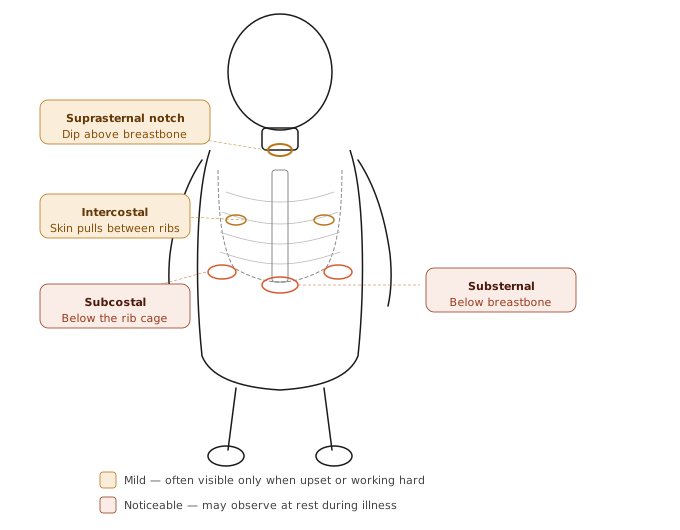
When a baby has both a fever and chest pulling in, it can be hard to know which is causing what. This guide helps parents understand the difference between fast breathing caused by fever and harder breathing that needs medical attention.
How Fever Affects Breathing
- When a baby has a fever, the body's metabolism speeds up to fight off infection, and one way the body keeps up is by breathing faster.
- Research shows that respiratory rate increases by roughly 2 to 3 breaths per minute for every 1°C (about 1.8°F) rise in body temperature — this is a predictable, normal response.
- This means a feverish baby will naturally breathe faster than usual, and that alone is not necessarily a sign of a lung problem.
- The important distinction is between faster breathing (which fever can explain) and harder breathing (which fever alone does not explain).
- Chest retractions — the visible pulling-in of skin between the ribs, below the ribcage, or at the throat — are a sign of increased effort, meaning the breathing muscles are working harder to move air past some kind of resistance in the airways or lungs.
- When retractions appear alongside a fever, it suggests the infection may be affecting the airways or lungs directly — not just raising the body temperature.
When to Worry
- Chest pulling-in that does not improve as fever comes down: If the baby's temperature decreases but the retractions continue or worsen, this suggests the breathing difficulty is coming from the lungs or airways rather than the fever alone — contact the baby's doctor.
- Breathing that stays fast beyond what fever explains: Normal respiratory rates are up to 60 breaths per minute for newborns, up to 50 for babies 2–12 months, and up to 40 for children 1–5 years. Breathing that stays well above these ranges even after accounting for fever, especially combined with visible chest pulling, warrants medical evaluation.
- Fever with grunting, nasal flaring, or color changes: A grunting sound with each breath out, nostrils widening with each breath in, or skin turning blue or gray around the lips or fingernails — any of these alongside fever and retractions means the baby needs prompt medical attention.
- Any fever in a baby under 2 months old with breathing changes: Babies younger than 2 months with a fever of 100.4°F (38°C) or higher should be seen by a healthcare provider, especially if there are any signs of increased breathing effort such as retractions, fast breathing, or unusual sounds.
Knowledge Check
Tap the answer that best fits each scenario.
A 4-month-old has a fever of 101°F. After a fever reducer is given the temperature drops, but the skin between the ribs is still pulling in with every breath. What is the appropriate response?
A 6-week-old has a temperature of 100.6°F with skin pulling in at the base of the throat and a grunting sound with each breath. What is the appropriate response?