A 2-year-old wakes at 1 AM with a loud barking cough. When the child is picked up they calm down and the noisy breathing disappears. What does this suggest?
Waking Up to a Barking Seal Cough (Midnight Croup)
Croup almost always strikes suddenly at night — often between 10 PM and 4 AM. The body's natural anti-inflammatory hormone drops to its lowest levels during these hours, allowing airway swelling from a cold virus to peak. A child who seemed fine at bedtime can wake with a loud, seal-like barking cough and noisy breathing. This nighttime pattern is normal for croup and does not automatically mean the child needs emergency care.
Why Croup Hits Hardest in the Middle of the Night
- The virus that causes croup most often inflames the voice box and windpipe over one to two days — but the swelling may not cause symptoms until cortisol, the body's natural anti-inflammatory hormone, drops to its lowest point between late evening and early morning.
- Lying flat allows gravity to increase blood flow to the already-swollen airway tissues, adding to the narrowing.
- Cool, dry nighttime air can further irritate inflamed airways, and the child's natural tendency to breathe more shallowly during sleep means less airflow to keep the airway open.
- This is why a child can seem perfectly fine at dinner and wake at midnight with a frightening barking cough — the virus was already there, but the body's defenses were masking the swelling during the day.
What Parents Should Watch For During a Midnight Croup Episode
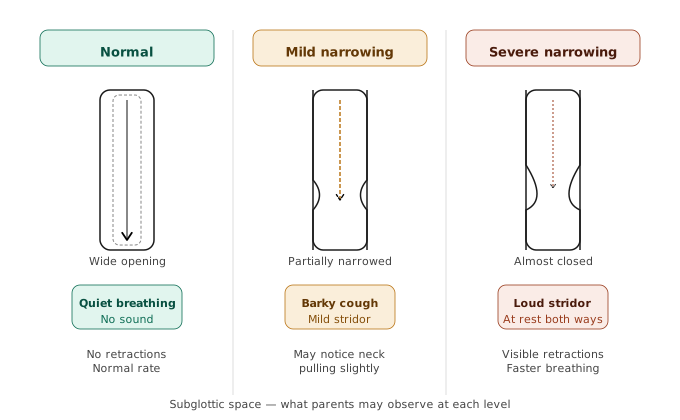
- Listen for stridor — a high-pitched squeaky sound when the child breathes in. If stridor is only present when the child is crying or upset but disappears when calm, this suggests mild croup.
- If stridor is heard at rest while the child is sitting calmly, this indicates moderate to severe airway narrowing and warrants medical evaluation.
- Watch for retractions — skin pulling in at the neck, between the ribs, or below the ribcage — which means the child is working harder than normal to pull air through the narrowed airway.
- Try calming the child and exposing them to cool night air — bundle up and step outside for 15 to 30 minutes. If the barking cough and noisy breathing improve, the child can likely be monitored at home.
How Pediatricians Evaluate and Manage a Midnight Croup Episode
- The doctor will assess severity based on the sound of the cough, presence of stridor at rest, breathing effort, skin color, and the child's alertness — no X-rays or blood tests are typically needed.
- A single dose of an oral steroid is the standard first treatment for croup of any severity — it reduces airway swelling and begins working within two hours, with effects lasting 24 to 48 hours.
- For moderate to severe croup — stridor at rest, visible retractions — the doctor may also give a breathing treatment that rapidly shrinks airway swelling. The child is then monitored for two to four hours because symptoms can return after the medication wears off.
- Most children with croup are sent home the same night. Parents should expect the barking cough to return the following night but usually milder, with full resolution within two to three days.
Knowledge Check
Tap the answer that best fits each scenario.
A child has had a barking cough for 20 minutes. After stepping outside into cool air for 20 minutes the cough is still loud and a squeaky noise is heard when the child breathes in — even when calm. What is the appropriate response?
A child was seen in the ER for croup and sent home. The next night the barking cough returns. Is this expected?