A 20-month-old has a barking cough at 11 PM. Between coughs the child breathes quietly, has no stridor at rest, and has pink lips. What is appropriate?
Toddler Barking Cough: Home Comfort vs. ER Baselines
Toddlers ages one to three are the most common age group for croup because their airways are at their narrowest relative to body size. Most toddler croup is mild and can be managed at home with calm comfort and cool air. The key decision point is whether the child has noisy breathing only when upset — which is mild — or at rest while calm — which needs medical evaluation.
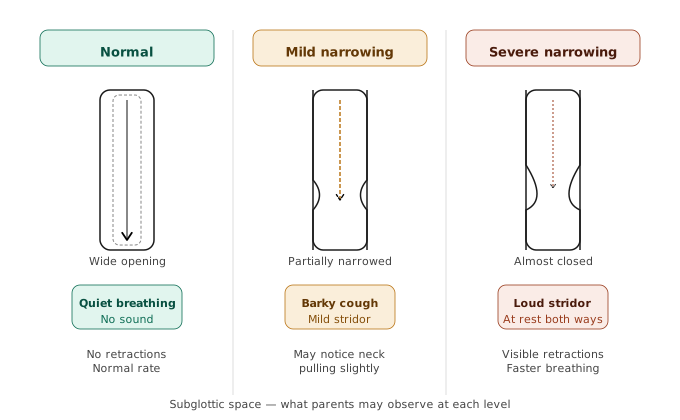
Why Toddlers Are More Affected by Croup Than Older Children
- The subglottis — the narrowest part of a child's airway, just below the vocal cords — is only about the diameter of a pencil in a toddler. Even one millimeter of swelling can reduce the airway opening significantly.
- Older children and adults have larger airways, so the same amount of viral swelling causes far less obstruction — this is why croup is rare after age six.
- Toddlers also have softer, more flexible airway cartilage, which means the walls of the windpipe are more likely to collapse inward when the child breathes hard against a narrowed opening.
- The peak incidence of croup occurs in the second year of life, and boys are affected roughly one and a half times more often than girls.
What Parents Can Manage at Home vs. What Needs the ER
- Home management is appropriate when the child has a barking cough but breathes quietly and comfortably between coughing episodes, with no stridor at rest, no retractions, and normal skin color.
- Keep the child calm — crying and agitation tighten airway muscles and worsen symptoms. Hold the child upright, speak softly, and avoid unnecessary examinations or throat checks.
- Bundle the child and step outside into cool night air for 15 to 30 minutes — this has been shown to reduce symptoms of mild to moderate croup.
- Go to the ER if stridor is present at rest when the child is calm, if retractions are visible at the neck or ribs, if the child is drooling or unable to swallow, if lips or fingertips appear blue or gray, or if the child seems unusually sleepy or limp.
How Pediatricians Decide Whether a Toddler With Croup Can Go Home
- In the ER, doctors use a severity assessment based on five observations: level of alertness, presence and timing of stridor, quality of air movement heard with a stethoscope, degree of retractions, and skin color.
- Mild croup — occasional barking cough, no stridor at rest, no retractions — is treated with a single dose of oral steroid and the child is sent home. This reduces the chance of return visits and worsening symptoms.
- Moderate to severe croup — stridor at rest, visible retractions — is treated with both a steroid and a nebulized breathing treatment. The child is then observed for two to four hours to ensure symptoms do not return before discharge.
- Parents should expect the barking cough to return the next night, usually milder. Full resolution typically occurs within two to three days, though some children have symptoms for up to a week.
Knowledge Check
Tap the answer that best fits each scenario.
A 2-year-old has croup. After calming down a squeak is still heard a high-pitched squeaky sound when they breathe in. The skin between the ribs is also pulling in. What is the appropriate response?
A toddler was treated for croup in the ER last night and sent home. Tonight the barking cough has returned but sounds milder and there is no stridor at rest. What does this mean?