Mottling is a lace-like or blotchy pattern of purple, reddish, or pale patches on the skin caused by changes in blood flow through tiny blood vessels near the surface. During a fever, the body redirects blood flow to protect vital organs, which can temporarily change how the skin looks. In young babies, mild mottling with cold or fever can be normal — but persistent, worsening, or widespread mottling during a fever is one of the key warning signs doctors use to identify serious infections.
Illustrative image.
What does normal skin look like during a fever?
When a child's temperature is rising, the skin may feel cool, look slightly pale, and the child may shiver — this is the body generating heat and is a normal part of the fever cycle
Once the fever peaks, the skin often turns flushed, pink, or red — especially on the cheeks and chest — as blood vessels open up to release heat
Young babies, especially newborns, commonly develop a mild lace-like pattern on the skin called cutis marmorata — this is a normal response to being cold or undressed and disappears quickly when the baby is warmed
During a fever, it is normal for a child's hands and feet to feel cooler than the rest of the body — the body naturally pulls blood toward the core to protect vital organs
In darker skin tones, color changes may be more visible on the palms, soles, lips, gums, and nail beds rather than on the trunk
What causes concerning skin changes during a fever?
When the body is fighting a serious infection, blood pressure can drop and blood flow to the skin decreases — this creates a blotchy, mottled, or marbled appearance that does not go away with warming
Mottled or pale skin during a fever can be an early sign of sepsis (a dangerous whole-body response to infection) — the skin changes happen because the smallest blood vessels are not getting enough blood flow
Research has identified that cold hands and feet, abnormal skin color, and leg pain are among the earliest signs of serious bacterial infections like meningococcal disease — often appearing hours before the more well-known rash
A non-blanching rash — tiny red or purple dots called petechiae (small pinpoint spots) or larger bruise-like patches called purpura that do not fade when pressed — can signal that bleeding is happening under the skin and may indicate a medical emergency
Dehydration during a fever can also cause the skin to look pale or mottled, as the body does not have enough fluid to maintain normal circulation to the skin
Illustrative image.
What can parents observe at home when skin looks blotchy or mottled?
Learn the glass test — press a clear glass firmly against a rash or skin discoloration; if the color fades under pressure and returns when released, it is blanching and generally less concerning; if the spots stay visible through the glass, this is non-blanching and needs urgent medical attention
When skin looks blotchy or mottled, try gently warming the child — if the mottling disappears quickly with warmth or bundling, it is more likely a normal response to temperature changes
Check the skin in good lighting and look at multiple areas — the chest, belly, arms, and legs — to see if the mottling is spreading or getting worse over time
Monitor the child's overall behavior alongside the skin changes — a child with mild mottling who is feeding well, making eye contact, and responding normally is more reassuring than one who is also limp, sleepy, or refusing to eat
Keep the child well-hydrated during a fever — small, frequent sips of fluids help maintain circulation and can improve mild skin color changes caused by dehydration
What skin changes during fever need urgent attention?
A non-blanching rash — purple or red spots that do not fade when pressed firmly — especially combined with fever, is a medical emergency — call 911 immediately — this can indicate meningococcal disease or another serious blood infection
Mottling or blotchy skin that does not improve with warming and persists even when the child is bundled in a warm room is a red flag for poor circulation
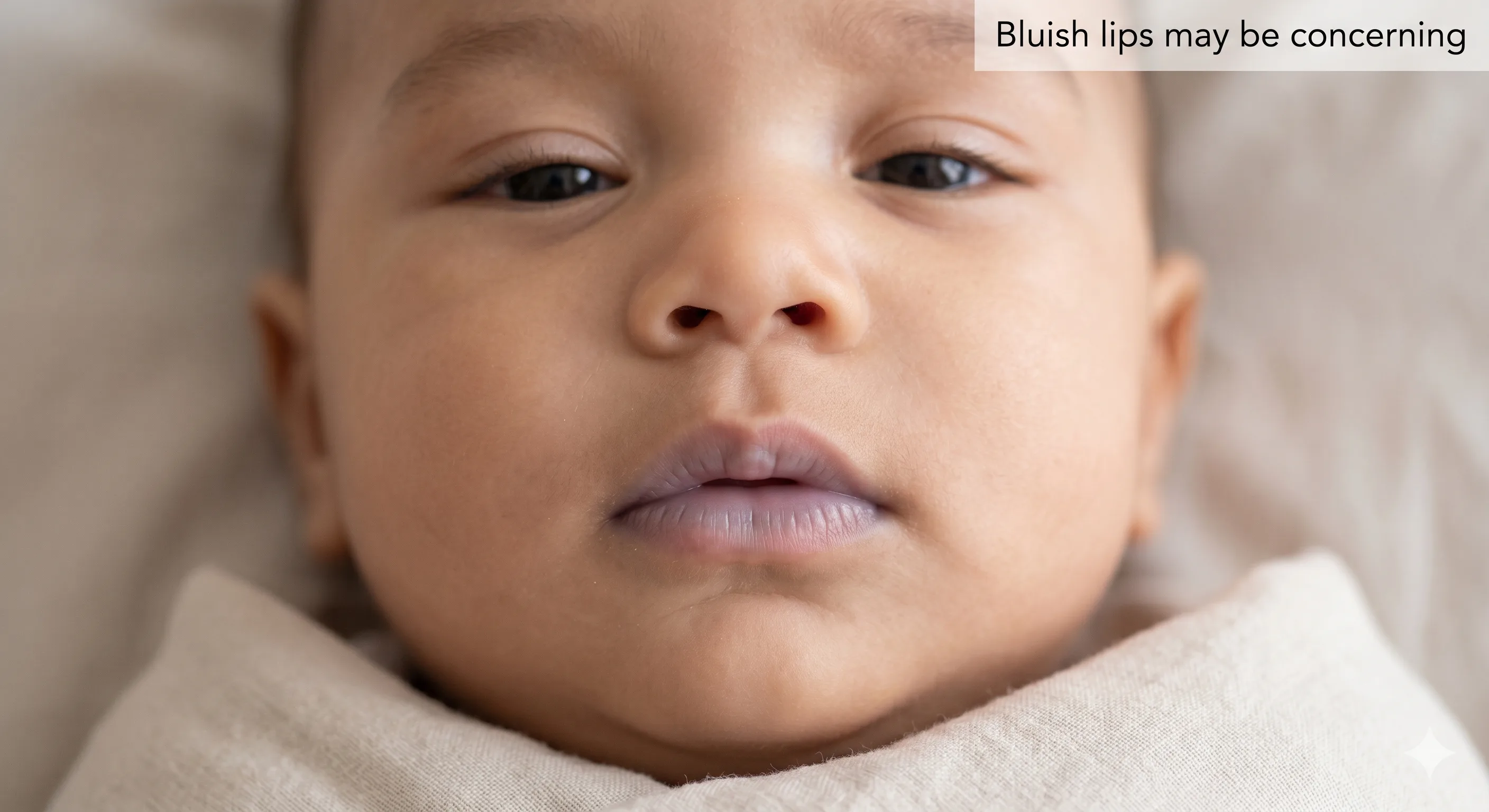
Skin that looks gray, ashen, or has a blue tint around the lips, tongue, or nail beds suggests the body is not getting enough oxygen — call 911 immediately
Skin changes accompanied by extreme sleepiness, difficulty waking, refusing all fluids, fast or labored breathing, or a weak or high-pitched cry need urgent evaluation
Any baby under 3 months with a fever of 100.4°F or higher and skin that looks mottled, pale, or discolored needs urgent evaluation — young babies can deteriorate quickly and skin changes may be one of the earliest visible clues
Describe the skin color and pattern observed
Which color description matches?
Choose the skin color or pattern you observed on your baby or young child.
How do pediatricians generally evaluate and manage skin color changes with fever?
One of the first things a doctor checks is capillary refill time — pressing on a fingertip or toenail until it turns white, then releasing and counting how long it takes for the pink color to return; longer than 2 to 3 seconds suggests poor blood flow and raises concern
The doctor assesses the child's overall appearance — looking at alertness, breathing, and skin color and circulation as a combined picture of how sick the child may be
If the skin changes suggest poor perfusion or possible sepsis, the doctor will typically order blood tests, urine tests, and may start intravenous fluids quickly to support the child's circulation
For a child with a non-blanching rash and fever, the evaluation is treated as urgent — blood cultures, blood counts, and clotting tests are typically drawn rapidly, and antibiotics may be started before results come back
In young babies, mottled skin combined with fever is one of the clinical signs that may lead to a full sepsis evaluation including a lumbar puncture (spinal tap — a test of the fluid around the brain and spine), because skin changes in this age group are an important marker of serious infection
Prepare a handoff summary for the doctor
Build your caregiver handoff sheet
Share what you have already observed. The preview updates as you type. Nothing is saved on this page.
Symptoms to note (select all that apply)
Live preview
PediaPulse
Caregiver Handoff Sheet
Your handoff preview will appear here as you type.
PediaPulse
Caregiver Handoff Sheet
No handoff information entered.
Check Your Understanding
Tap the answer that best fits each scenario.
A 3-month-old is undressed for a diaper change in a cool room. The parent notices a lace-like blotchy pattern on the baby's chest and arms. When the baby is re-dressed and wrapped in a blanket, the pattern disappears within a few minutes.
What does this skin pattern describe?
A 10-month-old has had a fever for several hours. A parent notices small red and purple pinpoint spots appearing on the baby's arms and chest. The parent presses a clear glass firmly against the spots — the spots remain fully visible through the glass and do not fade.
What does this non-blanching rash describe?
A 2-year-old with a fever of 103°F has a blotchy, mottled appearance on the legs. A parent tries warming the child with a blanket but the mottling does not improve after 10 minutes. The child is also very sleepy and refusing to drink.
What does persistent mottling that does not improve with warming describe?
Hamilton JL, Evans SG, Bakshi M. Management of fever in infants and young children. American Family Physician. 2020;101(12):721-729.
Thompson MJ, Ninis N, Perera R, et al. Clinical recognition of meningococcal disease in children and adolescents. Lancet. 2006;367(9508):397-403.
Ebenezer Adebiyi, MD, MPH, FAAP
Board-Certified Pediatrician · FAAP · Founder of PediaPulse
Dr. Adebiyi built PediaPulse to help parents understand what they are observing so they can have better, more informed conversations with their own doctors.