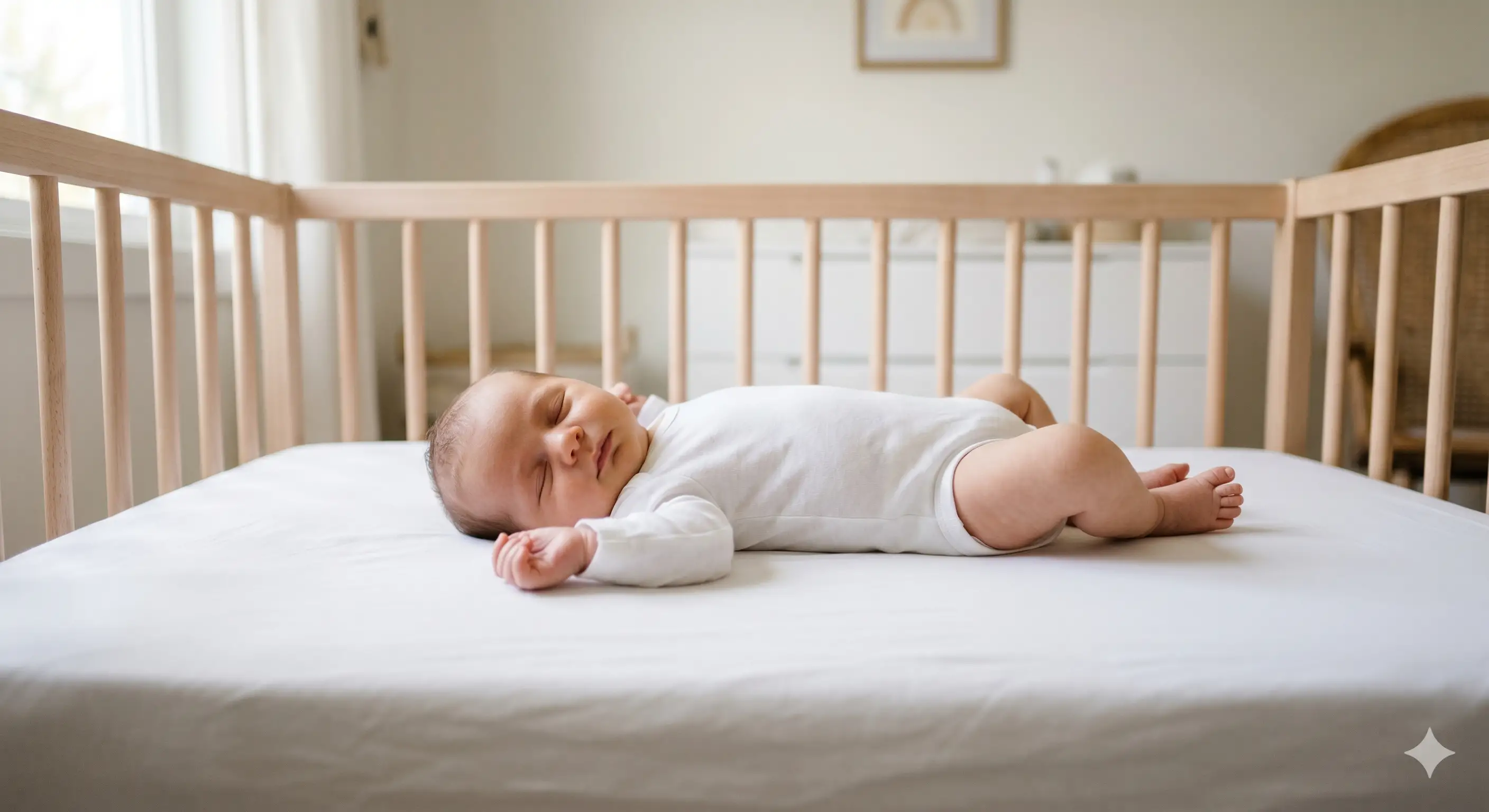
A 2-week-old pauses breathing for about 7 seconds during sleep, then starts again on their own. The baby has pink lips, relaxed limbs, and looks comfortable throughout. What is this?
Newborn Periodic Breathing: Why Babies Pause Their Breath
Healthy full-term newborns commonly pause their breathing for 3 to 10 seconds in a repeating cycle — a few breaths, a short pause, a few more breaths. This is called periodic breathing and happens because the brain's breathing control center is still maturing. As long as the baby stays pink, relaxed, and restarts breathing on their own, these pauses are a normal part of newborn development and typically fade by 2 to 4 months of age.
Why Periodic Breathing Is So Common in Newborns Specifically
- The brainstem — the part of the brain that controls automatic breathing — is not fully wired at birth. It sends breathing signals in bursts rather than a smooth, steady rhythm.
- Newborns spend over half their sleep time in active sleep, which naturally makes breathing more irregular and pauses more frequent.
- The sensors in the body that detect oxygen and carbon dioxide levels are still calibrating after birth — they sometimes overshoot or undershoot, causing the brain to briefly pause its breathing signal before correcting.
- Periodic breathing is seen in up to 40% of healthy full-term newborns in the first weeks of life and is most noticeable during sleep.
- This pattern decreases steadily as the brain matures and typically becomes uncommon by about 6 months of age.
What Parents Should Watch For During Newborn Breathing Pauses
- Normal periodic breathing: pauses last under 10 seconds, the baby's skin stays pink, and breathing restarts on its own without any intervention.
- A pause lasting 20 seconds or longer is no longer considered periodic breathing — it meets the medical definition of apnea and should be evaluated.
- Any pause — even a short one — that comes with a color change (blue or gray lips, face, or tongue), sudden limpness, or the need for stimulation to restart breathing is a warning sign.
- The number of pauses matters less than what happens during them — frequent short pauses with normal color are far less concerning than even one pause with a color change.
- If a pause seems longer than usual, gently rub the baby's back or feet. If the baby does not resume breathing promptly, call emergency services immediately.
How Pediatricians Evaluate Periodic Breathing in Newborns
- At routine checkups, the pediatrician assesses the baby's breathing pattern, heart rate, and overall tone — periodic breathing in an otherwise healthy, well-growing newborn usually requires no testing.
- If parents report episodes that seem prolonged or are accompanied by color changes, the doctor may ask for a phone video of the event — this is one of the most helpful tools for evaluation.
- In some cases, the pediatrician may recommend a brief period of monitored observation or refer to a specialist for a sleep study to distinguish normal periodic breathing from true apnea.
- Periodic breathing that is increasing in frequency or duration rather than decreasing over the first few months, or that persists beyond 6 months of age, warrants further evaluation.
Knowledge Check
Tap the answer that best fits each scenario.
A 3-week-old has a breathing pause and observers notice the lips turn slightly blue before breathing restarts. What is the appropriate response?
A 5-month-old is still having frequent breathing pauses during sleep. At 2 months the pediatrician said this was normal periodic breathing. Is ongoing concern warranted at 5 months?