A 2-month-old with known laryngomalacia sounds louder during sleep than when awake. The baby sleeps through the night, has no breathing pauses, and is gaining weight well. What is this?
High-Pitched Squeaking When Baby Breathes in Sleep
Many babies with a floppy voice box sound noisier during sleep — especially on their back — because relaxed muscles and gravity allow the soft tissue to fall inward more easily. Mild squeaking during sleep that does not wake the baby, does not cause pauses in breathing, and is not accompanied by color changes is usually part of the baby's known baseline. It becomes a concern if the baby has breathing pauses, turns blue or pale, struggles to breathe with visible chest or neck pulling, or is difficult to wake.
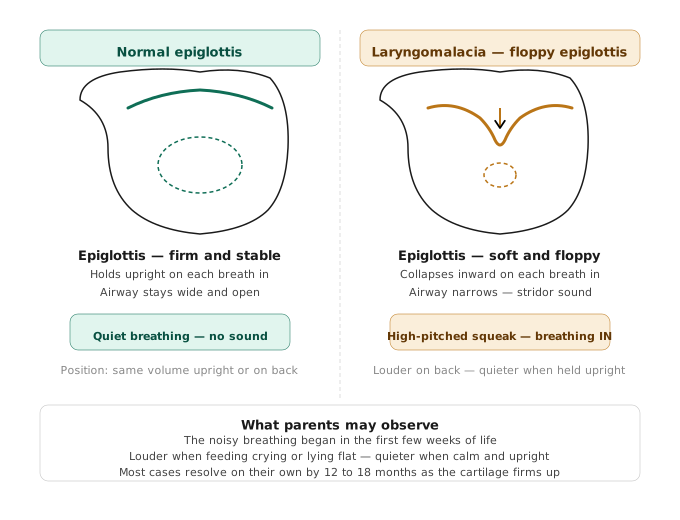
Why the Squeaking Sounds Worse During Sleep
- During sleep, the muscles that help hold the airway open relax — in a baby with a floppy voice box, this allows the soft tissue above the vocal cords to collapse inward more easily, making the squeaky sound louder than when awake.
- The back-sleeping position — which is the safest position for reducing SIDS risk — can make the sound louder because gravity pulls the floppy tissue backward into the airway. This does not mean back sleeping is unsafe.
- Sleep changes how the brain controls breathing — breathing becomes slightly shallower, which can make any existing narrowing more noticeable as a sound.
- A baby who has always had mild squeaking during sleep since the early weeks, sleeps comfortably, has no pauses or color changes, and wakes normally is likely showing the expected nighttime pattern of laryngomalacia.
When to Worry
- Pauses in breathing lasting longer than about 20 seconds, or shorter pauses followed by a color change — blue or pale lips, face, or fingertips — suggest the airway may be closing off rather than just vibrating.
- Visible increased effort during sleep: skin pulling in at the neck, between the ribs, or below the ribs, belly pumping hard, or nostrils flaring while the baby sleeps.
- The baby consistently extends the neck backward or arches during sleep — this may be an instinctive attempt to open a narrowed airway and should be mentioned to the pediatrician.
- The nighttime sound is getting progressively louder over weeks alongside feeding difficulties, poor weight gain, or frequent waking with gasping.
- New symptoms like choking or gagging during sleep — these are not expected with simple laryngomalacia and warrant a call to the doctor.
Knowledge Check
Tap the answer that best fits each scenario.
A 3-month-old with laryngomalacia has started having brief pauses in breathing during sleep followed by a gasp. There is also the skin between the ribs pulling in. What is the appropriate response?
Observers notice a sleeping 10-week-old consistently arches the neck backward during sleep and the squeaking sounds louder this week. The baby has also been taking longer to finish feeds. What is the appropriate response?