A 4-week-old makes a high-pitched squeak when crying hard but breathes silently when calm and sleeping. The baby is feeding well and gaining weight normally. What is this most likely?
High-Pitched Squeak Only When Baby is Crying
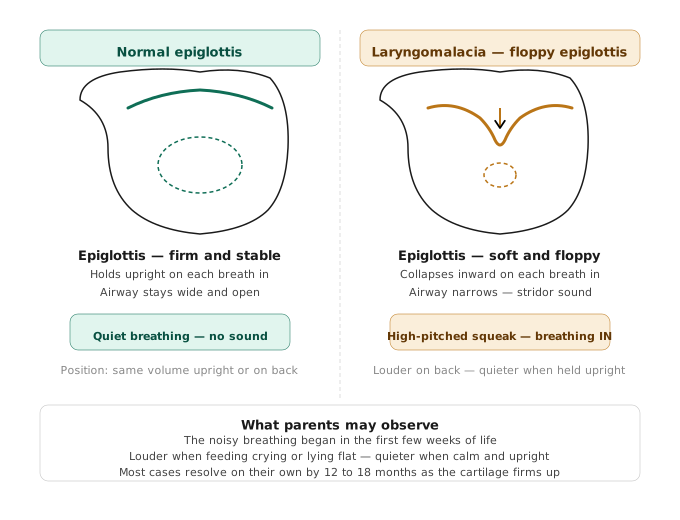
A high-pitched squeak heard only when a baby cries — and not when calm or sleeping — is usually the mildest form of laryngomalacia, a floppy voice box. Crying forces air faster through the airway, which is just soft enough to vibrate under high airflow but stays quiet during relaxed breathing. This pattern is common, typically appears in the first weeks of life, and usually resolves on its own by 12 to 18 months. It becomes a concern if the sound begins appearing during calm breathing, during feeding, or if the baby has trouble gaining weight.
Why Crying Brings Out the Squeak
- When a baby cries, airflow through the voice box increases dramatically — air moves faster and with more force than during quiet breathing.
- In babies with a mildly floppy voice box, the soft tissue above the vocal cords vibrates or collapses inward only when airflow is fast enough to pull it in — during calm breathing, the airflow is too gentle to cause this.
- This is why the squeak appears during crying, excitement, or vigorous feeding and disappears completely when the baby is relaxed or asleep.
- Stridor heard only during crying is classified as mild laryngomalacia — the airway is open enough for normal breathing but just soft enough to vibrate under stress.
- Stridor heard at rest means the airway is narrow enough to create turbulence even during quiet breathing — this represents a more significant degree of narrowing.
When to Worry
- The sound starts appearing during calm breathing, sleep, or feeding — any spread beyond crying suggests the airway may be narrowing further.
- Feeding problems: coughing, choking, gagging, pulling off the breast or bottle frequently, or very slow feeds — the floppy tissue may be interfering with swallowing.
- Poor weight gain or weight loss — a sign the breathing effort is using too much energy or the baby cannot feed efficiently.
- Signs of increased breathing effort beyond the sound itself — skin pulling in at the neck or between the ribs, belly pumping hard, or nostril flaring during calm moments.
- The sound gets dramatically louder rather than the mild gradual increase expected in the first six to eight months — sudden or significant worsening needs evaluation.
Knowledge Check
Tap the answer that best fits each scenario.
An 8-week-old has had a cry-only squeak since week two. This week observers notice the squeak also appears when the baby is quietly awake between feeds. What is the appropriate response?
A 3-month-old has mild laryngomalacia. At the 3-month visit the pediatrician notes the baby has gained weight well and the squeak is still limited to crying. What is the expected next step?