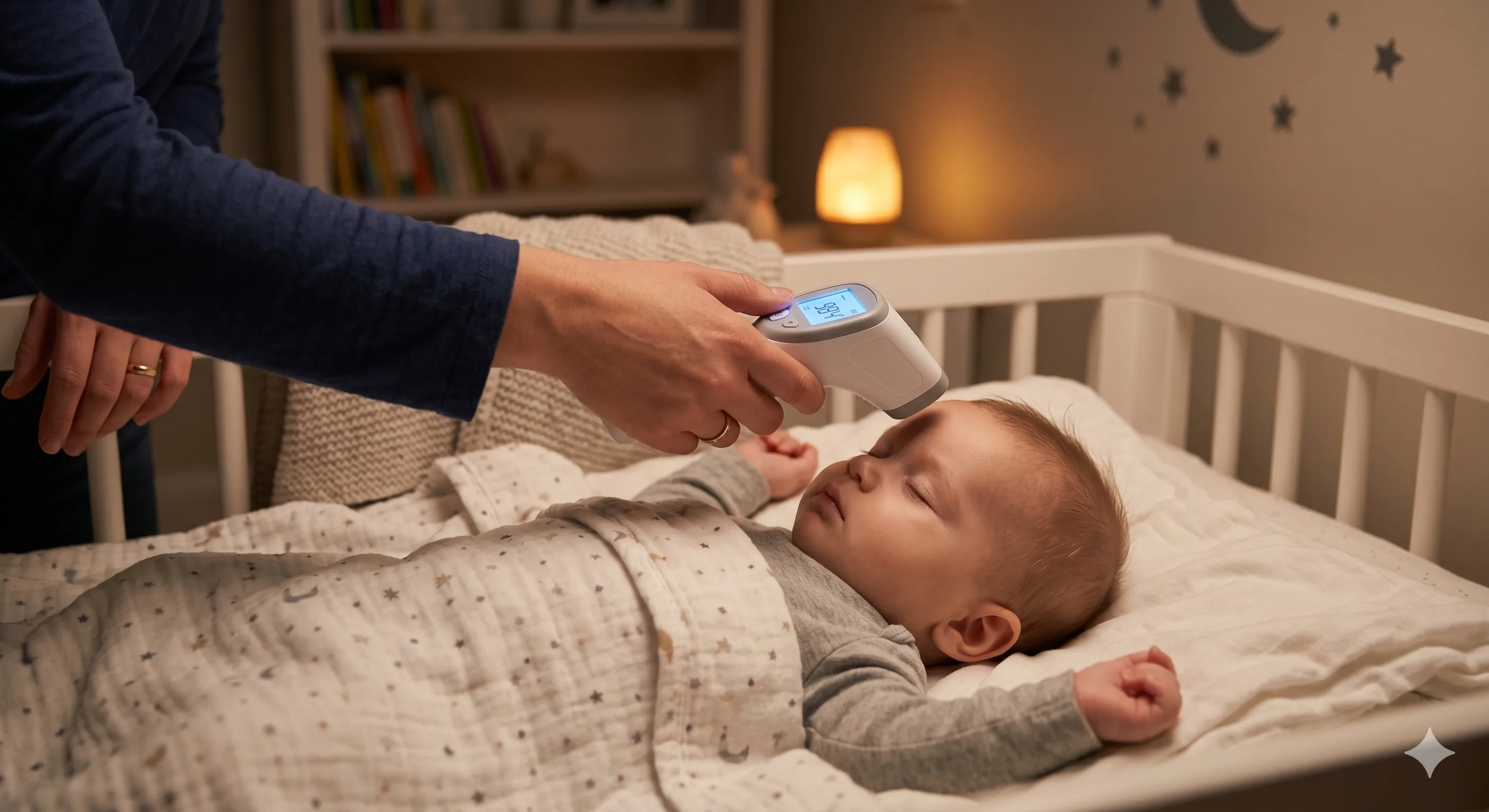
Body temperature measures the heat the body produces and releases. Normal temperature in babies and young children generally falls between 97.5°F and 99.5°F (36.4°C to 37.5°C). A temperature of 100.4°F (38.0°C) or higher is a fever — by any method of measurement.
Illustrative image.
What is a normal body temperature for babies and young children?
Normal body temperature in babies and young children generally falls between 97.5°F and 99.5°F (36.4°C to 37.5°C)
Babies in the first two months of life tend to run slightly warmer than older babies and children
Body temperature is naturally a little lower in the early morning and a little higher in the late afternoon and evening
Activity, feeding, warm clothing, and warm baths can temporarily raise temperature without indicating illness
A temperature reading depends on the method used — rectal readings tend to be about 0.5 to 1°F higher than armpit readings
A single reading slightly above or below the typical range does not always indicate a problem
A temperature of 100.4°F (38.0°C) or higher is a fever — this threshold applies regardless of the method used
How should parents take a baby's temperature?
Rectal thermometers are the most accurate method for babies and children under three years old
Armpit (axillary) readings are less invasive and useful for screening, but tend to read lower than rectal and may miss a low-grade fever
Ear (tympanic) thermometers work best in children over six months — they may be less reliable in very young babies due to small ear canals
Forehead (temporal artery) thermometers are convenient but can vary and may not be accurate enough for babies under three months
Using the same type of thermometer and the same method each time helps track changes accurately
Digital thermometers are preferred over glass mercury thermometers for safety
See fever thresholds by age
How old is your child?
What causes fever in babies and young children?
Viral infections — such as colds, flu, and stomach bugs — are the most common cause of fever in young children
Bacterial infections, including ear infections and urinary tract infections, can also cause fever
Teething may cause a very mild temperature rise, but a temperature of 100.4°F or higher is not caused by teething alone
Vaccines sometimes cause a low-grade fever within 24 to 48 hours — this is a normal immune response
Overdressing or overheating a baby can raise body temperature temporarily
In babies under three months old, fever may be the only visible sign of a serious infection
Fever itself is not an illness — it is the body's natural response to help fight infection
What does fever look like in babies and young children?
Any temperature of 100.4°F (38.0°C) or higher in a baby younger than three months old is a fever that requires same-day medical evaluation — regardless of how the baby appears
In babies three to six months old, a fever above 102°F (38.9°C) or any fever lasting more than one day is high
A fever that lasts more than three to five days in any child, even if the child seems otherwise well, is prolonged
A child with fever who appears limp, unresponsive, or has a stiff neck needs emergency evaluation — call 911
A purple or red rash that does not fade when pressed (non-blanching) alongside fever is a medical emergency — call 911
Fever combined with fast breathing, poor feeding, unusual sleepiness, or reduced wet diapers adds to the concern
The height of the fever alone does not always predict how serious the illness is — how a child looks and behaves matters as much as the number
How do pediatricians evaluate a child with fever?
Pediatricians assess the child's overall appearance, activity level, feeding, hydration, and behavior alongside the temperature reading
A thorough examination includes checking the ears, throat, lungs, belly, and skin for signs of infection
In young babies, blood tests, urine tests, and sometimes a spinal fluid test may be needed to check for bacterial infection
Older children with a clear source of fever — such as an ear infection or sore throat — may not need additional testing
Pediatricians consider the child's age, vaccination status, and how long the fever has lasted when deciding on next steps
The goal of evaluation is to identify whether the fever is caused by a common viral illness or something that needs specific attention
Check Your Understanding
Tap the answer that best fits each scenario.
A 6-week-old feels warm to the touch. A parent takes a rectal temperature and reads 100.6°F. The baby is feeding and appears alert.
How would you describe this temperature reading?
A 9-month-old has had a temperature of 101.8°F for one day. The baby is fussier than usual but is drinking fluids, producing wet diapers, and has no rash or breathing changes.
Which observation is most important to describe to a doctor?
A 2-year-old develops a fever of 103.2°F. While checking on the child, a parent notices a spreading red-purple rash on the legs that does not fade when pressed with a finger.
Pantell RH, Roberts KB, Adams WG, et al. Evaluation and management of well-appearing febrile infants 8 to 60 days old. Pediatrics. 2021;148(2):e2021052228.
Cioffredi LA, Jhaveri R. Evaluation and management of febrile children: a review. JAMA Pediatrics. 2016;170(8):794-800.
Ebenezer Adebiyi, MD, MPH, FAAP
Board-Certified Pediatrician · FAAP · Founder of PediaPulse
Dr. Adebiyi built PediaPulse to help parents understand what they are observing so they can have better, more informed conversations with their own doctors.