PediaPulse

Baby & Child Vital Signs

Vital signs tell a story about how a baby's heart, lungs, and body are working. This hub explains what normal looks like at every age — and what changes are worth describing to your child's doctor.
A simplified pediatric body outline showing the five vital signs: respiratory rate, heart rate, blood oxygen, body temperature, and blood pressure, each with a callout pointing to the relevant body region. Heart is on the patient's left (viewer's right). Blood pressure cuff is on the patient's right arm (viewer's left).Respiratory rateBreaths per minuteVaries by ageHeart rateBeats per minuteVaries by ageBody temperatureNormal: 97–100.3°FFever: ≥100.4°FBlood oxygenSpO₂ normal: ≥95%All agesBlood pressureSystolic/diastolicVaries by ageRespiratory rateHeart rateBody temperatureBlood oxygenBlood pressureNormal ranges vary by age. Always discuss readings with your child's doctor.

Explore by vital sign

What are vital signs and why do they matter in babies and young children?

  • Vital signs are basic body measurements that show how the heart, lungs, and temperature control systems are working
  • The main vital signs in babies and young children are heart rate, breathing rate, body temperature, blood oxygen level, and blood pressure
  • Babies and young children have different normal ranges than older children and adults — what looks fast for an adult may be completely normal for a newborn
  • Vital signs change naturally throughout the day — they rise with crying, feeding, activity, and fever, and fall during calm states and sleep
  • Pediatricians use vital signs as one part of a bigger picture that also includes how a child looks, feeds, and behaves
  • A single reading is rarely the full story — patterns and trends over time are often more meaningful than one number
  • Understanding what is normal for each age helps parents recognize and describe changes to their child's doctor

What are normal vital sign ranges for babies and young children?

  • Heart rate and breathing rate are both highest at birth and gradually decrease as children grow
  • A newborn's heart rate typically ranges from 110 to 160 beats per minute — by school age this settles closer to 60 to 100 beats per minute
  • A newborn's breathing rate is typically 30 to 60 breaths per minute — by age 6 this falls to around 20 to 25 breaths per minute
  • These ranges are wide — healthy babies of the same age can have noticeably different resting rates
  • Normal body temperature is generally below 100.4°F (38°C) — a reading at or above this threshold is considered a fever at any age
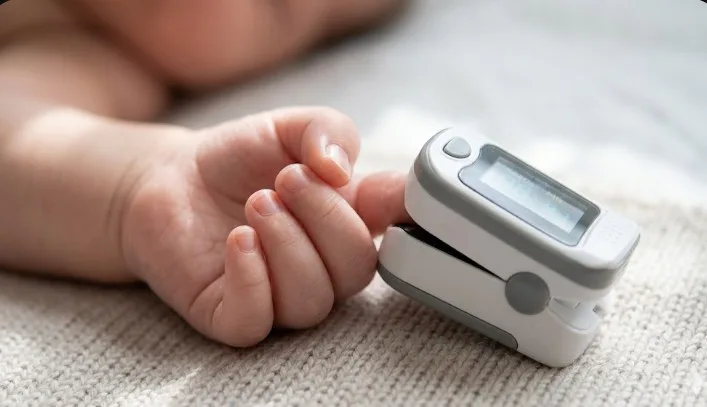
  • Blood oxygen level (SpO₂) measured by a pulse oximeter should generally read 95% or above in babies and young children
  • During sleep, both heart rate and breathing rate tend to run lower than during waking hours — this is expected

How old is your child?

What causes vital sign changes in babies and young children?

  • Fever is one of the most common reasons vital signs change — when body temperature rises, heart rate and breathing rate typically increase as well
  • Viral respiratory illnesses such as bronchiolitis, croup, and the common cold can raise breathing rate and increase the visible effort of breathing
  • Dehydration from vomiting, diarrhea, or poor fluid intake can raise heart rate as the body works to maintain circulation
  • Pain, discomfort, and distress — including ear infections and gas — can temporarily elevate heart rate
  • Activity, excitement, and crying are normal everyday causes of faster heart rate and breathing rate
  • Sleep naturally lowers both heart rate and breathing rate, and some variation during sleep is expected
  • In most cases, vital sign changes caused by everyday activity or mild illness return to normal once the cause resolves

When should parents pay closer attention to vital sign changes?

  • A breathing rate that stays fast even when a baby is calm and at rest — not just during crying or feeding — is worth describing to a doctor
  • Breathing that looks effortful, with visible chest pulling, nostril widening, or grunting sounds alongside a fast rate, is more significant than a fast rate alone
  • A heart rate that remains unusually fast or slow at rest — especially if a baby also looks pale, sweaty, or limp — warrants a closer look
  • Fever in a baby younger than 3 months (100.4°F / 38°C or higher) is generally a reason to seek prompt medical evaluation regardless of how the baby appears
  • Blue or gray color around the lips, tongue, or gums — especially at rest — combined with any vital sign change is a reason to seek immediate medical attention
  • A single mildly elevated reading during crying or activity is usually less concerning than a pattern of persistently abnormal numbers at rest
  • A child who is difficult to wake, refuses to feed, or shows a significant change in behavior alongside abnormal vital signs may need prompt evaluation

How do pediatricians evaluate vital signs in babies and young children?

  • Pediatricians measure vital signs at every well-child visit and sick visit — this builds a personal baseline for each child over time
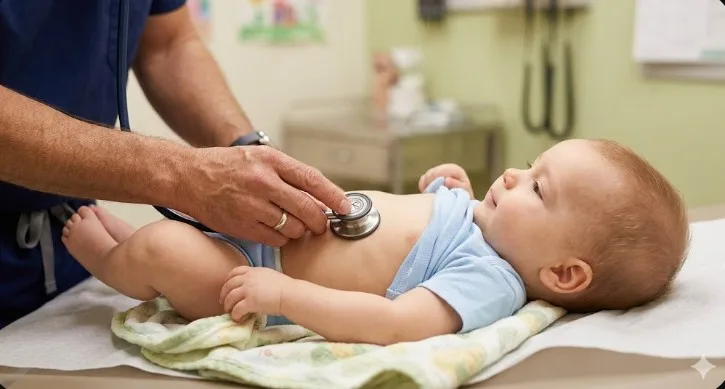
  • Heart rate is measured by listening with a stethoscope or using a pulse oximeter placed on a finger or toe
  • Breathing rate is counted by watching chest or belly movements for a full minute, ideally when the child is calm or sleeping
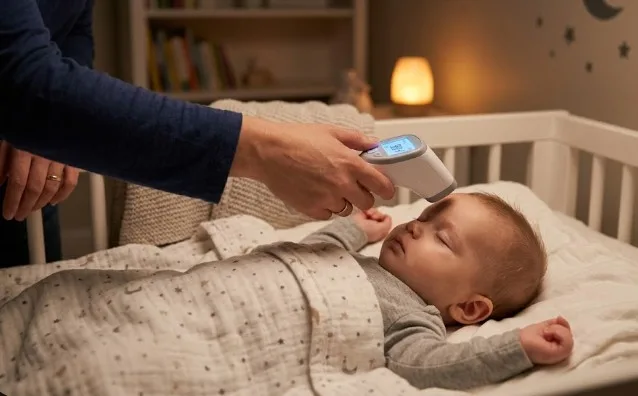
  • Temperature is measured using age-appropriate methods — rectal thermometers are generally recommended for accuracy in babies under 6 months
  • Blood oxygen level is measured with a small painless sensor (pulse oximeter) — normal readings are generally 95% or above
  • Capillary refill time — pressing briefly on a fingertip and watching how quickly the pink color returns — gives information about circulation; normal refill is about 2 seconds
  • Vital signs are always interpreted alongside a child's overall appearance, feeding, hydration, and behavior — no single number is evaluated in isolation
A simplified pediatric body outline showing the five vital signs: respiratory rate, heart rate, blood oxygen, body temperature, and blood pressure, each with a callout pointing to the relevant body region. Heart is on the patient's left (viewer's right). Blood pressure cuff is on the patient's right arm (viewer's left).Respiratory rateBreaths per minuteVaries by ageHeart rateBeats per minuteVaries by ageBody temperatureNormal: 97–100.3°FFever: ≥100.4°FBlood oxygenSpO₂ normal: ≥95%All agesBlood pressureSystolic/diastolicVaries by ageRespiratory rateHeart rateBody temperatureBlood oxygenBlood pressureNormal ranges vary by age. Always discuss readings with your child's doctor.

Test your observational skills — three quick scenarios.

Check Your Understanding

Tap the answer that best fits each scenario.

A 2-month-old is sleeping quietly. A parent counts the breaths for one minute and gets 48. The baby looks comfortable, with no visible chest pulling or color changes.

How would you describe this breathing rate?

A 4-month-old has had a fever of 101.2°F for several hours. A parent notices the baby's breathing seems faster than usual and the heart rate feels quicker when they hold the baby.

What is the most likely explanation for these vital sign changes?

A 6-month-old has a pulse oximeter reading of 93% while calm and awake. The baby looks comfortable but the parent is unsure if this is normal.

How should a parent think about this reading?