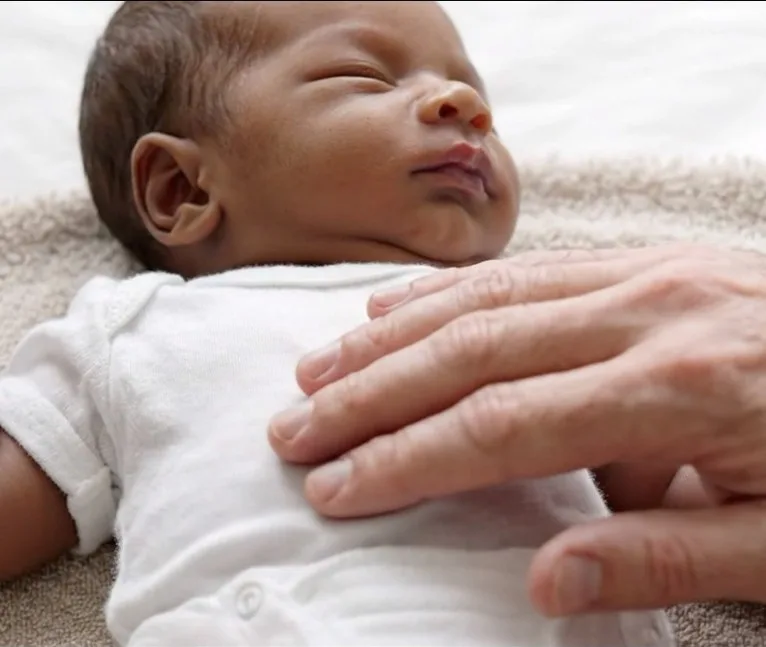
Toddlers between ages 1 and 3 often become noticeably sleepier when fighting off an illness — extra naps and earlier bedtimes are the body's way of conserving energy for healing. This is usually normal. The important distinction is whether a toddler can be woken up and, once awake, shows some awareness of surroundings. A toddler who cannot be roused, goes completely limp when picked up, or seems confused and does not recognize familiar faces needs medical evaluation.
Illustrative image.
Why is extreme sleepiness during illness different in toddlers than in younger babies?
Toddlers are normally high-energy, so a sudden shift to prolonged sleeping and no interest in play is more noticeable — but it is often just the body's natural healing response
Unlike babies, toddlers can give more feedback — they can point to pain, push away food, ask for water, or say no — providing more tools to gauge how they are feeling beneath the sleepiness
Toddlers are more likely than babies to have common viral illnesses like flu, croup, or roseola that cause several days of heavy fatigue followed by full recovery
At this age, the risk of hidden serious bacterial infections is lower than in young babies because the immune system is more developed and most routine vaccinations have been given
Toddlers are at the peak age for febrile seizures — brief episodes of shaking triggered by rapid temperature rise — which can cause a period of deep, hard-to-wake sleepiness afterward that is usually temporary
What should parents watch for when a toddler is extremely sleepy with fever?
After waking a toddler, watch whether they make eye contact, respond to their name, and show at least some recognition of familiar faces — even if cranky, these are reassuring signs
A toddler who perks up at least partially after fever-reducing medicine brings the temperature down is generally in a safer zone than one who remains completely flat and unresponsive regardless of temperature
Refusing all fluids for more than several hours, having a dry mouth, producing no tears when crying, or having noticeably dark urine are signs of dehydration that can worsen sleepiness
New symptoms layered on top of extreme sleepiness — such as a stiff neck, sensitivity to light, repeated vomiting, a spreading rash, or difficulty breathing — change the urgency significantly
A non-blanching rash — one that does not fade when pressed firmly — alongside extreme sleepiness is a medical emergency — call 911
A toddler who had a febrile seizure and remains very difficult to wake for more than 15 to 20 minutes afterward needs emergency evaluation — call 911
Observe alertness, consolability, and activity level
How does your child seem right now?
Rate what you observe on each dimension. This records your observations — it does not score or judge them.
Alertness
Consolability
Activity level
How do pediatricians generally evaluate a toddler with extreme sleepiness and fever?
The doctor will watch how the toddler interacts with the room — whether they look around, reach for a parent, resist the exam, or cry with energy — all of which are positive signs of normal brain function
A focused physical examination of the ears, throat, chest, and belly helps identify common sources of infection that may be driving the fever and fatigue
If no obvious source is found and the sleepiness is concerning, blood tests to check white blood cell counts and inflammation markers and a urine sample to rule out urinary tract infection are commonly ordered
In cases where the doctor suspects a brain-related cause for the extreme sleepiness, further evaluation may include imaging or, less commonly, a lumbar puncture (spinal tap — a test of the fluid around the brain and spine)
Most toddlers with viral illnesses and expected fatigue are managed with close monitoring at home, while those showing true lethargy or concerning signs are observed in a medical setting until they improve
Log observations to share with your doctor
Log temperature readings
Enter up to 6 temperature readings with times. The dot plot shows the pattern visually — it does not interpret the readings.
A 2-year-old has a fever of 102.8°F and has been napping most of the afternoon. When a parent calls the child's name loudly, the toddler opens eyes, looks up, and says 'mama' before falling back asleep. The child accepted a small cup of water when offered.
How would you describe this level of sleepiness?
A 18-month-old has had a fever for two days. After giving fever-reducing medicine, the parent notices the toddler remains completely flat — not looking around, not reaching for a favorite toy placed nearby, and not responding to a familiar voice even after 30 minutes.
What does this level of unresponsiveness describe after medicine?
A 2-year-old has a fever and is very sleepy. While checking on the child a parent notices the toddler's neck seems stiff — the child resists and cries when the head is gently moved side to side. The child has also vomited twice in the last hour.
What does neck stiffness and vomiting alongside extreme sleepiness describe?
Not every fever is the same—and not every fever needs the same response.
Get pediatrician-designed visual guides and tools like this one, free in the PediaPulse app.
Cioffredi LA, Jhaveri R. Evaluation and management of febrile children: a review. JAMA Pediatrics. 2016;170(8):794-800.
Hamilton JL, Evans SG, Bakshi M. Management of fever in infants and young children. American Family Physician. 2020;101(12):721-729.
Ebenezer Adebiyi, MD, MPH, FAAP
Board-Certified Pediatrician · FAAP · Founder of PediaPulse
Dr. Adebiyi built PediaPulse to help parents understand what they are observing so they can have better, more informed conversations with their own doctors.