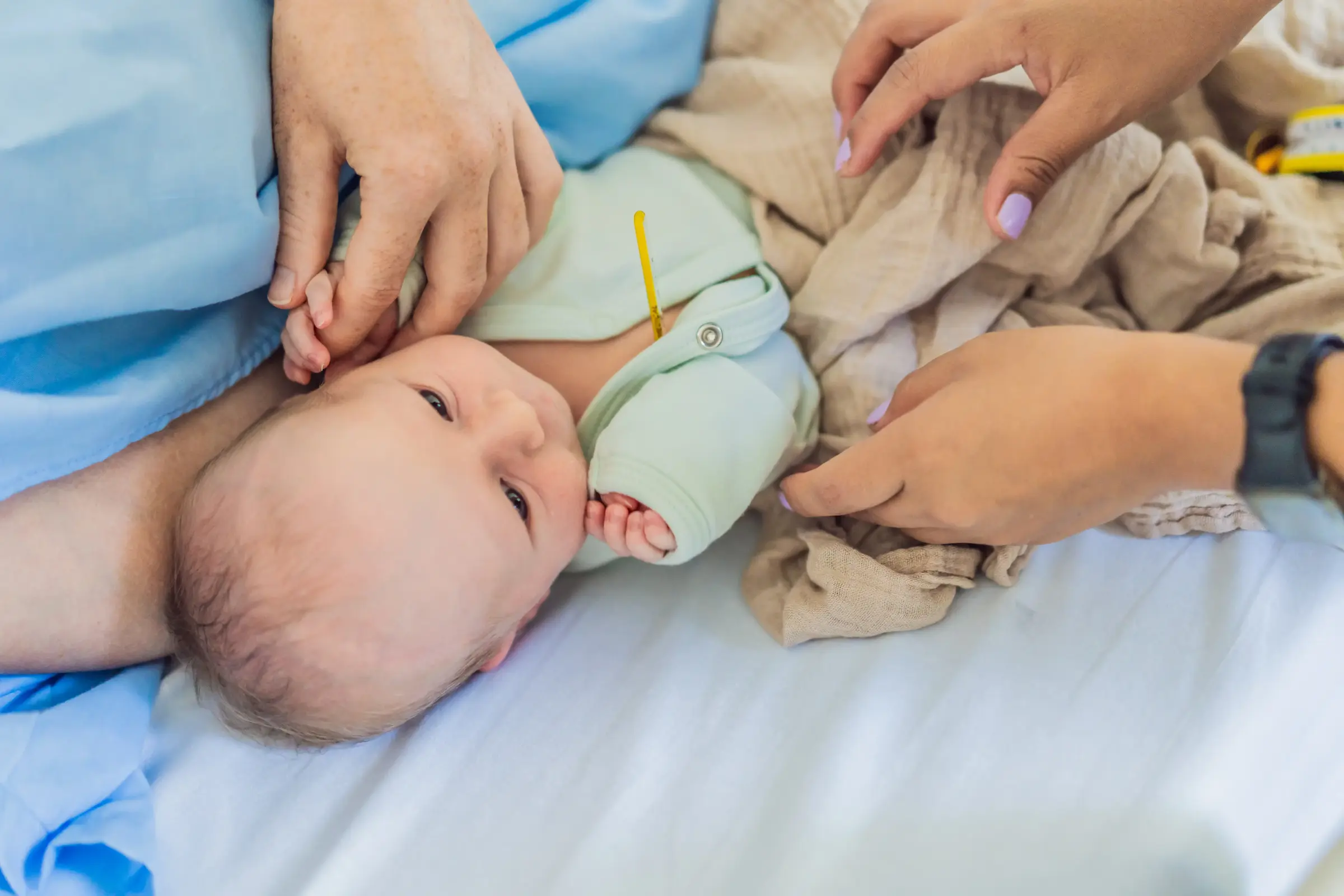
In toddlers, fever often rises and falls in a wave-like pattern called a fever curve. Temperature may spike in the late afternoon or evening and dip in the morning during the same illness. Fever-reducing medicine may flatten these peaks but rarely eliminates the pattern entirely until the underlying illness resolves.
Illustrative image.
Why do toddler fevers follow a rising-and-falling pattern?
Body temperature naturally runs lower in the early morning and higher in the late afternoon — illness amplifies this daily rhythm, creating noticeable fever spikes
The immune system releases infection-fighting signals in waves, which means the internal thermostat resets higher at certain times and lower at others
Fever-reducing medicine works for a limited window — typically four to eight hours depending on the type — and temperature often climbs again as the effect wears off
Toddlers have more mature immune systems than younger babies, but they encounter many new viruses — especially in group care settings — that can produce fevers lasting three to five days
A fever that returns after medicine wears off reflects the ongoing immune response, not a failure of the medicine or a worsening illness
Tracking the pattern — writing down temperatures, times, and when medicine was given — helps pediatricians see whether the fever curve is following an expected course
What should parents watch for when a toddler's fever keeps coming back?
How the child acts between fever spikes matters most — a toddler who drinks, plays, and interacts when the temperature dips is generally more reassuring than one who remains listless even when the fever is lower
Fever lasting more than five days — even with periods of normal temperature in between — is worth describing to a pediatrician
Refusal to drink any fluids, significantly reduced urine output, or dry lips and mouth may suggest dehydration
A toddler who becomes increasingly difficult to console, stops making eye contact, or appears confused needs prompt evaluation
New symptoms appearing after the first few days — such as ear pain, worsening cough, or a new rash — may suggest a secondary infection developing on top of the original illness
A non-blanching rash alongside fever is a medical emergency — call 911 immediately
Febrile seizures — brief episodes of shaking or stiffening triggered by rapid temperature changes — can occur in toddlers and should be evaluated by a pediatrician
Log temperature readings to see the pattern
Log temperature readings
Enter up to 6 temperature readings with times. The dot plot shows the pattern visually — it does not interpret the readings.
How do pediatricians generally evaluate a toddler with recurring fever spikes?
Pediatricians assess the child's overall appearance, activity, fluid intake, and behavior — these factors carry more weight than any single temperature reading
A thorough physical examination looks for a source — ears, throat, lungs, belly, lymph nodes, and skin are commonly checked
If no clear source is found, urine testing may be performed as urinary tract infections can present without obvious symptoms in this age group
For well-appearing, fully vaccinated toddlers with a clear viral illness, additional blood tests and cultures are generally not needed — the risk of hidden bacteremia in vaccinated children has dropped to very low levels
If the child is under-vaccinated, appears unwell, or has fever lasting beyond five days without a clear source, a more comprehensive evaluation — including blood counts and inflammatory markers — may be considered
Viral testing may help confirm a specific cause and provide reassurance that the fever curve is following an expected pattern
The focus of care at this age is comfort, hydration, and close monitoring of behavior and new symptoms
Is your sick day kit ready?
Sick-day readiness check
Answer ten quick questions while your child is well. Your score helps you spot preparation gaps before the next illness.
1. Do you have a working thermometer that every caregiver can find?
2. Do you have an oral syringe or dosing cup for liquid medicines?
3. Are age-appropriate fluids your pediatrician approves easy to locate at home?
4. Could you write a brief plan of symptoms and medicines already given if illness started tonight?
5. Is your pediatrician's phone number saved and posted where caregivers can see it?
6. Do you know the after-hours nurse line or on-call number?
7. Is your preferred pharmacy number saved?
8. Are urgent care or backup clinic numbers posted if your pediatrician advised using them?
9. Do you have a written weight-based dosing reference from your last well visit (if your doctor provided one)?
10. Do you feel confident describing your child's symptoms if you needed to call the nurse line tonight?
A 2-year-old has had a fever for four days. The temperature spikes to 103°F in the evening and drops to 99°F in the morning. Between spikes the child is drinking, playing, and making eye contact normally.
What does this rising-and-falling fever pattern describe?
A 18-month-old has had a recurring fever for six days. Between spikes the child is less interactive than usual and is refusing all fluids. The lips appear dry.
What does this combination of signs describe?
A 2-year-old has had a fever for three days with a typical evening spike pattern. On day three a parent notices a new rash spreading across the chest and belly. The rash does not fade when pressed firmly with a finger.
What does a non-blanching rash appearing alongside a recurring fever describe?
Not every fever is the same—and not every fever needs the same response.
Get pediatrician-designed visual guides and tools like this one, free in the PediaPulse app.
Cioffredi LA, Jhaveri R. Evaluation and management of febrile children: a review. JAMA Pediatrics. 2016;170(8):794-800.
Sullivan JE, Farrar HC; Section on Clinical Pharmacology and Therapeutics, Committee on Drugs. Fever and antipyretic use in children. Pediatrics. 2011;127(3):580-587.
Ebenezer Adebiyi, MD, MPH, FAAP
Board-Certified Pediatrician · FAAP · Founder of PediaPulse
Dr. Adebiyi built PediaPulse to help parents understand what they are observing so they can have better, more informed conversations with their own doctors.