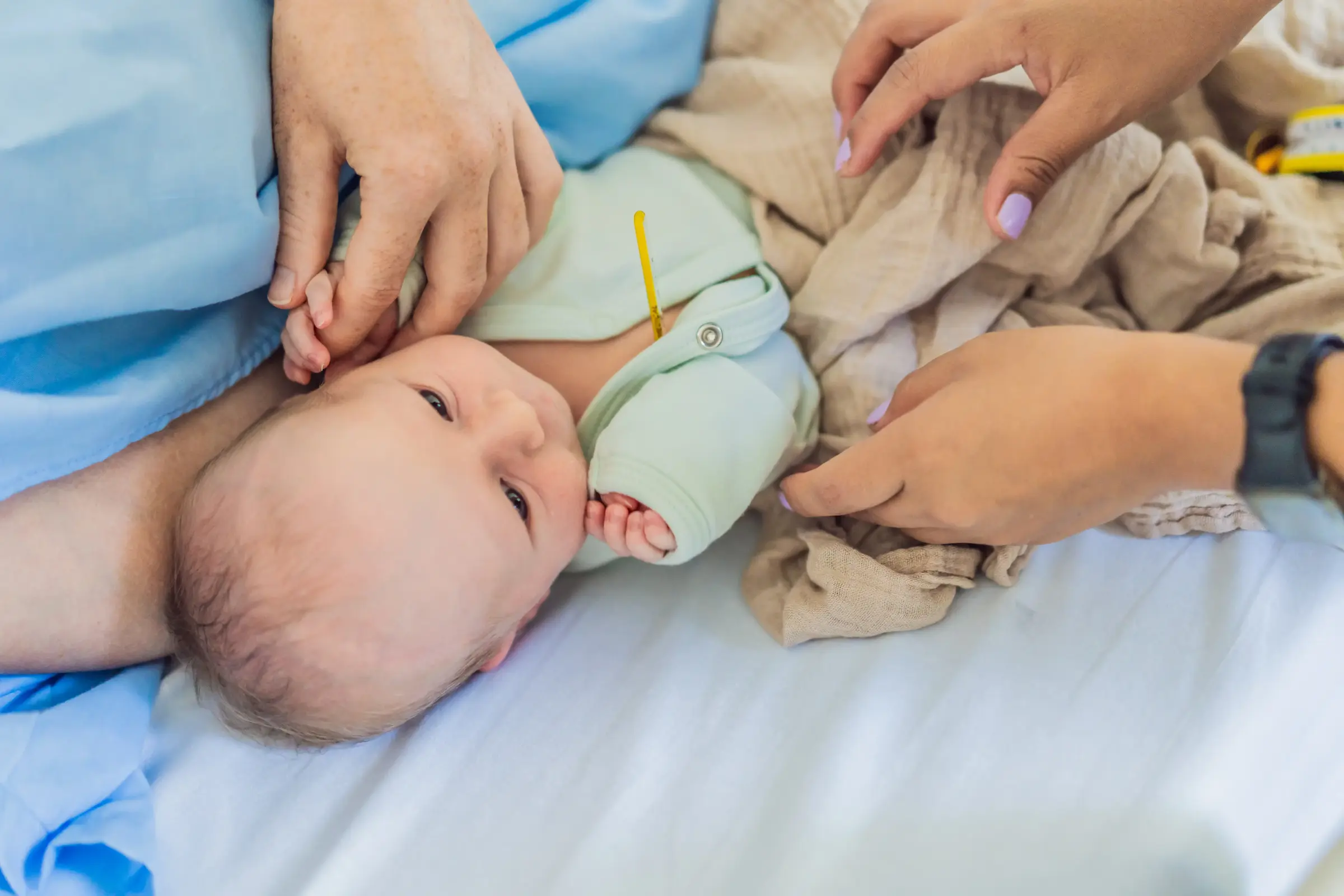
Toddlers between ages 1 and 3 commonly experience chills — shivering, goosebumps, and ice-cold hands and feet — while the rest of the body feels very hot during a fever. This happens because the brain has raised the body's temperature target and is actively conserving heat by narrowing blood vessels in the extremities. In a toddler who is still drinking, responding normally, and whose hands warm up once the fever peaks or medicine takes effect, this hot-core-cold-limbs pattern is a normal and expected part of how fevers work.
Illustrative image.
Why is the hot core and cold limbs pattern common and usually normal in toddlers?
Toddlers have more developed blood vessel control than babies, so their bodies manage the hot-core-cold-limbs cycle more efficiently — brief episodes of freezing hands and feet during a fever spike are extremely common and usually harmless at this age
Unlike babies, toddlers can communicate discomfort — they may say cold, pull at blankets, or shiver visibly, which helps parents recognize the body is in the heat-building phase of a fever rather than something more serious
Toddlers are more physically active even when sick, so overall wellness is easier to judge — a toddler with cold feet who is still walking around, asking for a drink, or playing quietly is far more reassuring than one who is limp and unresponsive
The risk of serious bacterial infection is significantly lower in fully vaccinated toddlers compared to young babies, so cold extremities during a fever carry less diagnostic weight on their own in this age group
What should parents watch for when a toddler has cold hands and feet during fever?
Notice the pattern — cold hands and feet that appear when the fever is climbing and then warm up once the temperature stabilizes or medicine takes effect are part of the normal fever cycle and not a red flag
Be concerned if the hands, feet, or legs stay cold, pale, or have a bluish tint even when the fever has come down or the toddler's body feels cooler — this may suggest the body is not circulating blood properly
Watch for chills that seem extreme or prolonged — shaking that lasts more than 20 to 30 minutes, teeth chattering that does not stop, or a toddler who cannot get comfortable despite being wrapped warmly
Look at the whole child alongside the cold extremities — refusing all fluids for several hours, not making wet diapers, being unusually difficult to wake, breathing fast, or developing a non-blanching rash are all reasons to seek prompt evaluation
Research shows that a parent's sense that this illness feels different from previous ones is a validated warning sign that doctors take seriously
Observe alertness, consolability, and activity level
How does your child seem right now?
Rate what you observe on each dimension. This records your observations — it does not score or judge them.
Alertness
Consolability
Activity level
How do pediatricians generally evaluate cold hands and feet with fever in toddlers?
The doctor assesses the toddler's overall appearance first — energy level, eye contact, responsiveness, breathing, and hydration status matter more than cold hands and feet alone in this age group
Capillary refill is checked by pressing on a fingertip — if color returns within 2 to 3 seconds, circulation is considered adequate; a slower return combined with other concerning signs may prompt further evaluation
For a well-appearing toddler whose cold extremities resolve with the fever cycle, doctors typically focus on identifying the underlying cause of the fever — such as an ear infection, viral illness, or urinary tract infection — rather than investigating the cold limbs separately
If the toddler appears unwell or has signs of poor circulation — persistent pallor, mottled skin, fast heart rate, or slow capillary refill — the doctor may order blood tests, check hydration status, and potentially start intravenous fluids
Most toddlers with fever chills and cold extremities who bounce back as the fever responds to medicine are managed with guidance on hydration and clear signs to watch for
Log observations to share with your doctor
Log temperature readings
Enter up to 6 temperature readings with times. The dot plot shows the pattern visually — it does not interpret the readings.
A 2-year-old has a fever of 102.8°F. The forehead and belly feel very hot. Both hands and feet are ice-cold and the toddler is shivering. When offered a warm blanket and a drink, the toddler accepts both and calms slightly. After 40 minutes the fever drops to 100.4°F and the hands and feet gradually warm up.
What does this hot core and cold limbs pattern describe?
An 18-month-old has had a fever for two days. Today the parent gives fever-reducing medicine and waits an hour. The temperature drops from 103°F to 99.8°F but the toddler's hands and feet remain cold and slightly pale. The toddler is also very quiet, not interested in toys, and has not had a wet diaper in 7 hours.
What does persistent cold extremities after fever reduction with reduced wet diapers describe?
A 3-year-old has a fever with the typical hot forehead and cold hands pattern. The toddler has been shaking and shivering for about 35 minutes despite being wrapped in a warm blanket. The teeth are chattering and the child cannot seem to get comfortable.
What does prolonged shaking and shivering for 35 minutes describe?
Not every fever is the same—and not every fever needs the same response.
Get pediatrician-designed visual guides and tools like this one, free in the PediaPulse app.
Hamilton JL, Evans SG, Bakshi M. Management of fever in infants and young children. American Family Physician. 2020;101(12):721-729.
Niehues T. The febrile child: diagnosis and treatment. Deutsches Ärzteblatt International. 2013;110(45):764-773.
Ebenezer Adebiyi, MD, MPH, FAAP
Board-Certified Pediatrician · FAAP · Founder of PediaPulse
Dr. Adebiyi built PediaPulse to help parents understand what they are observing so they can have better, more informed conversations with their own doctors.