A newborn is 90 minutes old and makes a soft grunt at the end of each breath out. The nurse says the baby is pink, oxygen levels are normal, and the rate is slowing down. What is this?
Baby Grunting on the Exhale: A Key Sign of Working to Breathe
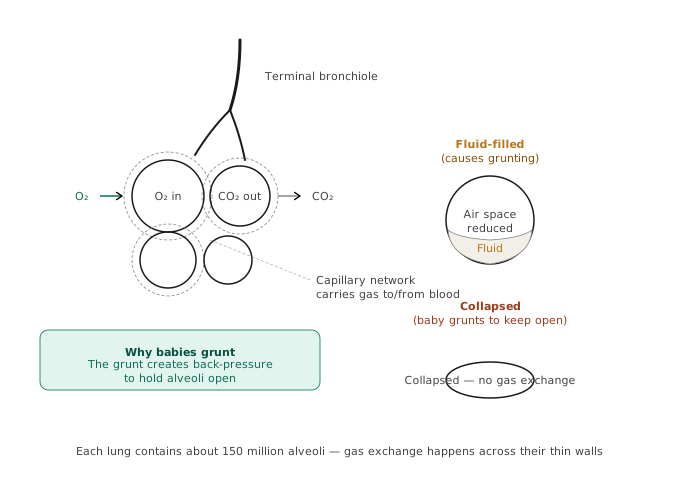
Grunting on the exhale is a short sound a baby makes at the end of each breath out. It happens because the baby is partially closing the vocal cords during exhaling to create back-pressure that keeps the tiny air sacs in the lungs from collapsing. This is the body's built-in rescue strategy — not a random noise. Brief grunting in the first hour or two after birth is common. Persistent, rhythmic grunting with every exhale — especially alongside nasal flaring, retractions, or color changes — is a key sign the baby is working harder than normal and needs medical evaluation.
Why Exhale Grunting Is Different from Other Baby Noises
- Most baby noises happen at unpredictable times and are not tied to a specific phase of breathing. Exhale grunting is different — it occurs at the same point in every breathing cycle, right at the end of each breath out, creating a steady rhythmic pattern.
- The sound is produced by the vocal cords — the baby partially closes them during exhaling to slow the air leaving the lungs and build pressure inside, which helps keep the air sacs inflated.
- This is a compensatory reflex — the baby's body is doing it automatically to solve a problem. The lungs are having difficulty staying open, so the body creates its own internal pressure to help.
- Because it is tied to a specific mechanical problem, exhale grunting is considered one of the most important signs of respiratory distress — more significant than many other noises babies make.
- Grunting that begins after birth and resolves within one to two hours is often the lungs clearing fluid. Grunting that persists beyond two hours, worsens, or appears for the first time later is more concerning.
When to Worry
- Grunting on every exhale that persists beyond the first two hours after birth or appears for the first time later in life — call the pediatrician.
- Grunting combined with nasal flaring, skin pulling in between the ribs or at the neck, or belly pumping hard — multiple signs of effort together increase urgency.
- Breathing faster than 60 breaths per minute while also grunting on every exhale — two signs of distress together.
- Blue, pale, or gray color around the lips, face, or fingertips alongside grunting — the baby is not getting enough oxygen and needs immediate emergency care.
- A baby who is grunting and refusing to feed, is limp, or is difficult to wake — seek emergency care without delay.
- Any newborn under 28 days old with persistent exhale grunting should be evaluated by a doctor even if other signs seem mild.
Knowledge Check
Tap the answer that best fits each scenario.
A 5-day-old has been making a steady grunt at the end of every breath out for 20 minutes. The nostrils are also flaring and the skin between the ribs is pulling in. What is the appropriate response?
A 3-week-old is grunting on every exhale, has pale lips, and is not waking up for feeds. What is the appropriate response?